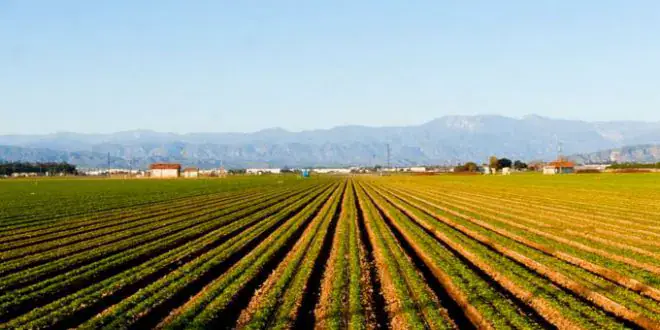
As of November 4, 2026, the Kaiserin governorate in Tunisia has made significant progress in its grain planting efforts, with 14% of the total planned area already sown. The region aims to cultivate 85,000 hectares for the 2026-2027 agricultural season. Fatma Halim, head of the Plant Production Department at the Regional Directorate of Agricultural Development, confirmed this development, expressing hope for a promising season despite climate change challenges.
The planting season began on October 15, 2026, and is being closely monitored by the relevant authorities. Preparations for the major agricultural season have been underway, including land preparation and the availability of necessary inputs such as high-quality and regular seeds, as well as chemical fertilizers. Halim emphasized that providing seeds and depth fertilizers on time is crucial for farmers to avoid delays in the planting schedule.
The Regional Directorate of Agricultural Development in Kaiserin, in coordination with the central services of the Ministry of Agriculture and the Regional Services of the Grain Office, is closely tracking the supply of seeds. This process is being carried out gradually and is under continuous monitoring. The directorate is also working to intensify guidance and technical support for farmers through demonstration plots in collaboration with the National Institute of Large-Scale Agriculture.
The demonstration plots will be used to test new varieties of durum wheat and to demonstrate resistance to weeds. Additionally, regional and local information days are being organized to discuss various aspects of the technical package for large-scale crops. These events will cover topics such as land preparation, variety selection, sowing, irrigation, fertilization, and pest control.
The planned areas for grain cultivation in the Kaiserin governorate amount to 85,000 hectares, divided between 80,000 hectares in the rain-fed sector and 5,000 hectares in the irrigated sector. The rain-fed sector will focus on planting 27,500 hectares of durum wheat and 52,500 hectares of barley. In contrast, the irrigated sector will allocate 1,500 hectares for durum wheat and 3,500 hectares for barley.
The distribution of the planned areas varies across different delegations, with 30% of the rain-fed areas allocated to the Tala delegation and 60% of the irrigated areas allocated to the Foussana delegation. Halim stressed the importance of farmers and stakeholders being prepared and adhering to correct technical standards during all stages of cultivation to ensure a successful season.
This development comes after concerns were raised about delays in the supply of wheat and barley seeds for the current agricultural season. The Regional Union of Agriculture and Maritime Fishing in Kaiserin had warned of potential repercussions on the progress of the major agricultural season due to these delays.
Key points
- The Kaiserin governorate aims to cultivate 85,000 hectares of grains for the 2026-2027 season.
- Grain planting has reached 14% completion in the region.
- The planting season began on October 15, 2026, and is being closely monitored by the authorities.