The government of the Democratic Republic of Congo has expressed support for prosecuting young fighters from the Forces Démocratiques de Libération du Rwanda (FDLR) for promoting genocide ideology. This move comes as former FDLR leaders and fighters have revealed that the group's youth are being indoctrinated with hate speech and prepared for combat. According to testimony from former FDLR leaders, the group's fighters are being taught to view the Tutsi ethnic group as enemies and to prepare for attacks on Rwanda.
Former FDLR leaders have revealed that the group's fighters receive support from the Congolese army, FARDC. This support includes supplies of weapons, ammunition, and equipment, as well as financial assistance and training. Col. Demobe Wensislas Nizeyimana, a former FDLR military leader, disclosed that he received instructions and resources from Kinshasa to distribute to his fighters in the Équateur province. He also revealed that he was provided with a satellite phone and documents that facilitated his travel abroad.
The FDLR's activities have been linked to various forms of exploitation, including extortion, cattle rustling, and illicit mining. Lt. Col. Emilien Mpakaniye, another former FDLR leader, stated that the group's fighters engage in these activities to generate funds, which are then used to sustain their operations. He also revealed that the group's leaders reap the majority of the benefits, leaving the fighters impoverished and demotivated.
The FDLR's ideology of hate and violence has been perpetuated through its training programs, which emphasize the need to target the Tutsi ethnic group. Former fighters have disclosed that they were taught to view themselves as victims and to prepare for revenge attacks on Rwanda. This ideology has been linked to the 1994 genocide in Rwanda, which resulted in the deaths of hundreds of thousands of Tutsis.
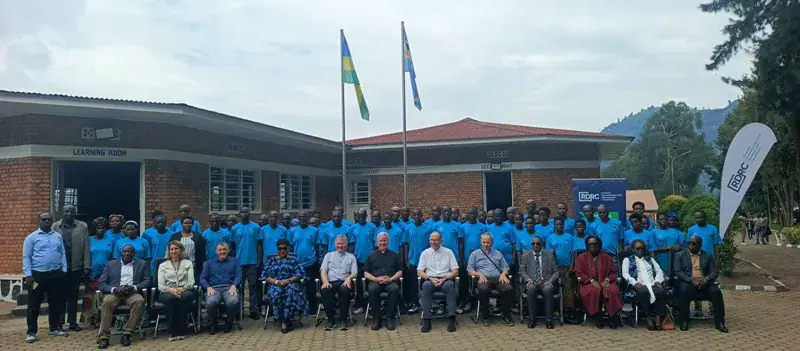
The RDRC's Mutobo facility currently hosts 527 individuals, including 228 former FDLR fighters, 13 former child fighters, and 142 civilians who were involved with the group. The center provides support and reintegration programs for these individuals, who are seeking to rebuild their lives in Rwanda. Former FDLR fighters have expressed gratitude for the opportunity to renounce their past and start anew.
Valérie Nyirahabineza, the head of the RDRC, emphasized that the FDLR's ideology of hate and division has been a major obstacle to reconciliation and peace. She praised those who have chosen to renounce their past and work towards rebuilding their lives. Seán Farrell, the CEO of Trócaire, expressed his organization's commitment to supporting the reintegration of former FDLR fighters and promoting peace and reconciliation in Rwanda.
The partnership between Trócaire and the RDRC aims to provide comprehensive support to former FDLR fighters, including psychological counseling, vocational training, and economic assistance. The goal is to enable these individuals to reintegrate into Rwandan society and contribute to the country's development. Farrell noted that Ireland, which has experienced its own share of conflict, is well-positioned to offer expertise and support to Rwanda's peacebuilding efforts.
Key points
- The Democratic Republic of Congo supports prosecuting young FDLR fighters for genocide ideology.
- Former FDLR leaders reveal that the group's youth are being indoctrinated with hate speech and prepared for combat.
- The RDRC's Mutobo facility provides support and reintegration programs for former FDLR fighters seeking to rebuild their lives in Rwanda.