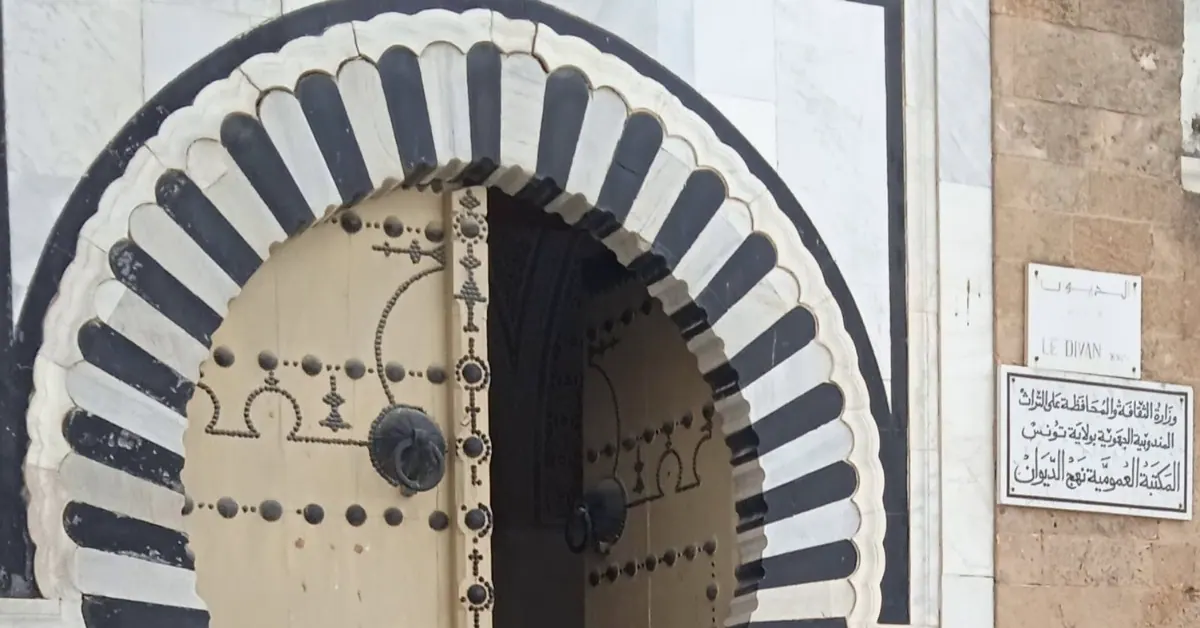
The National Heritage Institute of Tunisia has completed restoration work on the historic Diwan Library in Tunis, commissioned by the Ministry of Cultural Affairs. The library, located on Avenue Diwan in the capital, has regained its architectural and historical splendor after years of deterioration. The restoration project aimed to address damage caused by weather conditions and time.
The restoration work involved using original materials and traditional techniques in line with international standards to preserve the building's historical identity and architectural characteristics. The technical and specialized teams focused on treating humidity, removing damaged layers, and applying traditional lime-based mortar to ensure wall ventilation. They also reinforced the walls by injecting cracks with limestone materials.
The restoration project included several key interventions, such as renewing the roof insulation, adjusting water drainage, and preventing rainwater accumulation. The teams also worked on restoring the floors, dismantling damaged sections, cleaning and reattaching the original glazed tiles, and replacing missing pieces. Furthermore, they rehabilitated the library's fountain by manually removing mineral deposits and addressing water leaks.
In addition to these physical restoration efforts, the project involved updating the electrical network, removing random extensions, and replacing them with a supported network featuring aesthetic lighting. The teams also treated the library's heritage wooden and metal elements using original paint and preventive oils to preserve the authenticity of Tunisian craftsmanship.
The restoration of the Diwan Library is part of a broader effort to preserve Tunisia's cultural heritage. The Ministry of Cultural Affairs and the National Heritage Institute are working together to protect and maintain the country's historic sites. The Diwan Library is a significant cultural landmark, and its restoration will allow future generations to appreciate its historical and architectural value.
The restoration project demonstrates the importance of collaboration between government institutions, technical experts, and specialized teams in preserving cultural heritage sites. The use of traditional techniques and materials ensures that the library's historical identity is preserved while also meeting modern standards for conservation and sustainability.
The Diwan Library's restoration is a significant achievement for Tunisia's cultural sector, highlighting the country's commitment to preserving its rich history and cultural heritage. The library is expected to reopen to the public, offering a unique cultural and educational experience for visitors.
Key points
- The restoration of the Diwan Library was carried out using original materials and traditional techniques to preserve its historical identity and architectural characteristics.
- The project included several key interventions, such as treating humidity, renewing the roof insulation, and restoring the floors and fountain.
- The restoration of the Diwan Library demonstrates the importance of collaboration between government institutions, technical experts, and specialized teams in preserving cultural heritage sites.