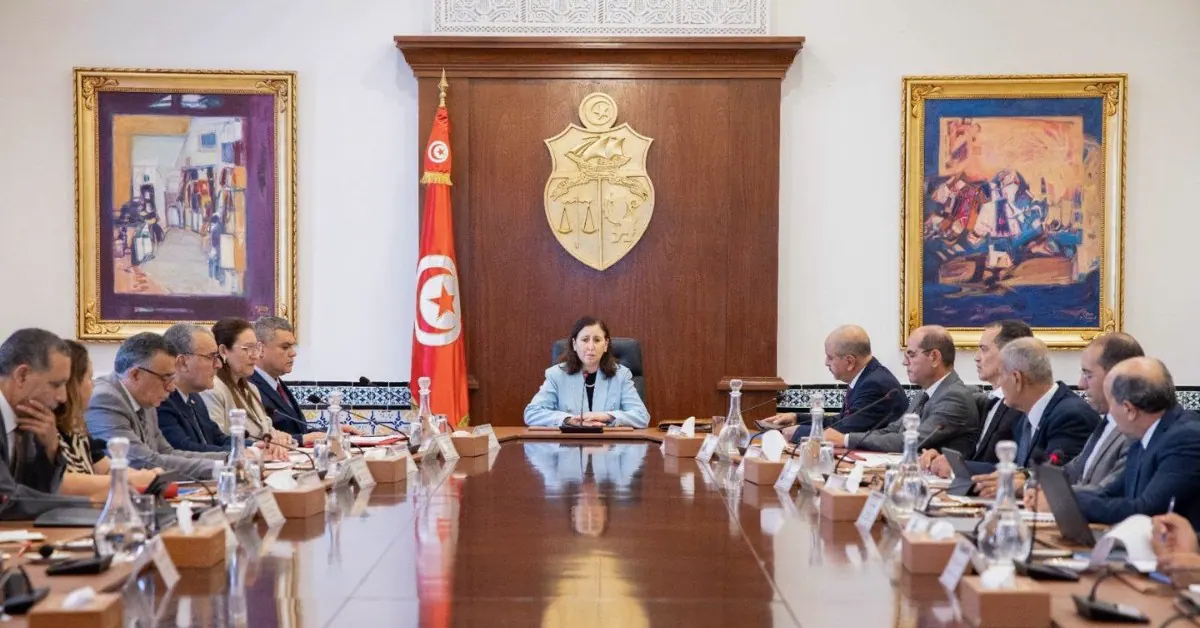
Tunisia's government has convened a ministerial council to discuss a comprehensive plan to boost electricity production and integrate renewable energy. The plan aims to mobilize additional production capacities, restore available capacities, and develop renewable energies and storage systems. The council, chaired by Prime Minister Sarah Zenzri, emphasized the importance of achieving energy security to ensure a sustainable electricity supply and reduce the deficit.
The plan, which will be implemented in the short, medium, and long term, aims to increase production efficiency and balance supply and demand during peak periods. Minister of Equipment, Housing, and Industry, Salah Zwari, stated that the plan adopts an integrated approach to achieve these goals. The plan includes several projects, such as the installation of cooling systems at turbine entrances to save 250 megawatts of electricity.
The Tunisian Electricity and Gas Company presented details of the short-term plan, which includes the acquisition of gas turbines with a capacity of 200 megawatts and the operation of a third turbine at the Borj El Amri station with a capacity of 300 megawatts. The plan also involves restoring the full production capacity of the Keshbata and Matlin stations, estimated at around 190 megawatts.
The plan includes the integration of around 300 megawatts of renewable energy before the summer of 2027, in addition to 40 megawatts within the fifth round of the licensing system. A energy storage system with a capacity of 300 megawatts and a storage power of 600 megawatt-hours will also be established. The plan also involves the construction of a photovoltaic station in Tataouine with a capacity of 200 megawatts and a storage system with a power of 100 megawatt-hours.
The government aims to achieve 35% of electricity production from renewable sources by 2030. To achieve this goal, the plan includes several projects, such as the construction of a station in Beni Mheira with a capacity of 50 megawatts and a storage system with a power of 20 megawatt-hours. The plan also involves expanding the wind farm in Sidi Daoud by 30 megawatts.
The ministerial council emphasized the importance of accelerating the implementation of these projects to achieve the set goals. The plan will be implemented in collaboration with several stakeholders, including the Tunisian Electricity and Gas Company and international partners.
The plan is part of Tunisia's efforts to address its energy challenges and reduce its reliance on imported energy sources. The country's energy sector has faced several challenges in recent years, including a significant increase in energy demand and a decline in production. The plan aims to address these challenges and ensure a sustainable electricity supply for the country's growing population and economy.
Key points
- Tunisia aims to achieve 35% of electricity production from renewable sources by 2030.
- The plan includes the integration of around 300 megawatts of renewable energy before the summer of 2027.
- A energy storage system with a capacity of 300 megawatts and a storage power of 600 megawatt-hours will be established.