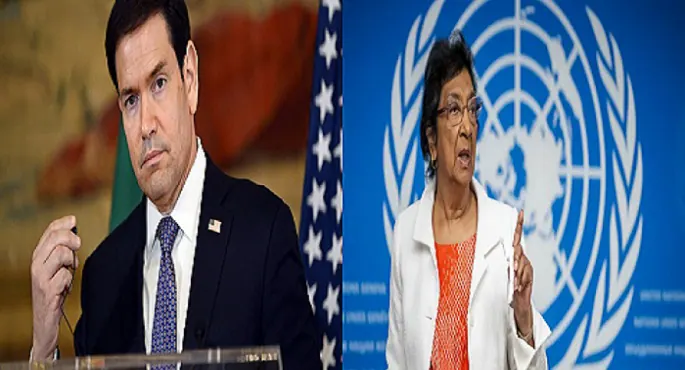
The United States' decision to impose sanctions on the International Criminal Court (ICC) has raised concerns over the impact on global justice and sovereignty. The move comes after the ICC's chief prosecutor, Fatou Bensouda, launched an investigation into alleged war crimes committed by Israel in Palestine. The US has threatened to take action against the ICC, with Secretary of State Mike Pompeo announcing that the US will impose sanctions on the court. This has sparked fears that the US is trying to undermine the ICC's authority and protect its allies from accountability.
The ICC's investigation into Israel's actions in Palestine is focused on alleged war crimes committed during the conflict in Gaza. The investigation is being led by Bensouda, who has been recognized for her work on international justice. The US has been critical of the ICC's investigation, with President Donald Trump claiming that the court is biased against Israel. However, the ICC has maintained that its investigation is impartial and based on evidence. The US sanctions have been widely condemned by human rights groups and other countries, who argue that they will undermine the ICC's ability to hold perpetrators of war crimes accountable.
The US sanctions on the ICC have also raised concerns over the impact on global justice and sovereignty. The ICC was established to prosecute individuals responsible for international crimes, including war crimes, crimes against humanity, and genocide. The court's jurisdiction is based on the principle of complementarity, which means that it can only investigate and prosecute crimes that have not been investigated or prosecuted by national authorities. The US sanctions have been seen as an attempt to undermine the ICC's authority and protect US allies from accountability.
The reaction to the US sanctions on the ICC has been mixed. Some countries, including the UK, France, and Germany, have expressed concern over the sanctions and emphasized the importance of the ICC in promoting international justice. Other countries, including Israel, have welcomed the US sanctions and criticized the ICC's investigation into Israel's actions in Palestine. The US sanctions have also sparked concerns over the impact on the ICC's ability to investigate and prosecute crimes committed by US nationals.
The ICC's investigation into Israel's actions in Palestine is part of a broader effort to hold perpetrators of war crimes accountable. The ICC has also launched investigations into alleged war crimes committed in other countries, including the Democratic Republic of Congo and Uganda. The court's work has been recognized as an important step towards promoting international justice and accountability. However, the US sanctions have raised concerns over the impact on the ICC's ability to carry out its mandate.
The US sanctions on the ICC have also raised concerns over the impact on US foreign policy. The US has been a key player in international efforts to promote justice and accountability, and the sanctions have been seen as a departure from this approach. The US has also faced criticism for its handling of the ICC, with some arguing that the sanctions are an attempt to undermine the court's authority and protect US interests.
The future of the ICC and its relationship with the US remains uncertain. The US sanctions have created a significant challenge for the ICC, and it is unclear how the court will respond. The ICC has emphasized its commitment to its mandate and its determination to continue investigating and prosecuting crimes committed by individuals, regardless of their nationality. However, the US sanctions have raised concerns over the impact on the ICC's ability to carry out its work and the implications for global justice and sovereignty.
Key points
- The US sanctions on the ICC have sparked concerns over the impact on global justice and sovereignty.
- The ICC's investigation into Israel's actions in Palestine is part of a broader effort to hold perpetrators of war crimes accountable.
- The US sanctions have raised concerns over the impact on US foreign policy and the implications for global justice and sovereignty.