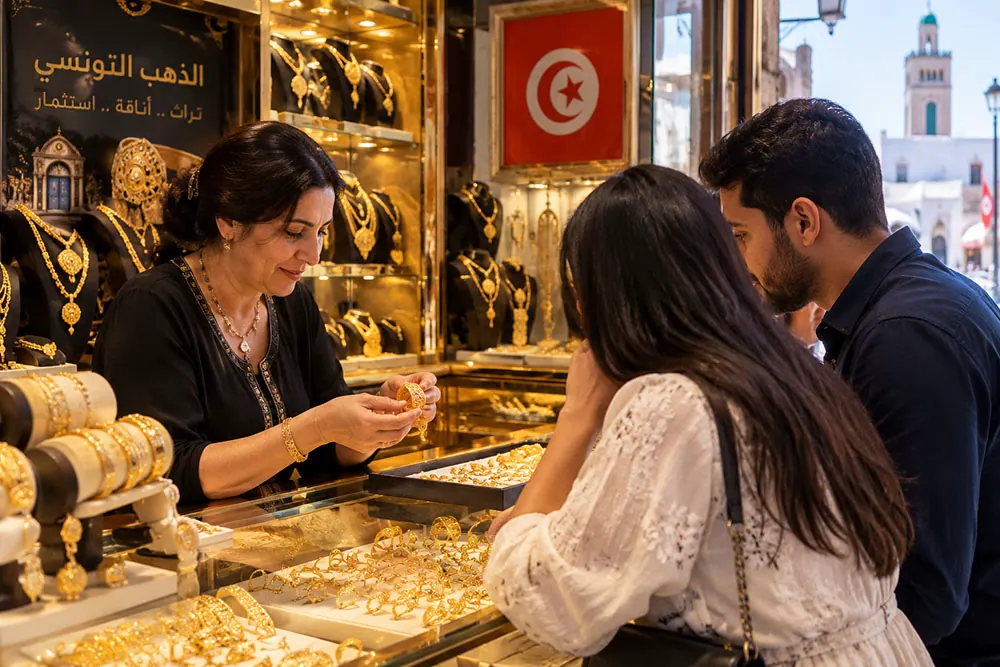
In Tunisia, gold has long been a staple of family savings and wedding preparations. For generations, families have set aside a portion of their income to purchase gold, which serves as a safety net during hard times. However, with gold prices skyrocketing in recent years, this tradition is becoming increasingly difficult to maintain. The price of gold has reached unprecedented levels, making it challenging for ordinary Tunisian families to afford.
The relationship between gold and marriage in Tunisia is deeply ingrained. Gold is traditionally given to the bride as part of her trousseau, symbolizing the family's wealth and serving as a form of savings for the bride. However, with the current prices, this custom is becoming a significant burden for families. A single gram of gold now costs around 407 dinars, making it difficult for families to afford the traditional gold gifts.
According to traders, the high prices are not only affecting sales but also changing consumer behavior. Many customers are opting for lighter-weight pieces or simpler designs to reduce costs. Some families are even selling their old gold to upgrade to new pieces. The industry is facing a challenging situation, as high prices deter buyers, while traders struggle to maintain sales.
The impact of global events on gold prices is also being felt in Tunisia. The country's gold market is influenced by international factors, including US monetary policies and global geopolitical tensions. These external factors contribute to the rising prices, making it difficult for local buyers to afford gold.
As gold becomes less accessible, Tunisians are reevaluating their priorities. Some young couples are choosing to forego the traditional gold gifts or opt for smaller, more symbolic pieces. Others are considering alternative forms of savings or investments. The changing attitudes towards gold reflect the shifting economic landscape in Tunisia.
Despite the challenges, gold remains an integral part of Tunisian culture. Many families continue to view gold as a safe-haven asset and a symbol of prosperity. However, as prices continue to rise, it remains to be seen how long this tradition can be sustained. The gold industry in Tunisia is at a crossroads, as traders and consumers adapt to the new economic reality.
As Tunisians navigate the complexities of the gold market, they are forced to confront the reality of their changing economic circumstances. The soaring prices of gold have brought to the forefront the difficulties faced by ordinary families in maintaining traditional practices. The future of gold in Tunisia hangs in the balance, as the country struggles to reconcile its cultural heritage with the harsh realities of the modern economy.
Key points
- Soaring gold prices threaten traditional Tunisian practice of buying gold as savings and wedding trousseau.