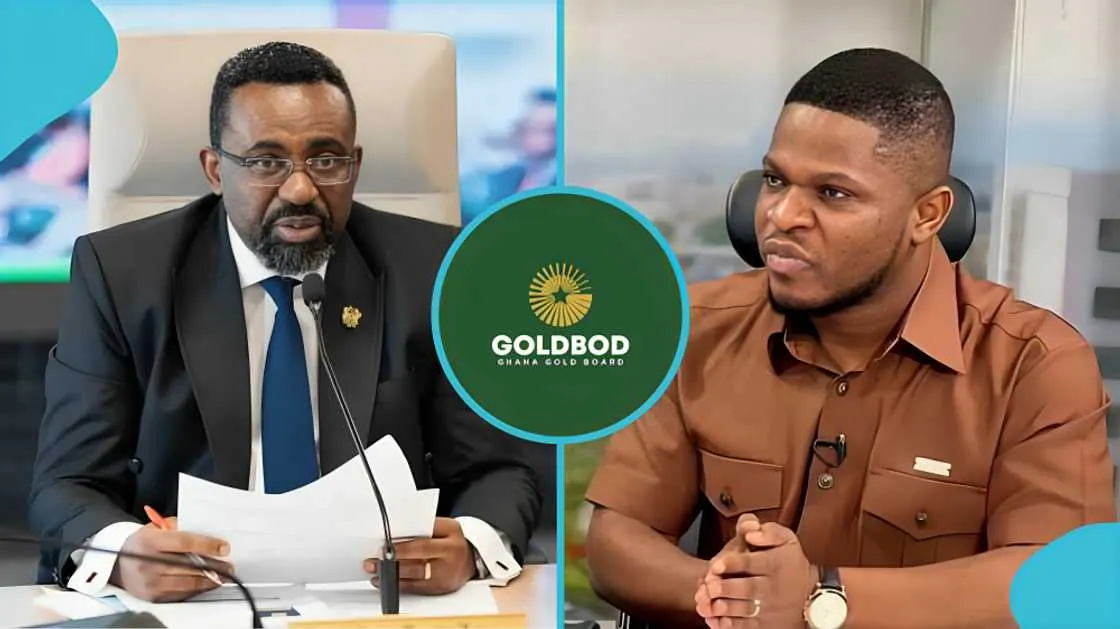
GoldBod has clarified that Bank of Ghana (BoG) Governor, Dr. Johnson Asiama's decision to stop serving personally on its governing board does not indicate a disagreement between the two institutions. According to Media Relations Officer of GoldBod, Prince Kwame Minkah, the Governor's decision should not be interpreted as evidence of problems or wrongdoing at GoldBod.
Dr. Asiama had mentioned at the latest Monetary Policy Committee (MPC) meeting that he had "resigned" from the GoldBod board about five months earlier. However, Mr. Minkah explained that the Governor did not withdraw from the GoldBod board due to any disagreement. Instead, Dr. Asiama chose to nominate his second deputy, Mrs. Matilda Asante-Asiedu, to represent him on the board due to his busy schedule.
The arrangement is provided for under Section 4(e) of the GoldBod Act, 2025 (Act 1140), which states that the governing body of GoldBod shall comprise, among others, "the Governor of the Bank of Ghana or a representative of the Governor of the Bank of Ghana not below the rank of a Director nominated by the Governor of the Bank of Ghana." This provision allows for the Governor to appoint a representative to serve on the board.
Mr. Minkah noted that this arrangement is not unique to the Bank of Ghana, as other ministers have also appointed representatives to serve on the GoldBod board. For instance, the Finance Minister, Dr. Cassiel Ato Forson, nominated Deputy Finance Minister Thomas Nyarko Ampem to represent him on the board from the establishment of GoldBod.
Similarly, the Minister of Lands and Natural Resources, Emmanuel Armah-Kofi Buah, initially served on the board personally but later appointed the Chief Director of the Ministry, Marcus Haligah, to represent him in January 2026 due to his demanding schedule. Dr. Asiama had also initially chosen to serve on the board himself when GoldBod was established in 2025.
However, on May 11, 2026, the BoG Governor wrote to the GoldBod board to nominate Mrs. Matilda Asante-Asiedu, the Second Deputy Governor of the Bank of Ghana, to represent him. Mr. Minkah emphasized that this nomination was a change in representation and not a withdrawal of the Bank of Ghana from the GoldBod board.
Mr. Minkah rejected claims that Dr. Asiama's absence from the board indicated "rot" at GoldBod or a dispute between the two institutions. He stressed that the Governor had simply exercised the option provided by law to appoint a qualified representative to serve on his behalf, and that GoldBod and the Bank of Ghana continue to work closely together.
Key points
- GoldBod clarifies that Dr. Asiama's decision to stop serving personally on its governing board does not indicate a disagreement between the two institutions.
- The arrangement for the Governor to appoint a representative to serve on the board is provided for under Section 4(e) of the GoldBod Act, 2025 (Act 1140).
- GoldBod and the Bank of Ghana continue to work closely together, with GoldBod being a major source of foreign exchange for the country.