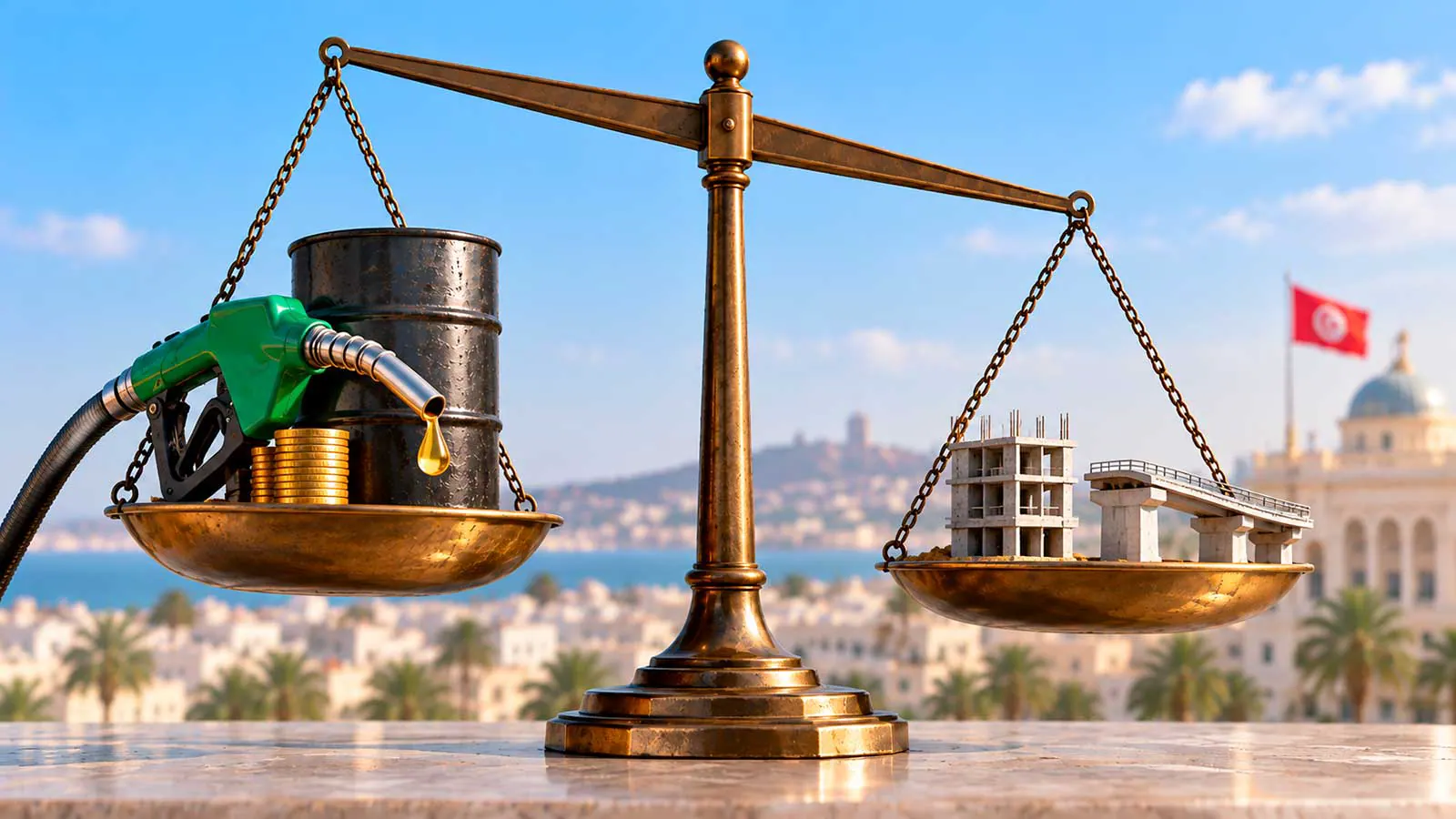
According to the Tunisian Ministry of Finance's budget execution report for the first half of 2026, fuel subsidies have exceeded investment spending. The subsidies allocated to fuel reached 2.427 billion dinars, while investment spending did not exceed 1.665 billion dinars. This represents a difference of 762 million dinars. The significant increase in fuel subsidies is attributed to the rise in global oil prices during the first half of 2026.
The total compensation expenses in Tunisia increased by 12% during the first half of 2026, reaching 3.486 billion dinars. The execution rate of compensation expenses was 35.7% compared to the finance law's forecasts. Fuel subsidies accounted for approximately 48.6% of the total compensation expenses. The surge in global oil prices, particularly due to the Iranian crisis, contributed to the increased fuel subsidy costs.
The average price of a barrel of oil reached 92.6 dollars by the end of June 2026. This significant increase in oil prices had a substantial impact on Tunisia's fuel subsidy expenses. The country's budget for 2026 is based on several assumptions, including a gradual recovery of economic growth, an estimated growth rate of 3.3%, and an average Brent oil price of 63.3 dollars.
The Tunisian government's budget for 2026 assumes a stable exchange rate of the Tunisian dinar against major currencies. The execution rate of committed and disbursed credits reached 39.2% by the end of June 2026. The total disbursed budget expenses stood at approximately 24.917 billion dinars, representing an 8.9% increase compared to the same period in 2025.
The increase in fuel subsidies has significant implications for Tunisia's economy. The country's reliance on imported oil and the subsequent subsidy costs can be a substantial burden on the government's finances. The situation may require the government to reassess its budget priorities and explore alternative solutions to mitigate the impact of rising fuel costs.
The Tunisian government may need to consider adjusting its fuel subsidy policies to reduce the financial burden. Possible measures could include reducing subsidies, increasing fuel prices, or implementing more targeted subsidy programs. However, any changes to the subsidy regime may have social and economic implications that need to be carefully considered.
The Ministry of Finance's report highlights the need for careful budget management and strategic planning to address the challenges posed by rising fuel costs. The government will need to balance its budget priorities, ensure economic stability, and mitigate the impact of global economic trends on the country's finances.
Key points
- Fuel subsidies in Tunisia reached 2.427 billion dinars in the first half of 2026.
- Investment spending in Tunisia was 1.665 billion dinars in the first half of 2026.
- Tunisia's total compensation expenses increased by 12% to 3.486 billion dinars in the first half of 2026.