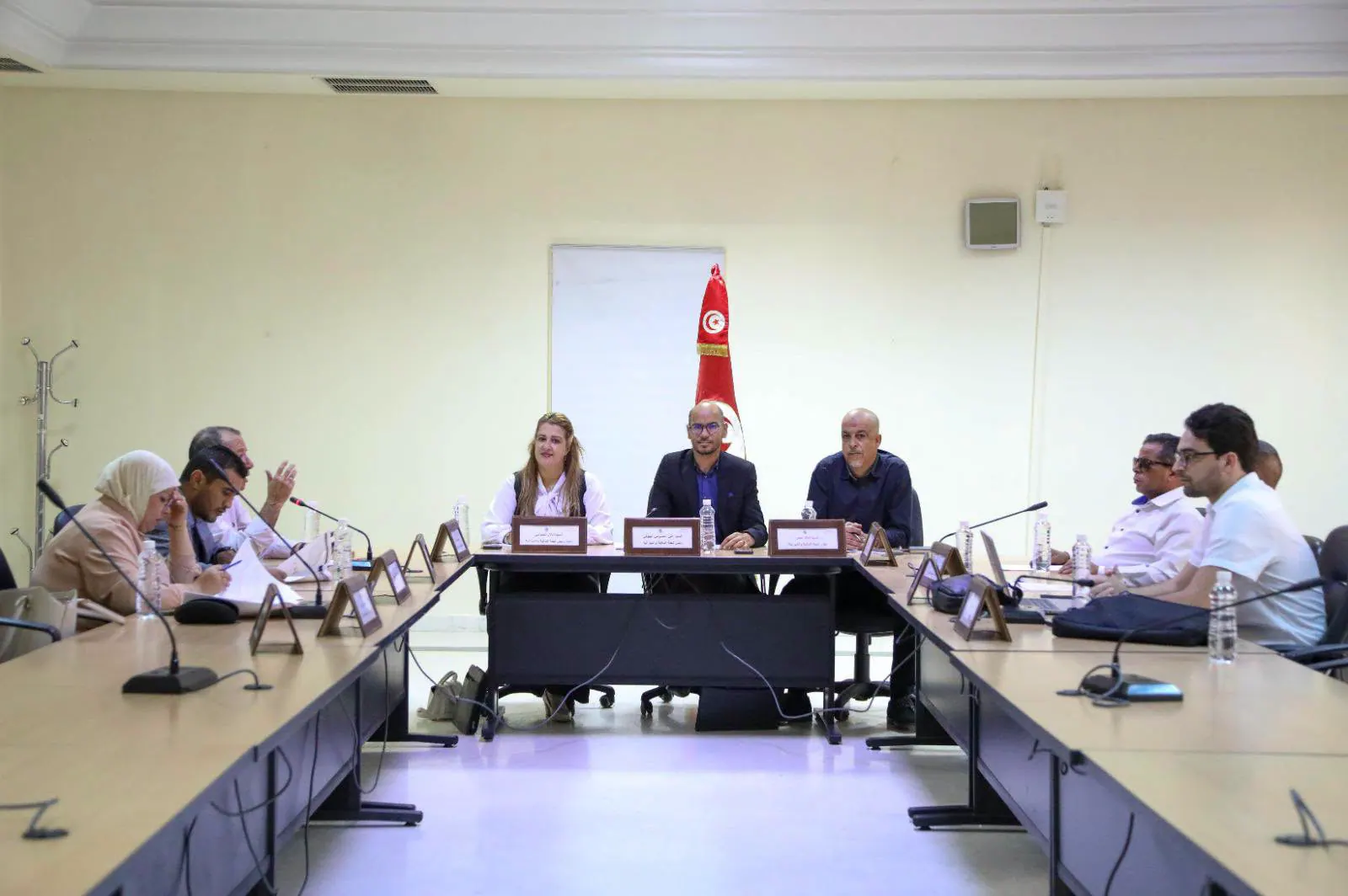
The Finance and Budget Committee of Tunisia's National Council of Regions and Districts convened on October 12, 2026, to examine the country's economic and financial indicators. The committee, led by its chairman, Ali Al-Hosumi Beyouli, reviewed the implementation of the 2026 state budget and discussed the major orientations of the 2027 finance bill. The meeting aimed to continue the committee's oversight work and monitor the execution of the state budget up to the end of the first half of 2026.
During the session, committee members analyzed data and indicators provided by the Ministry of Finance. They assessed the extent to which the results achieved matched the assumptions adopted in the 2026 finance law. Specifically, they examined the impact of a 3.3% economic growth rate forecast and the effects of global economic and geopolitical changes on state resources and expenditures. The discussions also focused on the implementation of the budget, the evolution of resources and expenditures, and the contribution of productive sectors to economic growth.
The committee emphasized the need to rationalize public spending, improve subsidy targeting, and accelerate the completion of public projects. They stressed the importance of maintaining the state's social role and ensuring the sustainability of public finances. The committee also highlighted the need to address administrative and financial obstacles hindering the implementation of public projects. Additionally, they called for the settlement of contractors' dues and the acceleration of delayed projects to boost investment, create jobs, and improve infrastructure and public services.
Committee members discussed the impact of support expenditures, particularly subsidies for fuel, basic goods, and grains. They also addressed the increasing burden of public debt and its pressure on available financial resources. Regarding the 2027 finance bill, the committee advocated for an economic and financial vision that responds to global changes and maintains state financial balances. They recommended reforming the subsidy system and directing resources toward national priorities, such as health, social affairs, and investment.
The committee emphasized the importance of supporting agricultural production, enhancing food security, and improving the investment climate. They also highlighted the need to develop the industrial, energy, and renewable energy sectors to boost the national economy's competitiveness and support growth and employment. In the area of regional and territorial development, the committee stressed the need for coherence between the development plan and the state budget.
The committee decided to continue examining budget and public finance issues and invited Ministry of Finance representatives to present a report on the budget document. They also planned a study day on financing the energy deficit and its impact on public finances, with the participation of experts and specialists. This aims to deepen the discussion on financing mechanisms and possible options for addressing the deficit and evaluating its impact on investment and development.
The committee's discussions reflected a comprehensive approach to addressing Tunisia's economic and financial challenges. By engaging with various stakeholders and experts, the committee seeks to ensure that the country's financial policies are informed by a thorough understanding of the complex issues at play. The 2027 budget and economic outlook will likely be shaped by the committee's recommendations and the government's response to the challenges facing the country's economy.
Key points
- The committee emphasized the need to rationalize public spending and improve subsidy targeting.
- The 2027 finance bill should adopt a vision that responds to global changes and maintains state financial balances.
- The committee recommended supporting agricultural production and enhancing food security.