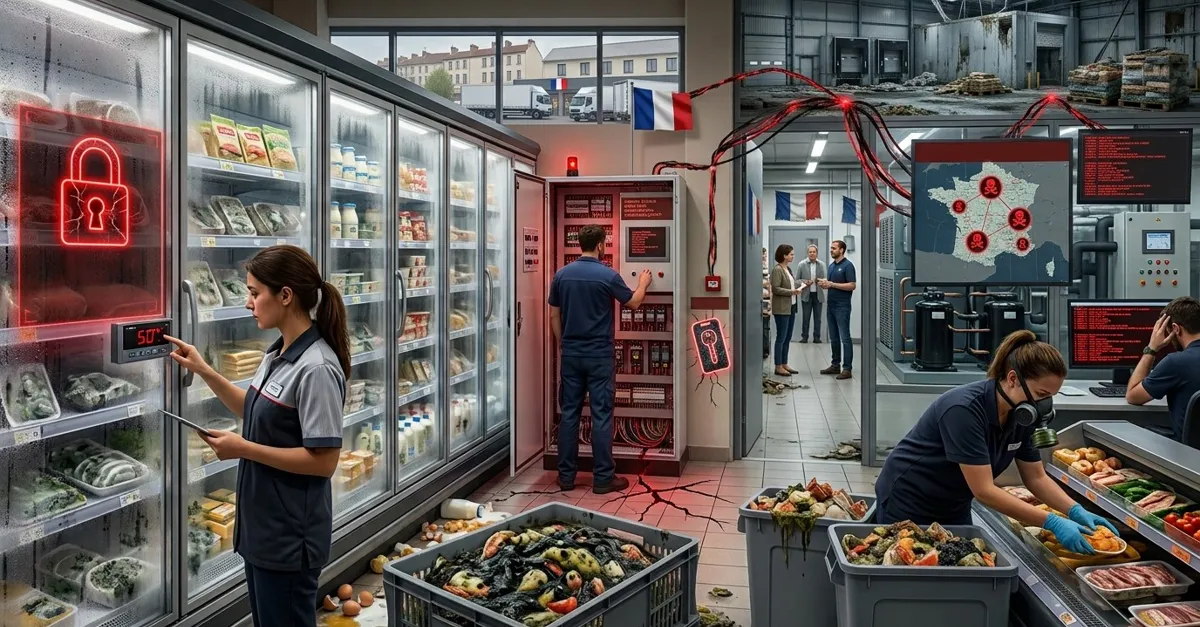
A devastating cyberattack has struck several major French grocery store chains, causing significant disruptions to their operations. The attack, which began on Sunday evening, affected over 300 stores belonging to the Intermarché chain and its Netto brand, as well as more than 100 branches of the Coopérative U cooperative and several E Leclerc stores. The attackers managed to breach the stores' central refrigeration systems, raising temperatures to as high as 50°C and causing fires and extensive damage to fresh and frozen food stocks.
The attack has been described as one of the most serious cyberattacks to target Europe's food security infrastructure. According to reports, the attackers used a vulnerability in the refrigeration control systems supplied by Danish company Danfoss to gain access to the stores' systems. Danfoss acknowledged that many of the affected devices were running outdated software that was no longer receiving security updates, and that they had previously warned customers of the need to upgrade.
The cyberattack has resulted in significant financial losses for the affected stores, with estimates suggesting that the total damage could be in the tens of millions of euros. Intermarché has announced that it will dispose of all fresh and frozen products in its affected stores, while the French newspaper Le Monde reported that the total losses could be substantial. The attack has also raised concerns about the vulnerability of critical infrastructure to cyberattacks.
French authorities have launched an investigation into the attack, with the Paris prosecutor's office opening a formal inquiry into the "large-scale cyberattack" that targeted several major grocery store chains. The investigation aims to identify the perpetrators and determine the extent of the damage. Meanwhile, the French government has stepped up efforts to protect critical infrastructure from hybrid attacks, with President Emmanuel Macron issuing directives to enhance security measures.
The cyberattack has also raised concerns about the potential for similar attacks on other European countries. According to European Food and Agriculture Commissioner Christophe Hansen, the attack demonstrates that "using food as a weapon is a reality" and stressed the need for enhanced food security measures at all levels. The French cybersecurity agency has been working with European counterparts to assess the risk of further attacks.
The impact of the cyberattack has also been felt in neighboring countries, with Dutch retailer Ahold Delhaize announcing that it had suspended some of its systems as a precautionary measure. The company, which owns the Albert Heijn supermarket chain in the Netherlands, reported that its online delivery services had been temporarily halted, although its physical stores remained open.
The French government has vowed to take steps to prevent similar attacks in the future, with the cybersecurity agency working to identify and mitigate potential vulnerabilities in critical infrastructure. The incident has highlighted the need for enhanced cooperation between governments, businesses, and cybersecurity experts to protect against the growing threat of cyberattacks.
Key points
- The cyberattack on French grocery stores has resulted in significant financial losses and raised concerns about the vulnerability of critical infrastructure to cyberattacks.
- The attack has been described as one of the most serious cyberattacks to target Europe's food security infrastructure.
- French authorities have launched an investigation into the attack, with the aim of identifying the perpetrators and determining the extent of the damage.