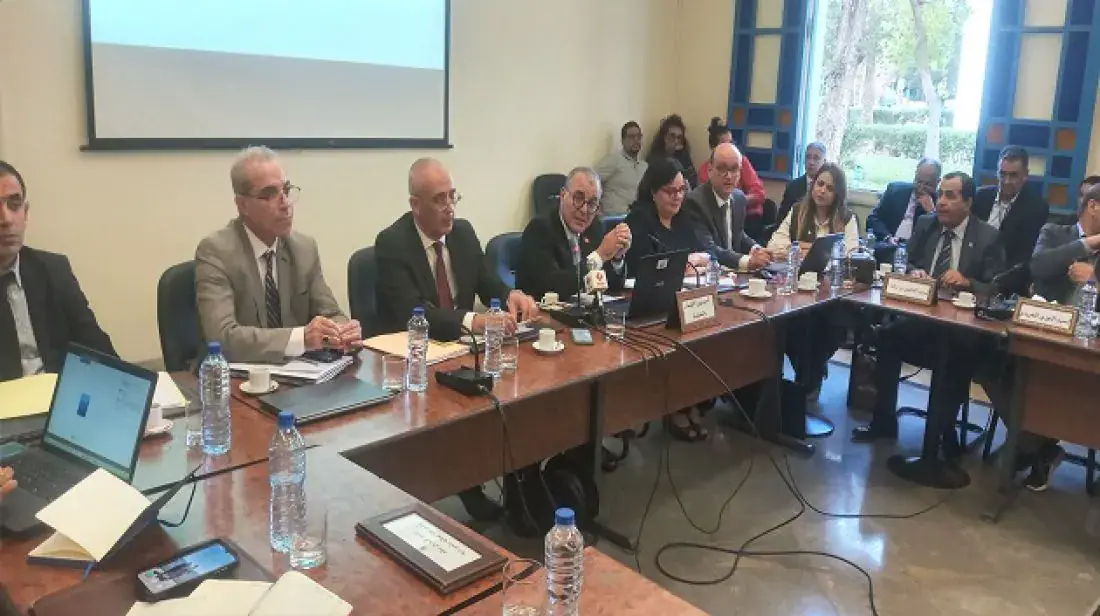
Tunisia's economy has shown a relative ability to withstand internal and external shocks, according to Minister of Economy and Planning Samir Abdel Hafiz. He made these comments during a hearing by the Finance and Budget Committees of the House of People's Representatives and the National Council of Regions and Districts on the draft economic budget for 2027. Abdel Hafiz highlighted the state's ongoing efforts to enhance its social role and support public institutions.
The Minister emphasized that the state is working to restore the productive capacities of public institutions with the launch of new programs and projects included in the 2026-2030 development plan. This plan aims to drive economic growth and improve the country's overall performance. Abdel Hafiz's statements come amid a challenging international environment, characterized by rising global uncertainty.
Global uncertainty has increased due to ongoing wars and geopolitical conflicts, as well as rising oil prices, which are expected to impact the global and national economies. Tunisia is navigating these challenges, and Abdel Hafiz's comments suggest that the country is working to mitigate their effects. The Minister's hearing was an opportunity for him to outline the government's economic strategy.
The 2026-2030 development plan is a key component of Tunisia's economic strategy, and it includes a range of initiatives aimed at driving growth and improving living standards. Abdel Hafiz's comments suggest that the government is committed to implementing this plan and achieving its objectives. The plan's success will depend on various factors, including the global economic environment.
Tunisia's economy has faced significant challenges in recent years, including a decline in investment and a slowdown in growth. The government's efforts to restore the productive capacities of public institutions and drive economic growth are critical to addressing these challenges. Abdel Hafiz's comments suggest that the government is working to address these issues.
The Minister's hearing was an opportunity for him to provide an update on the government's economic plans and policies. Abdel Hafiz's comments suggest that the government is committed to achieving its economic objectives, despite the challenges posed by the global economic environment. The success of these efforts will depend on various factors, including the implementation of the 2026-2030 development plan.
Tunisia's economic performance will be closely watched in the coming months, as the country navigates a challenging global environment. Abdel Hafiz's comments suggest that the government is working to mitigate the effects of external shocks and drive economic growth. The country's economic prospects will depend on various factors, including the implementation of its development plan and the global economic outlook.
Key points
- Tunisia's economy has shown relative resilience in the face of internal and external shocks.
- The government is working to restore the productive capacities of public institutions and drive economic growth.
- The 2026-2030 development plan is a key component of Tunisia's economic strategy.