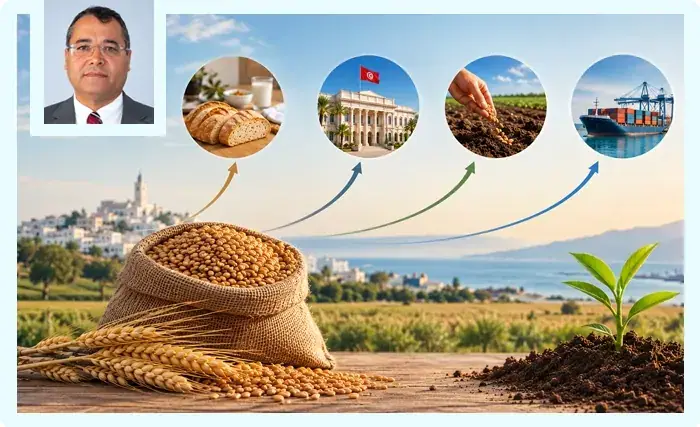
Tunisia's national accounts reveal a concerning trend of low investment and high consumption, with the country's production and imports mainly directed towards meeting immediate needs rather than preparing for the future. According to the National Institute of Statistics (INS), the final consumption reached 167.8 billion dinars in 2025, accounting for 97.8% of the country's GDP. This leaves little room for investment and savings, with the national savings rate estimated at 6.0% of the gross national disposable income in 2025.
The country's public consumption has increased significantly, reaching 31.4 billion dinars in 2025, which is 18.3% of the GDP. However, the government's savings rate is negative, and its financing needs have reached 8.0 billion dinars, equivalent to 4.7% of the GDP. The Central Bank of Tunisia (BCT) has been providing advances to the government to meet its financing needs, with the outstanding amount increasing to 19.85 billion dinars as of September 30, 2026.
Investment in Tunisia remains low, with the gross fixed capital formation reaching 26.5 billion dinars in 2025, accounting for 15.4% of the GDP. This rate has been relatively stable since 2021 but is still far from the 25% threshold generally associated with sustained growth. The investment breakdown shows that non-financial corporations and households have increased their investments, while public administrations have reduced theirs.
The country's trade balance tells a similar story, with the deficit reaching 21.0 billion dinars in the first nine months of 2026, up from 16.7 billion dinars in the same period last year. The import growth rate has outpaced export growth, with imports of equipment, consumer goods, and energy increasing significantly. However, there are some positive trends, such as the growth in olive oil exports, which reached 4.0 billion dinars in the first nine months of 2026.
The agricultural sector has also shown improvement, with a good cereal harvest in 2026. However, the FAO estimates that Tunisia will still need to import around 1.8 million tons of wheat in 2026-2027, which is more than half of its needs. The country's reliance on imports and low investment rate are concerns that need to be addressed to ensure sustainable economic growth.
The author, Taoufik Rajhi, notes that borrowing to invest in the future is different from borrowing to meet immediate needs. While Tunisia's current account deficit is financed through external borrowing, the country's low savings rate and high consumption levels are challenges that need to be addressed. The government's efforts to increase investment and promote economic growth are crucial to improving the country's economic prospects.
In conclusion, Tunisia's economic challenges are evident in its national accounts, with low investment, high consumption, and a reliance on imports. The country's growth prospects depend on its ability to increase investment, promote savings, and improve its trade balance. The government's policies and the Central Bank's actions will play a crucial role in addressing these challenges and ensuring sustainable economic growth.
Key points
- Tunisia's low investment rate and high consumption levels are major concerns for the country's economic growth prospects.
- The country's reliance on imports and low savings rate are challenges that need to be addressed.
- Borrowing to invest in the future is different from borrowing to meet immediate needs, and Tunisia needs to focus on investing in its future.