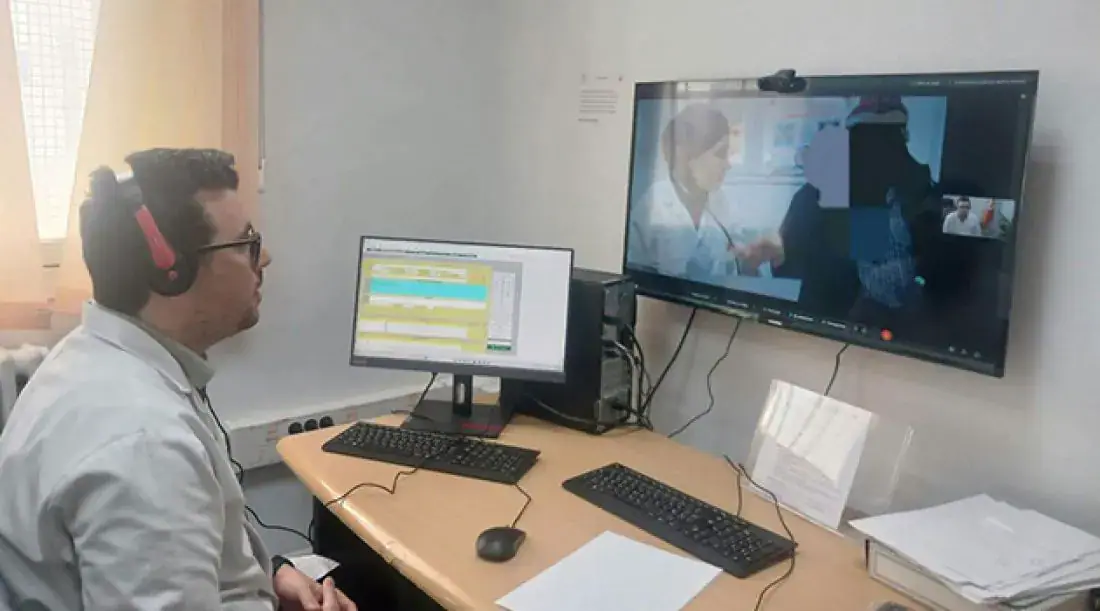
Tunisia's digital hospital, located in Sfax, has started offering remote medical consultations in several specialties, including neurology, cardiology, and nephrology. This initiative aims to bring healthcare services closer to citizens and facilitate their follow-up care. According to a statement released by the Ministry of Health, the hospital's remote clinics are designed to reduce the burden on hospitals and waiting times, while also minimizing travel costs for patients.
The remote clinics in neurology have been launched at the regional hospital in Qafsa, in collaboration with the neurology department at the University Hospital of Habib Bourguiba in Sfax. Similarly, remote cardiology consultations have been initiated at the local hospital in Skhira, in partnership with the cardiology department at the University Hospital of Hedi Chaker in Sfax. Additionally, the nephrology department at the same hospital is now offering remote consultations for kidney diseases.
These remote clinics are operated according to a weekly schedule, coordinated with the central team of the digital hospital at the Ministry of Health. The Ministry plans to add more specialties and connect other health institutions in neighboring governorates. This development is part of a broader effort to enhance healthcare services in Tunisia and make specialized care more accessible to the population.
The digital hospital's services are designed to benefit patients who require specialized care but face challenges in accessing it due to geographical or logistical constraints. By providing remote consultations, the hospital aims to reduce the need for patients to travel long distances for medical care, thereby saving time and resources.
The Ministry of Health has emphasized that the digital hospital's remote clinics are a key component of its strategy to improve healthcare services in Tunisia. The initiative is expected to have a positive impact on the quality of care and patient outcomes, particularly for those living in remote or underserved areas.
The development of the digital hospital in Sfax is a significant step towards enhancing Tunisia's healthcare system. The hospital's remote clinics have the potential to increase access to specialized care, improve patient satisfaction, and reduce healthcare costs. As the initiative continues to expand, it is likely to have a lasting impact on the country's healthcare landscape.
The Ministry of Health has confirmed that the digital hospital will continue to monitor patients remotely, in coordination with local medical teams. This approach ensures that patients receive comprehensive care and follow-up support, even after their initial consultation. By leveraging technology and collaboration, Tunisia's digital hospital is poised to make a meaningful difference in the lives of its citizens.
Key points
- The digital hospital in Sfax offers remote medical consultations in neurology, cardiology, and nephrology.
- The initiative aims to reduce the burden on hospitals, waiting times, and travel costs for patients.
- The Ministry of Health plans to add more specialties and connect other health institutions in neighboring governorates.