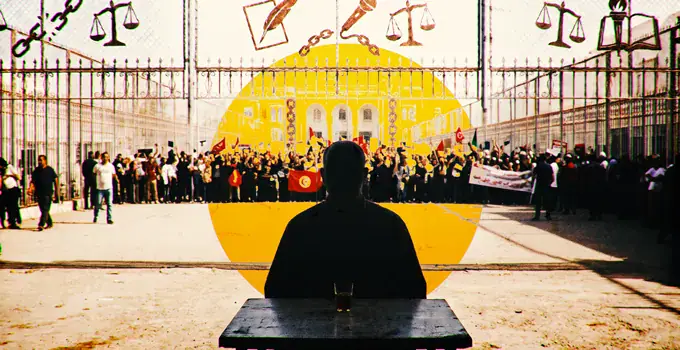
In Tunisia, the slogan "Liberties, liberties, the police state is dead!" became a rallying cry during protests after the 2011 revolution, symbolizing the fall of the single-party regime and the rejection of police control. However, this slogan is now often met with derision as the country witnesses a return to political trials, repressed freedoms, and imprisonment for those who denounce arbitrariness and authoritarianism.
Many Tunisians have been convicted and sentenced to prison for statements or publications on social media, with some receiving two-year prison sentences. N. F., a defendant, described the experience of being convicted for a Facebook post, saying it was a heavy burden for him and his family to bear.
On September 19, a demonstration in support of the "Sumud" Flotilla prisoners was organized in front of the Tunisian National Journalists' Union, followed by a wave of arbitrary arrests and prosecutions targeting activists from different sides. Those arrested were detained for 21 days before being sentenced to six months in prison with a suspended sentence.
According to the association "Intersection," 59 trials were initiated against Tunisians between 2020 and 2026, with 21 defendants still in detention for exercising their right to freedom of expression and peaceful demonstration. The sanctions imposed on those tried for exercising their right to freedom of expression or participating in demonstrations do not stop at their trial.
Many of those arrested after the solidarity march with the Sumud Flotilla prisoners face various obstacles related to their detention period, including difficulties in resuming work, loss of administrative assistance, and psychological or physical illnesses.
Those convicted of opinion-related offenses often face social exclusion and stigma after their release, with their families and social environments distancing themselves. The association "Intersection" collected testimonies from victims of judicial prosecutions related to freedom of expression, highlighting the legal, social, economic, and psychological repercussions they suffered.
The organization's co-author, Elyes Jebali, explained that they encountered difficulties in identifying victims pursued for exercising their right to freedom of expression due to fear of executing suspended sentences or returning to prison.
Key points
- Despite amendments to decree 54, Tunisia's dissenting voices continue to face judicial harassment and sanctions.
- The country's authorities have not ceased in their efforts to suppress freedom of expression and peaceful demonstration.
- Detainees of opinion in Tunisia face not only imprisonment but also post-release penalties and social exclusion.