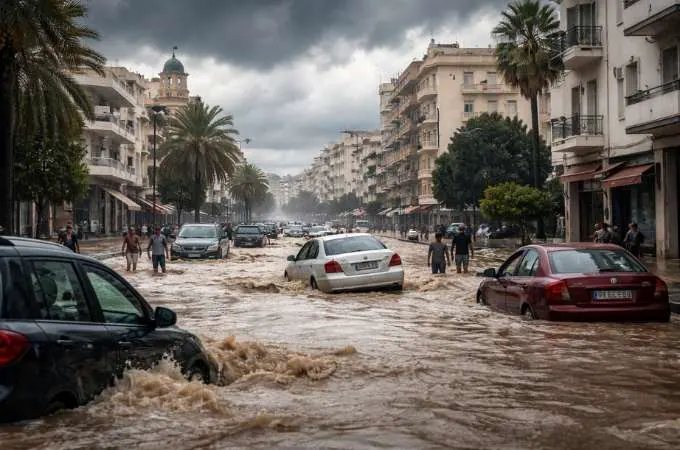
Tunisia, a North African nation, is grappling with the consequences of climate change, as extreme weather events test the country's resilience and governance. The nation's experience with natural disasters has led to a perception that "Mother Nature" plays a role in regulating and justifying the actions of those in power. The current administration, led by President Kaïes Saïed, has faced criticism for its handling of climate-related disasters.
Between 2023 and 2025, Tunisia experienced three consecutive years of above-average rainfall, which helped alleviate financial pressures and supported agricultural production. This period of favorable weather allowed the country to partially overcome an economic crisis triggered by a $1.9 billion loan refusal from the International Monetary Fund (IMF). The improved climate conditions enabled Tunisia to reduce its imports of food products and allocate more resources to debt servicing.
However, the favorable climate conditions were not leveraged to implement necessary structural reforms, modernize infrastructure, or enhance the country's resilience to external shocks. Instead, the administration's inaction has been attributed to incompetence and a lack of preparedness for climate-related disasters. This has led to criticism that the government has not prioritized sustainable development or invested in disaster risk reduction and management.
In 2026, Tunisia faced a series of devastating climate-related disasters, including deadly floods in January and February, followed by a severe heatwave in the summer months. Temperatures soared to 50 degrees Celsius in some regions, resulting in widespread power outages and water shortages. The government's inability to mitigate the effects of these disasters has sparked widespread discontent among the population.
The situation worsened in September 2026, when the country experienced devastating autumn floods, which caused further loss of life and damage to infrastructure. The disasters have highlighted the inadequacy of Tunisia's infrastructure, including its road network and disaster management systems. The government's response to these crises has been criticized for being inadequate and ineffective.
Many Tunisians believe that the current administration's inability to address the country's socio-economic challenges has led to "Mother Nature" exacting a form of revenge. The perception is that the government's incompetence and lack of preparedness have exacerbated the effects of climate-related disasters. As a result, the administration's legitimacy and effectiveness have been called into question.
The recent climate-related disasters in Tunisia serve as a stark reminder of the need for effective governance, infrastructure development, and disaster risk reduction and management. The country's experience highlights the importance of prioritizing sustainable development, investing in climate resilience, and addressing the needs of its population. The government must take concrete steps to address these challenges and demonstrate its commitment to the well-being and safety of its citizens.
Key points
- The recent floods and heatwaves in Tunisia have exposed weaknesses in the country's infrastructure and governance, highlighting the need for effective disaster risk reduction and management.
- The favorable climate conditions between 2023 and 2025 were not leveraged to implement necessary structural reforms or modernize infrastructure, exacerbating the country's vulnerability to climate-related disasters.
- The government's response to the climate-related disasters has been criticized for being inadequate and ineffective, sparking widespread discontent among the population.