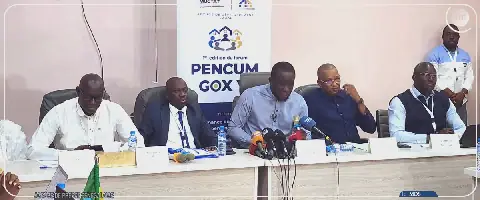
A study conducted by the Central Bank of Tunisia's Financial Inclusion Observatory, in collaboration with the United Nations Development Programme, has shed light on the limited access to financial services for women in Tunisia. The study, which surveyed 2,057 individuals, found that women in seven governorates, including Tataouine, Kébili, Medenine, Gabès, Tozeur, Gafsa, and Kairouan, face significant barriers to accessing financial services.
According to the study, only 18% of women in these governorates have access to banking services, while 98% rely on cash for their transactions. Furthermore, less than 0.3% of women own electronic wallets. The study's findings highlight the need for greater financial inclusion and accessibility for women in Tunisia. The study aimed to diagnose the reality of financial inclusion among young people and women and identify the obstacles that prevent them from benefiting from financial services.
The study revealed that women's access to financial services is hindered by multiple factors, including financial dependence on family members, limited financial autonomy, and a lack of trust in the banking sector. Additionally, low incomes limit women's ability to open bank accounts and achieve financial independence. The study also found that many women struggle with complex banking terminology and a lack of information about available services.
The study's results also showed that 32% of women believe that financial institutions do not provide sufficient information about their products and services. Women prefer awareness campaigns on social media to simplify financial information and help them understand services and how to use them. The study's findings emphasize the importance of trust in financial institutions, with the Tunisian Post enjoying the highest level of trust among respondents, followed by commercial banks and insurance companies.
To address these challenges, the Financial Inclusion Observatory has launched a financial literacy caravan in the governorates concerned, in partnership with the German Development Cooperation and the United Nations Development Programme. The caravan aims to raise awareness among women, particularly entrepreneurs and project initiators, about the importance of financial inclusion and introduce them to available products and services.
The observatory's director, Rajae Dahmani, emphasized that the initiative seeks to bridge the gap between financial institutions and target groups, promoting direct communication to clarify the nature of financial services and how to benefit from them. The observatory has also developed a national financial education program targeting five key groups, including children, young people, women, public and private sector employees, and micro, small, and medium-sized enterprises.
The program aims to promote financial inclusion and improve access to financial services for all Tunisians. Dahmani noted that the observatory will continue to implement awareness projects targeting women, young people, entrepreneurs, and project initiators, as well as organize annual training and awareness sessions. The study's findings and recommendations will inform policy decisions and strategies to promote financial inclusion in Tunisia.
Key points
- Limited access to financial services for women in Tunisia
- Need for greater financial inclusion and accessibility for women
- Importance of trust in financial institutions and awareness campaigns