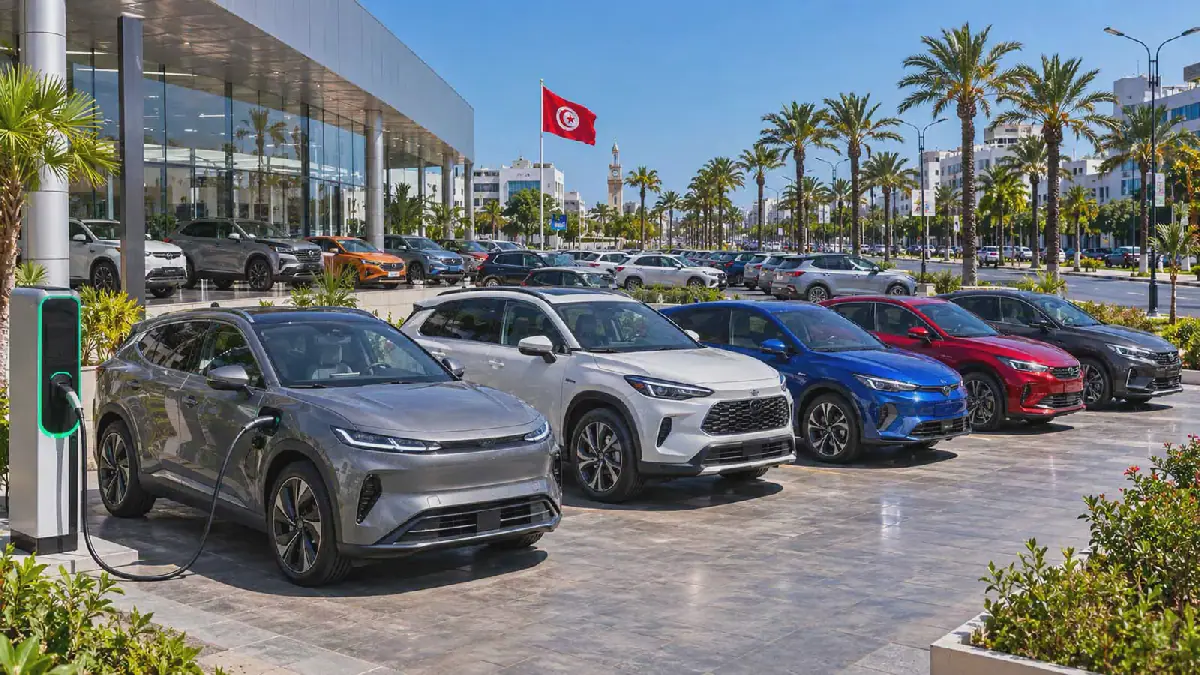
The Tunisian automotive market has experienced significant growth in 2026, with 12 new brands entering the market, including 11 Chinese and one South Korean brand. A 13th brand is set to launch on December 15, and a 14th brand is already present in the market, albeit without an official launch date. This influx of new brands has increased competition and diversified the market offerings. The market has also seen a rise in electric and hybrid vehicles, aligning with global trends.
According to Hédi Hamdi, an expert in the automotive sector, the number of new vehicles registered in Tunisia reached 60,375 units as of October 31, 2026. This represents a 5.5% increase compared to the same period in 2025. The sales data only includes vehicles imported by official dealerships and does not account for privately imported vehicles or used cars. The growth in sales is a positive indicator for the market, which has been steadily recovering.
Electric vehicles have seen a remarkable surge in sales, with 3,796 units registered as of October 31, 2026, representing a 100% increase compared to 2025. This growth can be attributed to the favorable treatment of electric vehicles, which are exempt from the quota system applied to other vehicles. The government's policy aims to encourage the adoption of electric mobility, and the results are evident in the sales data.
Hybrid vehicles, particularly plug-in hybrids, are also gaining traction in the Tunisian market. As of October 31, 2026, 3,595 plug-in hybrid vehicles were registered, indicating a growing interest in this category. These vehicles offer consumers a transition phase towards electric mobility, allowing them to adapt to new technology without drastically changing their driving habits.
The increasing diversity of brands and technologies has provided Tunisian consumers with a wider range of choices, catering to different needs and financial capabilities. However, the top five brands in the market are still dominated by traditional and historically established manufacturers. The expert predicts that hybrid vehicles will continue to play a significant role in 2027, provided that fiscal incentives for this category are maintained.
Despite the positive trends, the sector faces challenges related to import operations. A circular published by the Central Bank of Tunisia in March has complicated import procedures for dealerships, leading to delays in delivery times. The situation has been further exacerbated by maritime transport disruptions due to the conflict in the Gulf region, which has affected supply chains and increased import costs.
The outlook for 2027 depends on new regulatory measures and the continuation of fiscal incentives. The market's evolution will be closely watched, as it has the potential to become a significant player in the region. The growth of electric and hybrid vehicles is expected to continue, driven by government policies and consumer interest.
Key points
- The Tunisian automotive market has seen 12-14 new brands enter the market in 2026, mostly Chinese.
- Electric vehicle sales have increased by 100% in 2026 compared to 2025.
- Hybrid vehicles, particularly plug-in hybrids, are gaining popularity in Tunisia.