In northern Togo, many children rely on the midday meal at school as their most reliable meal of the day. The national school feeding program, supported by Germany, has reached over 48,000 students in 141 public primary schools in the Kara and Savanes regions. This initiative aims to improve nutrition and education outcomes for students in these areas. The program has been making a positive impact on the lives of students and local communities.
The school feeding program, launched in 2008 by the Togolese government, addresses the issue that hungry children often struggle to learn and may eventually drop out of school. By providing meals, the program helps to combat malnutrition and increase student retention, particularly in rural areas. In 2025, the program provided meals to 161,630 students nationwide, according to the National Agency for Support to Development at the Base (ANADEB). This achievement demonstrates the program's potential to make a significant difference in the lives of students.
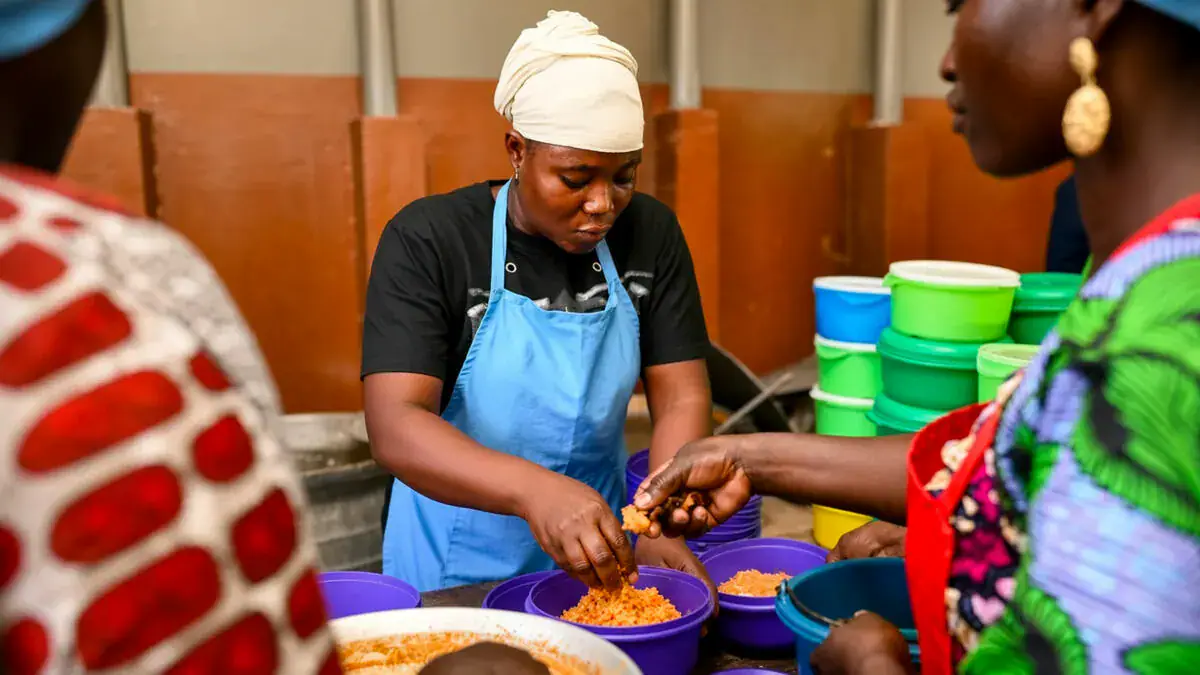
The program not only provides meals but also generates income for local women who prepare and serve the food. These women, affectionately known as "mamans-cantines," play a vital role in the program's success. Additionally, the program supports local farmers by purchasing products from them, creating a regular market for their produce. This approach helps to keep the money within the community and promotes local economic development.
Germany's support for the program comes through its development bank, KfW, and the Federal Ministry for Cooperation and Development (BMZ), in partnership with the World Food Programme (WFP). The German Embassy in Togo has highlighted the importance of this support, which has contributed to the program's success. The partnership aims to create a sustainable food system that benefits local communities and improves education outcomes.
To ensure the program's long-term sustainability, partners are investing in school gardens, seeds, and fertilizers for agricultural cooperatives, as well as modern kitchens and storage facilities. The program is also being digitalized through the School Connect platform, which will improve management and efficiency. These efforts aim to create a more solid local food system that benefits future generations.
The school feeding program has become an essential part of the Togolese government's strategy to address education and nutrition challenges. By supporting local communities and promoting sustainable agriculture, the program contributes to reducing inequalities among children and improving education outcomes. The program's impact extends beyond the meal itself, aiming to create a more equitable and sustainable food system.
As the program continues to grow and expand, its partners remain committed to supporting its development. With a focus on sustainability and community engagement, the school feeding program is well-positioned to make a lasting impact on the lives of students and local communities in Togo. The program's success will depend on continued support and investment from partners and stakeholders.
Key points
- The program provided meals to 161,630 students nationwide in 2025.
- Over 48,000 students in northern Togo benefit from the school feeding program.
- The program aims to create a sustainable local food system that benefits future generations.
Reporting sources
- Vive les mamans-cantines · republicoftogo.com