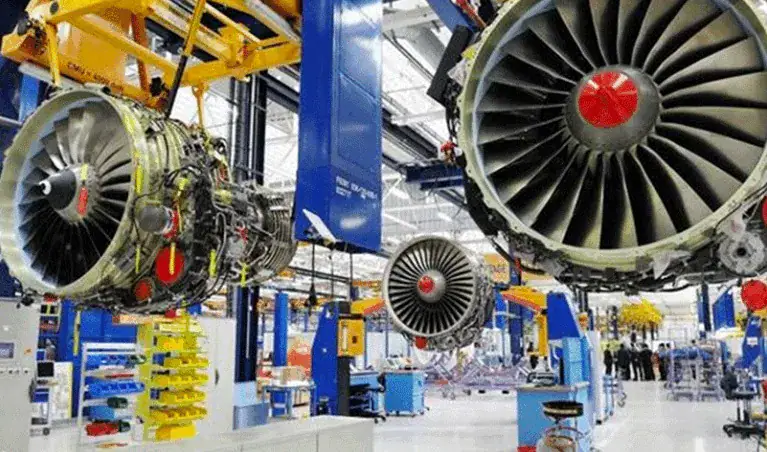
The aeronautics industry in Tunisia has become a significant contributor to the country's economy, accounting for 4% of its Gross Domestic Product (GDP). According to the Ministry of Industry, Mines, and Energy's strategy for industrial and innovation development by 2035, this sector has experienced remarkable growth. Between 2010 and 2018, exports in the aeronautics industry multiplied by seven, reaching 480 million euros, approximately 1.6 billion dinars.
France is Tunisia's primary commercial partner in the aeronautics sector, absorbing 88% of its exports, followed by the United Kingdom with 5%, and the United States with 4%. The industry has expanded to comprise over 81 companies, a significant increase from just 10 in 2004. This growth has led to the creation of more than 17,000 jobs, particularly benefiting engineers, technicians, and qualified professionals.
Several international groups have established a presence in Tunisia, including Airbus through Stelia Aerospace, Safran, Hutchinson, Latecoere, and Zodiac Aerospace, alongside the local group Telnet. The industry is heavily focused on exports and relies on infrastructure such as the El Mghira aeronautical industrial zone and the Centre of Excellence for Aeronautics Industry (CEMIA).
Tunisia aims to diversify its aeronautics industry by developing high-value-added activities, including maintenance, repair, and overhaul (MRO) of aircraft, which is estimated to have a 20% profit margin. The country also plans to focus on drones, nanosatellites, composite materials, and 3D printing. By expanding into these areas, Tunisia hopes to strengthen its industrial position and become a regional hub for aeronautical services.
The development of these new specialties could enable Tunisia to capitalize on its existing strengths and become a key player in the African and Middle Eastern markets. The industry's growth has been driven by a combination of foreign investment and local expertise, with the government providing support through initiatives such as the CEMIA.
As the aeronautics industry continues to evolve, Tunisia is well-positioned to benefit from emerging trends and technologies. The country's strategic location, skilled workforce, and favorable business environment make it an attractive destination for international companies looking to establish a presence in the region.
With its sights set on becoming a major player in the global aeronautics industry, Tunisia will need to continue investing in its infrastructure, workforce, and technology. By doing so, the country can build on its existing successes and create new opportunities for growth and development.
Key points
- Tunisia's aeronautics industry contributes 4% to the country's GDP.
- The industry has experienced significant growth, with exports multiplying by seven between 2010 and 2018.
- Tunisia aims to develop high-value-added activities, including MRO, drones, nanosatellites, composite materials, and 3D printing.