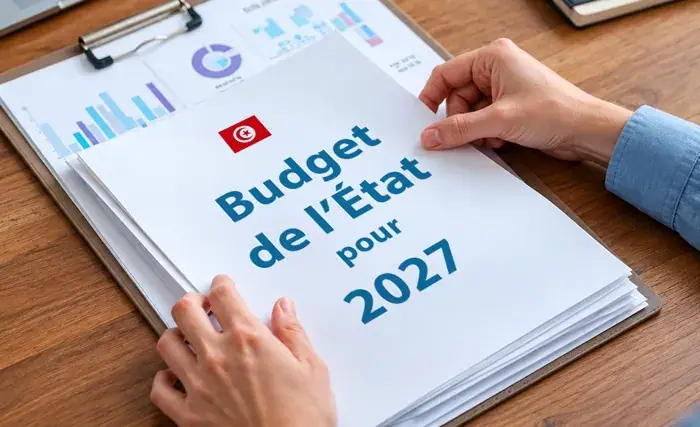
The Tunisian government has submitted the 2027 state budget to the Assembly of People's Representatives and the National Council of Regions and Districts for approval. The budget outlines projected revenues of 54.28 billion dinars and expenditures of 68.895 billion dinars. The government's priorities include facilitating the creation and financing of projects, promoting social inclusion, and improving public services.
The 2027 budget focuses on several key axes, including facilitating the creation and financing of projects, particularly for small and medium-sized enterprises. The government aims to alleviate obstacles faced by project owners, provide easier access to financing, and reduce the tax burden. These measures are expected to stimulate job creation and economic growth.
The budget also emphasizes the state's social role and aims to strengthen economic inclusion. The government plans to enhance social protection, support social security regimes, and improve the healthcare system. These efforts aim to promote social and economic justice and improve living standards for citizens across different sectors and regions.
The 2027 budget prioritizes several fundamental areas, including food security, water security, and energy security. The government will finance projects in agricultural production, support small farmers, and promote the olive oil sector. Additionally, the government will invest in large-scale water mobilization and transfer projects, aiming to improve water resource management and reduce consumption.
The budget also focuses on supporting public enterprises by alleviating their financial burdens and reducing their debt. This aims to improve their financial situation, ensure their sustainability, and enhance their performance. Furthermore, the government seeks to promote tax equity and integrate the parallel sector, preserving economic power for enterprises and citizens, supporting investment, and reducing tax pressure.
The 2027 budget authorizes the collection of revenues totaling 54.28 billion dinars, comprising 49.6 billion dinars in tax revenues, 4.33 billion dinars in non-tax revenues, and 350 million dinars in donations. The government's revenue projections are based on current economic trends and aim to support the budget's expenditure plans.
The Tunisian government's 2027 budget reflects its commitment to promoting economic growth, social inclusion, and public service improvement. The budget's key priorities and axes aim to address the country's economic and social challenges, ensuring a more sustainable and equitable future for its citizens.
Key points
- The 2027 budget outlines projected revenues of 54.28 billion dinars and expenditures of 68.895 billion dinars.
- The government prioritizes food security, water security, and energy security, investing in agricultural production, water management, and renewable energy.
- The budget aims to promote social inclusion, improve public services, and support public enterprises, ensuring a more sustainable and equitable future for Tunisian citizens.