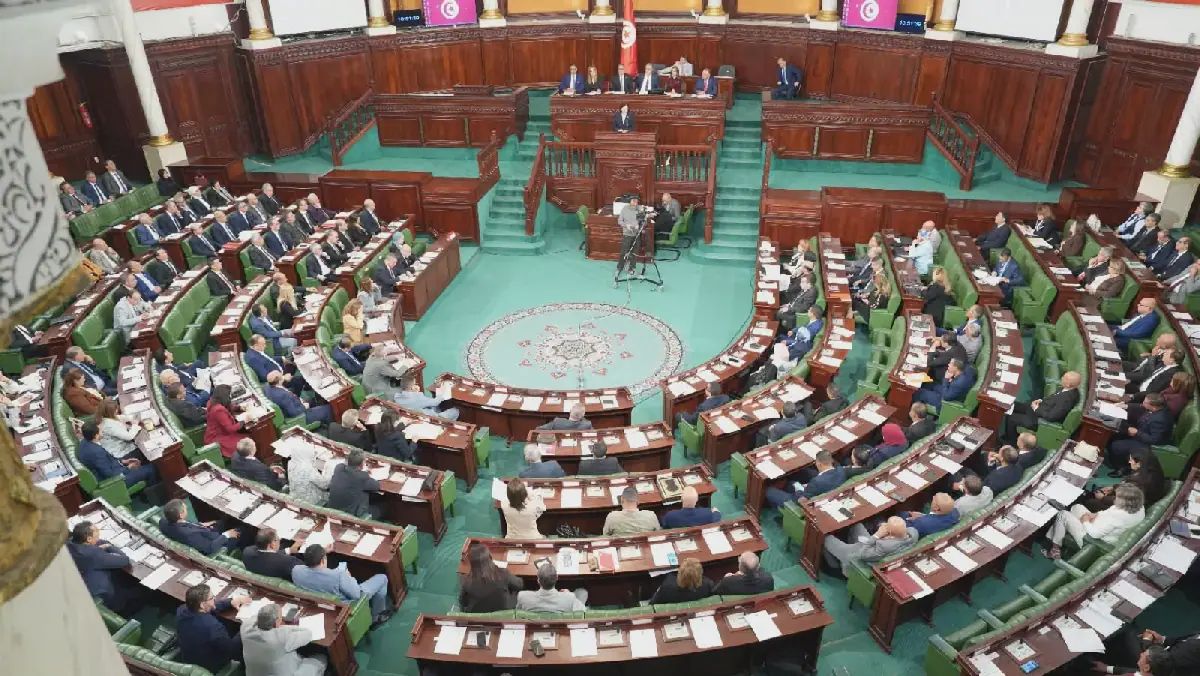
The Tunisian parliament's joint general session reconvened on November 10, 2026, to continue discussing the 2027 state budget and economic plan. The session was attended by Parliament Speaker Ibrahim Boudherbala, government members, and accompanying delegations. The discussion centered on several key issues, including reforming public institutions, activating regulatory laws, combating drugs, and modernizing and digitizing the administration.
Deputy Fathi Rajab highlighted the successes of security forces in combating drugs and smuggling, emphasizing the need for continued efforts to address the issue. He also called for granting ministers the necessary powers to make decisions, subject to oversight by the President, and advocated for increasing their salaries to improve government performance. Additionally, Rajab warned against interference in Tunisia's internal affairs, affirming the country's commitment to its full sovereignty.
Deputy Kamel Farraj considered the government's statement to require a comprehensive review of the legislative system, starting with the investment and exchange codes. He noted that the statement lacked mechanisms to address the issue of resource scarcity and stressed that the effectiveness of government policies requires converting promises into concrete actions that drive development and create jobs.
Deputy Tayeb Tlalbi called for a revolution in administration by filling vacancies with necessary competencies, restructuring public services, and digitizing them. He viewed the licensing system as a gateway to clientelism and corruption, feeding into the rentier economy, and emphasized that implementing the state budget project requires breaking free from bureaucracy.
In the agricultural sector, Deputy Lotfi Saadawi urged the removal of administrative obstacles hindering investment in the sector and the activation of Law No. 18 for those who have been unemployed for a long time. He requested that the government provide explanations for the delay in its implementation. Meanwhile, Deputy Badredine Qamoudi emphasized the need to transform public institutions into a wealth-generating lever, calling on the state to inventory and update its assets.
Deputy Noura Chabrack highlighted the importance of the Budapest Convention, calling on the government to establish a comprehensive program to implement its requirements, given its connection to the country's security. Deputy Aymen Marraoui also emphasized the need to establish the necessary mechanisms and policies to build resilient institutions by involving all Tunisians in the national construction process.
The discussion of the 2027 budget plan highlights the Tunisian government's focus on addressing key challenges facing the country, including public sector reform, administrative modernization, and combating drugs. The parliament's recommendations and calls for action aim to improve government performance, promote development, and create jobs, ultimately contributing to the country's economic growth and stability.
Key points
- The Tunisian parliament's discussion of the 2027 budget plan emphasizes the need for public sector reform, administrative modernization, and combating drugs.
Reporting sources
- Établissement de la Radiodiffusion-Télévision Tunisienne · Établissement de la Radiodiffusion-Télévision Tunisienne