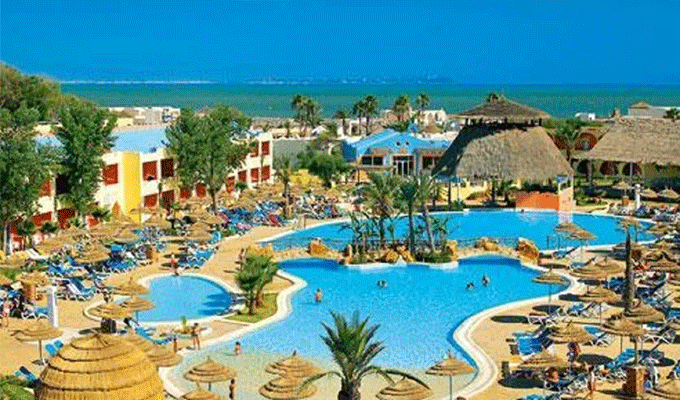
The Tunisian tourism industry has received a significant boost with the reinstatement of the country in the Michelin Green Guide after a decade-long absence. The new edition, set to be commercialized on September 25, features 432 pages and highlights the country's diverse offerings, including Carthage, Sidi Bou Saïd, Djerba, Matmata, Ksar Ghilane, the Sahara, and various oases. This development is expected to enhance the country's visibility and promote its rich cultural heritage.
The return of Tunisia to the Michelin Green Guide is largely symbolic, but it also presents an opportunity for the country's tourism sector to diversify and expand. The guide showcases a range of destinations, including coastal areas, historical sites, and desert landscapes, which can help to promote a more nuanced understanding of Tunisia's tourism offerings. This, in turn, can lead to increased economic benefits for local communities and businesses.
While the presence in a prestigious guide like Michelin Green Guide is no guarantee of increased tourist arrivals or revenue, it can play a significant role in shaping travelers' perceptions and preferences. The guide's focus on lesser-known destinations and experiences can encourage visitors to explore beyond the traditional tourist areas and engage with local cultures. This, in turn, can lead to a more sustainable and equitable tourism industry.
The real impact of Tunisia's reinstatement in the Michelin Green Guide will be measured in the coming months, as visitors and tourism operators respond to the new edition. The guide's publishers and Tunisian tourism authorities will be closely monitoring the situation to assess the guide's effectiveness in promoting tourism and economic growth. Key indicators will include visitor numbers, length of stay, and expenditure patterns.
To maximize the benefits of the guide, Tunisian tourism operators and authorities will need to work together to develop and promote a range of itineraries and experiences that showcase the country's diverse attractions. This will require investment in infrastructure, services, and marketing, as well as a commitment to sustainable tourism practices. By doing so, Tunisia can ensure that its tourism industry is both economically viable and environmentally responsible.
The Michelin Green Guide is widely regarded as one of the most influential and respected travel guides in the world, with a reputation for providing authoritative and insightful recommendations. Tunisia's reinstatement in the guide is a testament to the country's rich cultural heritage and its potential as a tourist destination. As the tourism industry continues to evolve, Tunisia will need to adapt and innovate to remain competitive and capitalize on emerging trends and opportunities.
The reinstatement of Tunisia in the Michelin Green Guide has significant implications for the country's tourism industry, which has faced challenges in recent years. By leveraging the guide's global reach and reputation, Tunisia can promote its unique attractions and experiences to a wider audience, while also showcasing its commitment to sustainable tourism practices and cultural preservation. The coming months will be crucial in determining the long-term impact of this development.
Key points
- The Michelin Green Guide features 432 pages and highlights Tunisia's diverse tourism offerings.
- The guide's focus on lesser-known destinations can encourage visitors to explore beyond traditional tourist areas.
- The impact of Tunisia's reinstatement in the guide will be measured by visitor numbers, length of stay, and expenditure patterns.