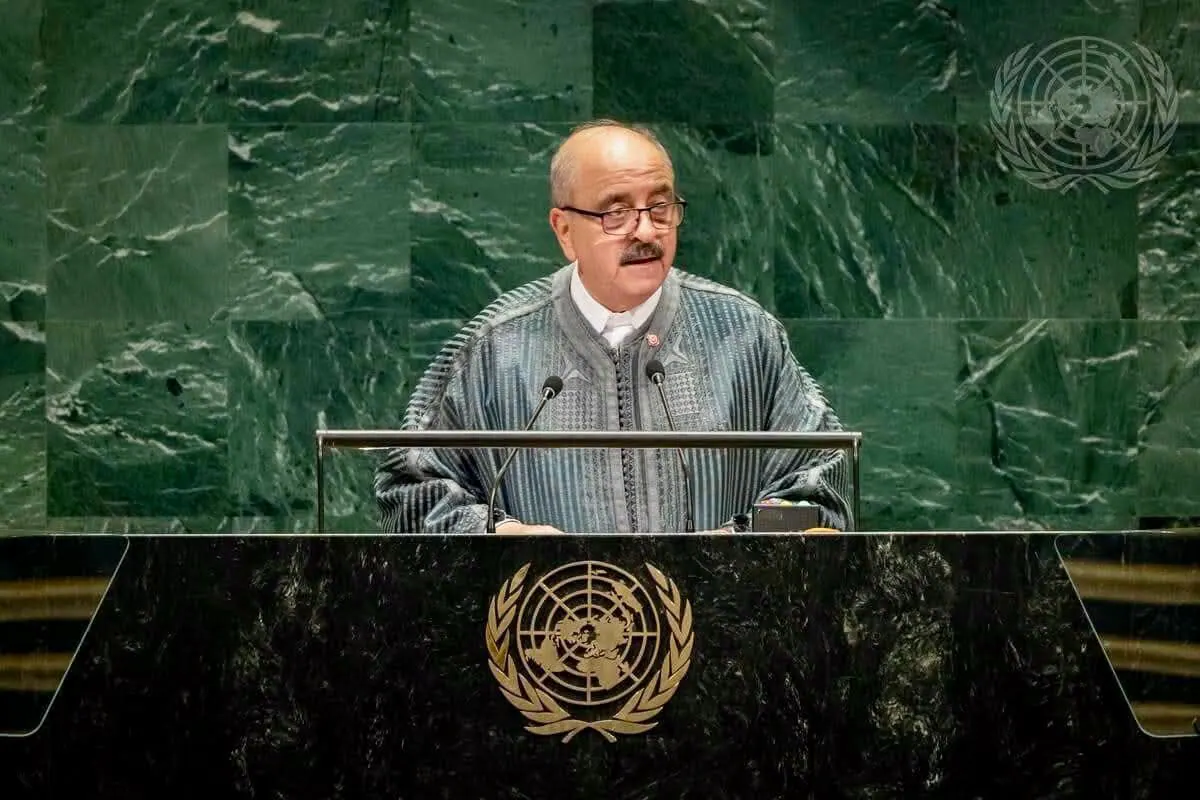
Tunisia's Foreign Minister, Mohamed Ali Nafti, has emphasized the country's commitment to its reform process, enhancing human rights, and empowering women and youth. Speaking at the 81st UN General Assembly in New York, Nafti highlighted Tunisia's efforts to promote individual and collective freedoms, despite challenges. He stressed the importance of respecting human rights and fundamental freedoms, as enshrined in the country's 2022 constitution.
Nafti outlined Tunisia's approach to development, focusing on self-reliance, attracting investments, and fostering economic partnerships based on mutual benefits and respect. He noted that the country's reform process, initiated in July 2021, aims to consolidate democracy, ensure citizens' rights, and meet the aspirations of the Tunisian people. The minister emphasized the need to address economic, social, and environmental challenges to achieve sustainable development.
The minister highlighted the significance of women's and youth empowerment in Tunisia's development. He emphasized the need to eliminate all forms of violence and discrimination against women and to promote their participation in decision-making processes. Nafti noted that empowering women is crucial for Tunisia's growth and stability. He also stressed the importance of involving young people in the country's development, citing their energy and creativity as vital assets.
Nafti praised the Tunisian diaspora for their contributions to promoting the country's image and supporting development efforts. He assured that the government is committed to strengthening ties with the diaspora and providing them with necessary support. The minister also called for a comprehensive approach to addressing migration, taking into account its historical and humanitarian aspects.
The minister emphasized the need for international cooperation to address the root causes of migration, including conflicts, poverty, and economic disparities. He noted that Tunisia is committed to protecting the dignity and rights of migrants, while rejecting the notion of being a transit or destination country for irregular migrants. Nafti highlighted Tunisia's efforts to rescue and assist migrants in distress.
Nafti met with UN officials, including Deputy Secretary-General Rania Al-Mashat, to discuss cooperation and development issues. He also participated in a series of meetings on the sidelines of the UN General Assembly, focusing on strengthening bilateral relations and promoting Tunisia's interests.
The Tunisian government is working to strengthen its partnerships with international organizations, including the International Organization for Migration (IOM). Nafti's statement at the UN General Assembly reflects Tunisia's commitment to addressing global challenges, promoting human rights, and fostering sustainable development.
Key points
- Tunisia reaffirms its commitment to promoting human rights, empowering women and youth, and addressing migration challenges.
- The country emphasizes the importance of self-reliance, attracting investments, and fostering economic partnerships for sustainable development.
- Tunisia rejects the notion of being a transit or destination country for irregular migrants, while emphasizing its commitment to protecting their dignity and rights.