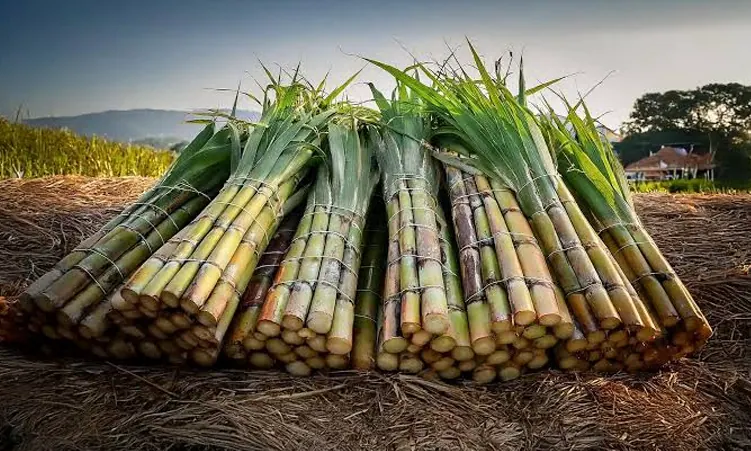
Namibia's reliance on imported sugar has raised concerns about food sovereignty and self-sufficiency. A visit by former agriculture minister Calle Schlettwein to Namib Mills revealed that the country does not produce a single grain of sugar, with the Marathon Sugar brand being packaged locally but containing entirely imported sweet crystals. This has sparked discussions about why Namibia cannot grow its own sugar, with farmers citing the country's limited water resources as a major constraint. Sugarcane is a water-intensive crop, requiring between 1,500 and 2,500 millimeters of rainfall annually, which Namibia's dry climate cannot provide.
The country's semi-arid and desert regions, poor water retention, and cool winters also pose challenges to sugarcane cultivation. Even in regions with higher rainfall, such as Kavango and Zambezi, large-scale sugarcane production would require massive irrigation projects, dams, and pumping systems, which are economically daunting. Furthermore, building and operating sugar mills essential for processing sugarcane quickly after harvest are prohibitively expensive. As a result, Namibia's sugar imports through the Southern African Customs Union (Sacu) remain cheaper than domestic production, with neighboring countries like South Africa, Eswatini, and Zambia already producing sugar at scale under ideal conditions.
However, experts suggest that Namibia can explore alternative sweetener production that fits its climate and economic realities. One promising candidate is sweet sorghum, also known locally as inswe, which requires far less water than sugarcane and matures in just three to five months. Sorghum is already widely cultivated across northern Namibia, making this a natural transition. The crop's stalks yield sweet juice rich in sucrose, glucose, and fructose, which can be boiled into syrup, refined into sugar, or fermented into bio-ethanol.
Sweet sorghum production could create jobs and reduce Namibia's reliance on imports, particularly if farmers in regions like Kavango produce sorghum syrup for local markets. Another option is sugar beet, a crop that generates nearly 20% of global sugar production and thrives in temperate, drier climates with poor soil and water conditions. Sugar beets could be planted during cooler winter months in regions like Hardap under drip irrigation, producing sucrose chemically identical to cane sugar.
Stevia, a plant that produces natural, zero-calorie sweeteners, is another alternative being considered. Stevia is extremely efficient under modern drip irrigation, offering massive sweetening capacity per liter of water applied. As the world becomes increasingly conscious of sugar consumption, stevia's potential as a low-calorie sweetener could provide a lucrative opportunity for Namibian farmers.
According to industry experts, sweet sorghum, sugar beet, and stevia production could provide a breakthrough for Namibia's agricultural sector, creating new economic opportunities and reducing the country's reliance on imported sugar. While challenges still exist, these alternatives offer a promising future for Namibia's sweetener production.
As Namibia explores these alternatives, stakeholders are optimistic about the potential for growth and development in the sector. With the right investment and support, the country could become a significant producer of sweet sorghum, sugar beet, and stevia, not only meeting domestic demand but also exporting to regional markets.
Key points
- Namibia's dry climate and limited water resources make sugarcane production unviable.
- Sweet sorghum, sugar beet, and stevia are being considered as alternative sweetener crops that fit Namibia's climate and economic realities.
- These alternative crops offer opportunities for job creation, reduced reliance on imports, and economic growth in Namibia's agricultural sector.