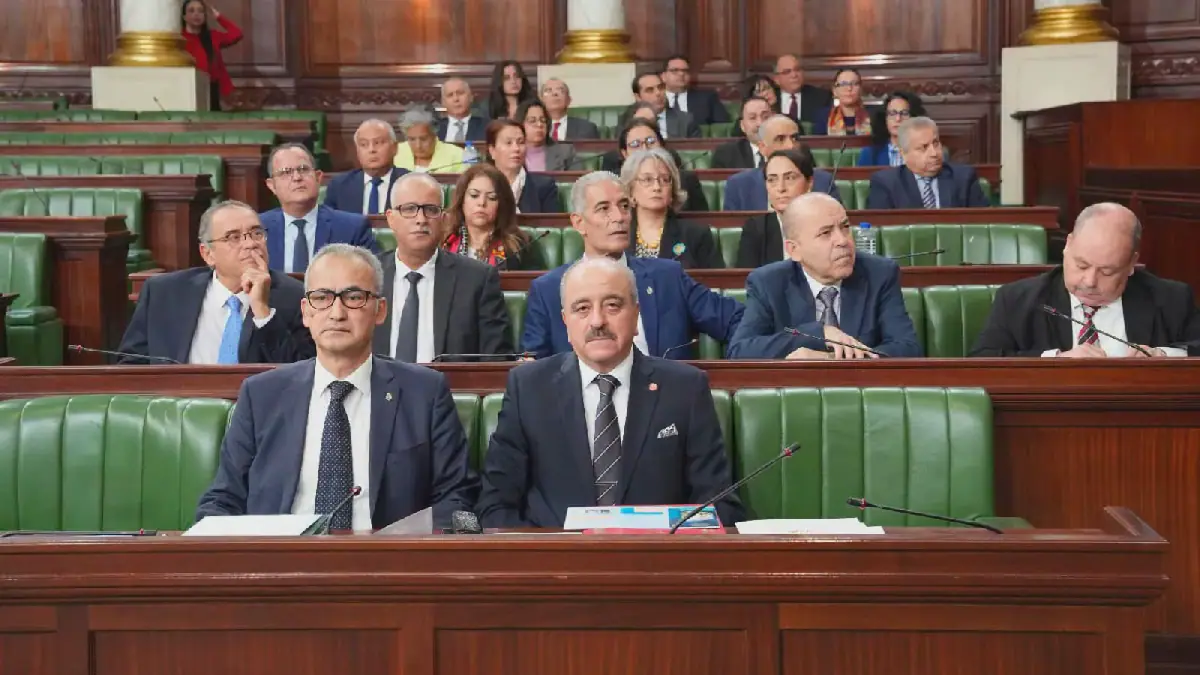
Tunisia's Foreign Minister Mohamed Ali Nafti has emphasized the country's commitment to enhancing its international partnerships to finance priority projects, attract foreign investments, and explore new export markets. During a joint plenary session at the Parliament, Nafti highlighted the strategic role of economic diplomacy in achieving these goals, despite limited financial resources. He stressed the importance of securing funding for development projects and promoting Tunisian exports.
Nafti revealed that discussions are ongoing with the European Union regarding the 2025-2027 financial programming. Tunisia is advocating for increased European funding and a revision of the association agreement, while respecting its sovereignty and economic choices. The minister also mentioned new agreements and financing arrangements with several international partners, including Germany, France, Italy, the Netherlands, Spain, Kuwait, the United Arab Emirates, Japan, and China.
One of the significant financial commitments is the Tunisia-Italy cooperation program for 2025-2027, worth €400 million. Additionally, Japan has provided a grant of 67 million dinars to fund a pilot wastewater treatment plant. The cooperation with China encompasses several key projects, including the reconstruction of the El Menzah Olympic Stadium, the development of an oncology center in Gabès, and the expansion of the Al-Khawarizmi computing center in Manouba.
The energy sector is also a priority, with projects aimed at enhancing interconnection and cooperation with European and Maghrebi countries. These projects include an electrical interconnection between Tunisia and Italy, as well as a 400 kV interconnection between Tunisia, Algeria, and Libya. Furthermore, plans are underway to build a 1,400 MW power plant in collaboration with Algeria.
On the commercial front, Nafti emphasized efforts to defend the interests of Tunisian companies abroad and diversify export markets, particularly for olive oil. In the first nine months of 2026, Tunisia's exports to sub-Saharan Africa exceeded 835 million dinars, while imports from the region stood at 323 million dinars. The country aims to increase Africa's share of its exports to 5%, leveraging the African Continental Free Trade Area (AfCFTA) and the Common Market for Eastern and Southern Africa (COMESA).
The minister also highlighted Tunisia's cooperation with multilateral organizations, including the United Nations, which has enabled the mobilization of $661 million. The country is working on implementing a debt-for-climate initiative to finance climate projects. Moreover, Tunisia continues to prioritize its diplomatic relations with various countries and international organizations, including its commitment to the Palestinian cause and efforts to resolve the Libyan conflict through a political solution.
Tunisia is set to continue its diplomatic efforts to strengthen partnerships and secure funding for its development projects. The country's foreign ministry will focus on enhancing economic diplomacy, promoting exports, and attracting foreign investments. With its strategic location and existing partnerships, Tunisia aims to become a key player in regional and international trade.
Key points
- Tunisia is seeking to increase its exports to Africa to 5% through the African Continental Free Trade Area (AfCFTA) and the Common Market for Eastern and Southern Africa (COMESA).
- The country has secured several financial commitments, including a €400 million cooperation program with Italy and a 67 million dinar grant from Japan.
- Tunisia's economic diplomacy efforts are focused on securing funding for priority projects, attracting foreign investments, and promoting exports.