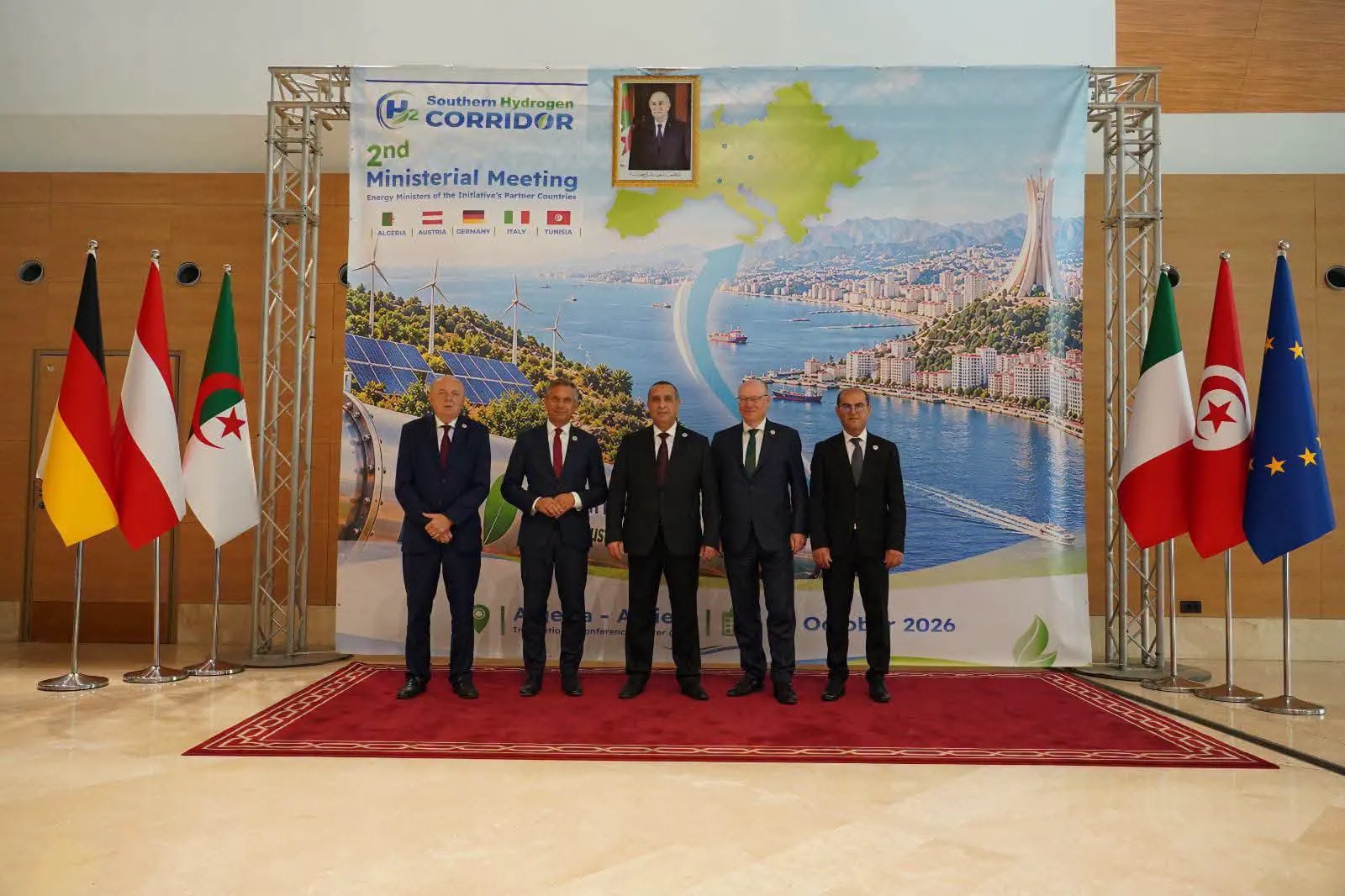
Tunisia's Minister of Equipment and Housing, Slah Zouari, participated in the second ministerial summit of the SouthH2 hydrogen project in Algeria on October 1, 2026. The summit brought together representatives from Tunisia, Algeria, Italy, Austria, and Germany to discuss the development of a regional clean energy corridor. Zouari emphasized that the transition to renewable energy presents a strategic opportunity to strengthen partnerships between North Africa and Europe.
The minister highlighted Tunisia's potential as a strategic partner in the development of a regional clean energy network due to its geographical location and existing energy infrastructure. Tunisia aims to leverage its strengths in renewable energy, green hydrogen, and its derivatives to become a key player in the region. The country's goal is to move from dialogue to concrete projects, prioritizing economically viable and environmentally friendly initiatives.
The summit resulted in the signing of the Algiers Ministerial Declaration on the SouthH2 corridor, which aims to establish a regional clean energy network between North Africa and Europe. The declaration provides for the creation of a dedicated secretariat for the project, with support from the United Nations Industrial Development Organization (UNIDO). This new step aims to strengthen Euro-Mediterranean energy cooperation and lay the groundwork for future clean energy exchanges.
Zouari emphasized the importance of cooperation in research, innovation, and technology transfer to achieve the goals of the SouthH2 project. The minister also stressed the need for economically viable and environmentally friendly projects that can be financed and implemented. Tunisia's participation in the project is seen as a key step towards achieving its renewable energy goals and strengthening its partnerships with European countries.
The SouthH2 project aims to create a regional clean energy corridor that will enable the exchange of clean energy between North Africa and Europe. The project has the potential to contribute to the reduction of greenhouse gas emissions and promote sustainable economic growth in the region. The signing of the Algiers Ministerial Declaration marks an important step towards the implementation of the project.
The second ministerial summit of the SouthH2 hydrogen project was attended by representatives from five countries, including Tunisia, Algeria, Italy, Austria, and Germany. The summit provided a platform for the countries to discuss their cooperation in the field of clean energy and to identify areas for future collaboration. The project is seen as a key initiative to promote sustainable energy development in the region.
The implementation of the SouthH2 project is expected to have a positive impact on the environment and the economy of the region. The project aims to promote the use of clean energy, reduce greenhouse gas emissions, and create new economic opportunities. Tunisia's participation in the project is seen as a strategic move to position itself as a key player in the region's clean energy sector.
Key points
- Tunisia aims to leverage its strengths in renewable energy, green hydrogen, and its derivatives to become a key player in the region's clean energy sector.