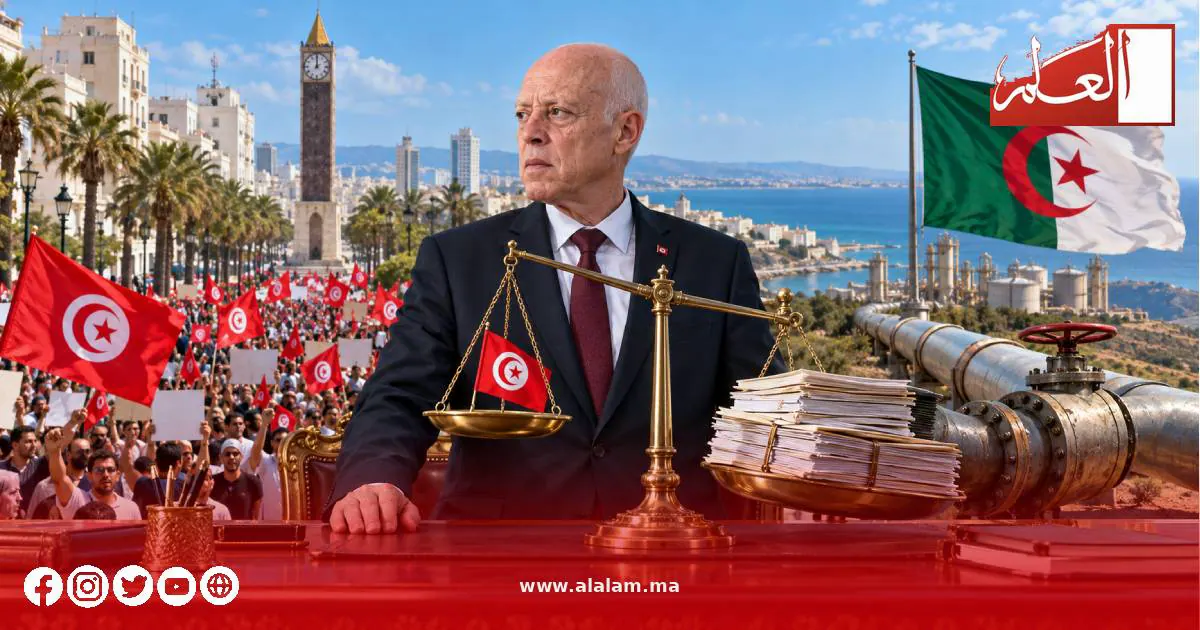
Tensions are escalating in Tunisia as President Kais Saied faces growing opposition from various sectors, including unions, human rights groups, and professional organizations. The country is set to witness a national march on October 17, called by nine national organizations, including the Tunisian General Labor Union and the National Union of Tunisian Journalists. The march aims to protest against the deteriorating economic and social situation, as well as concerns over freedoms and human rights.
The national march, set to take place in the capital Tunis, is seen as a significant test of the level of discontent among Tunisians. The organizers have called for the march under the slogan "Tunisia First... The People Above All Considerations." The move comes amid a backdrop of rising unemployment, inflation, and a decline in public services. The protesters also aim to express their concerns over issues such as press freedom, judicial independence, and the right to assembly and association.
President Kais Saied has been facing criticism for his handling of the economy and his policies, which have been accused of eroding freedoms and democratic institutions. His government has been criticized for its crackdown on opposition figures, journalists, and activists. In response to growing criticism, Saied has stated that he is fighting against corruption and those who seek to undermine the state. However, many Tunisians remain skeptical about his intentions and the impact of his policies on the country.
Tunisia has traditionally enjoyed a high level of economic and social development, with a strong education system and a skilled workforce. However, the country's economy has struggled in recent years, with slow growth, high unemployment, and a decline in foreign investment. Many Tunisians are questioning why their country, with its significant potential, continues to rely on foreign aid and loans rather than developing its own economic capacities.
Algeria has emerged as a key player in Tunisia's economic and political landscape, providing significant financial support to the country. In 2021, Algeria provided a $300 million loan to Tunisia, followed by an additional $200 million loan and a $100 million grant in 2022. This financial support has been accompanied by growing cooperation in areas such as energy, security, and defense. Tunisia has become increasingly reliant on Algerian gas, which accounts for a significant portion of its energy needs.
The growing closeness between Tunisia and Algeria has raised concerns about the impact on Tunisia's relationships with other countries, particularly Morocco. The two countries have traditionally enjoyed good relations, but tensions have risen in recent years over issues such as the Western Sahara conflict. In August 2022, President Saied's decision to receive Polisario Front leader Brahim Ghali at the presidential airport sparked a diplomatic crisis with Morocco.
The Western Sahara conflict has long been a sensitive issue in Tunisia, with the country traditionally maintaining a cautious and balanced approach. However, Saied's decision to receive Ghali has been seen as a significant shift in Tunisia's position, potentially aligning it more closely with Algerian interests. As Tunisia prepares for the October 17 march, it remains to be seen how the country's leadership will navigate its complex relationships with Algeria and Morocco, and whether it can find a way to address the growing discontent among its own people.
Key points
- Tunisia is set to witness a national march on October 17, called by nine national organizations to protest against the deteriorating economic and social situation.
- President Kais Saied faces growing opposition from various sectors, including unions, human rights groups, and professional organizations.
- Algeria has provided significant financial support to Tunisia, which has raised concerns about the impact on Tunisia's relationships with other countries.