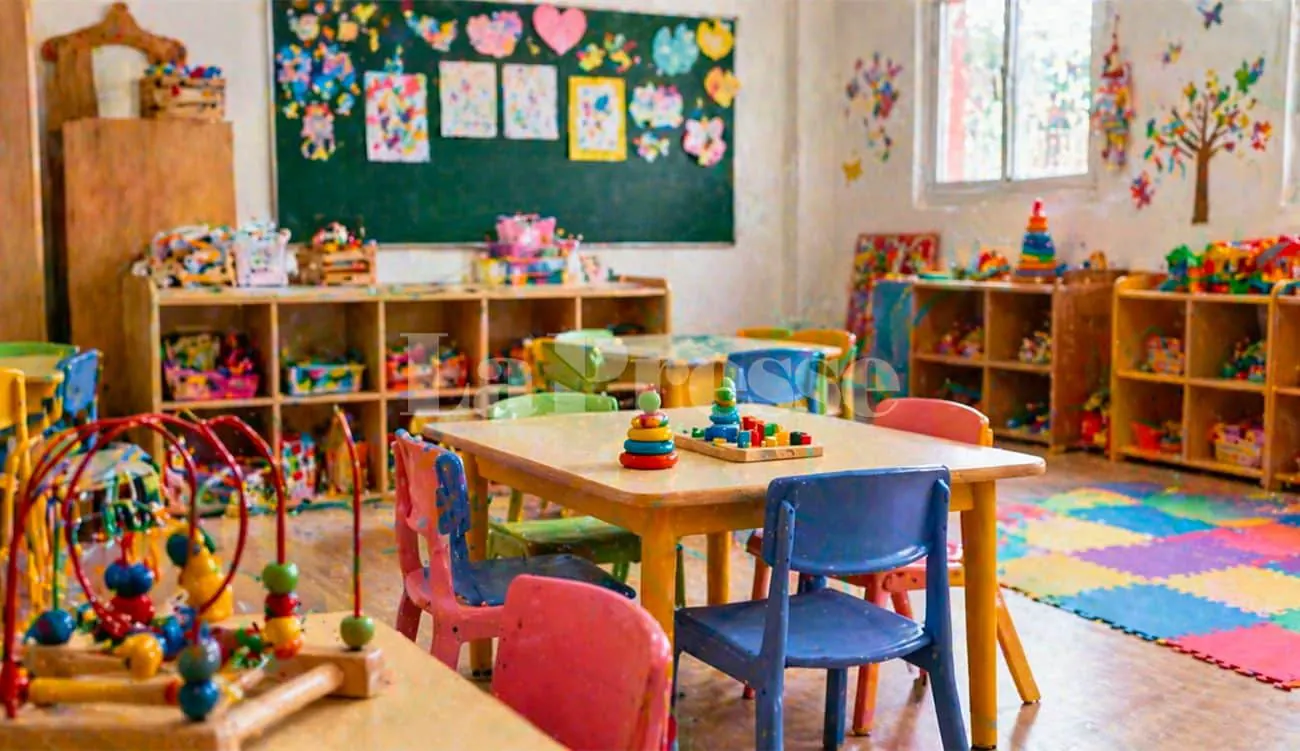
Tunisia's Assembly of People's Representatives (ARP) is currently reviewing a proposed law aimed at regulating the creation and operation of nurseries and kindergartens. The law seeks to address the proliferation of unauthorized establishments and protect children from mistreatment. According to Raouf Fekiri, rapporteur of the Health, Women's Affairs, Family, Social Affairs, and Handicap Committee, the bill aims to strengthen child protection in the face of abuses recorded in some unauthorized facilities.
The proposed law is built around five main pillars, including regulating the establishment of childcare services, defining management conditions and educational frameworks, and enhancing child protection and social inclusion. It also provides for control and inspection mechanisms, strengthened fight against unauthorized establishments, and a clearer regime of offenses and sanctions. Fekiri stated that the current draft law aims to address the shortcomings of the current system, which has proven insufficient in preventing abuses in some unauthorized structures.
One of the key measures being discussed is the possibility of capping the fees charged by nurseries and kindergartens. This move is intended to take into account the purchasing power of Tunisian families. According to Fekiri, some facilities currently charge over 500 dinars per child. However, a uniform national tariff is not considered feasible due to regional differences in rental costs. Instead, a tariff ceiling is being considered, which would be presented as a recommendation to the relevant ministry.
The proposed law also addresses preparatory classes, with Fekiri indicating that authorization may be granted to kindergartens to establish such classes. Furthermore, efforts are underway to harmonize educational programs offered in nurseries, kindergartens, and preparatory classes with those applied in primary schools and approved by the Ministries of Education and Family, Women's Affairs, Childhood, and Elderly People.
Another measure announced is the increase in the minimum age for admission to nurseries from two to three months. This change is consistent with recent legislative developments related to maternity leave adopted by the ARP. Fekiri added that the Health Committee has completed hearings with various stakeholders in the sector and is now working with the law's sponsor and deputies to finalize the text.
The proposed law has undergone significant deliberation, with the Commission de la santé having completed its hearings with stakeholders. The commission is now working to finalize the articles of the text, which will then be transmitted to the Bureau of the Assembly. The Assembly will set a date for a study day, followed by a plenary session to examine and potentially adopt the law.
The proposed law aims to provide a more comprehensive framework for childcare services in Tunisia, addressing concerns around quality, accessibility, and affordability. If adopted, the law is expected to improve the lives of thousands of children and families across the country. Key stakeholders will continue to engage with the law as it moves through the legislative process.
Key points
- The proposed law includes a measure to cap childcare fees to make services more affordable for Tunisian families.
- The law aims to strengthen child protection and combat the proliferation of unauthorized childcare establishments.
- The minimum age for admission to nurseries would be raised from two to three months under the proposed law.