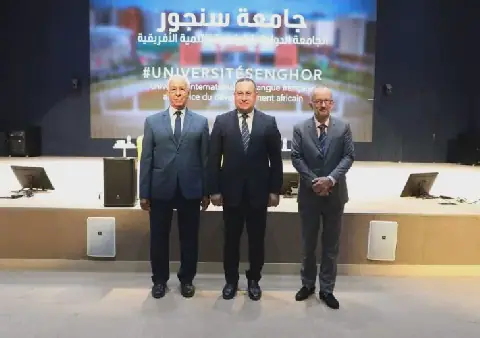
The Ministry of Social Affairs in Tunisia has officially launched a new digital platform called "Work Management Platform", primarily aimed at labor inspectors and labor inspection services. This platform is part of a cooperation with the International Labor Organization (ILO) within the project "Responsible and inclusive social dialogue for sustainable social cohesion in Tunisia". The launch event was attended by Minister of Social Affairs Essam Al-Ahmar, ILO North Africa Office Director Halim Hamzawi, and Swiss Cooperation Director at the Swiss Embassy in Tunis.
The new platform is a multifunctional tool that digitalizes labor inspection and consists of several functional units covering various areas of intervention for labor inspectors. It allows for the follow-up of files from registration to processing, and includes a unit for institutions that provides data on institutions subject to labor inspection. The platform also features a monitoring unit that enables the registration of inspection visits, their results, and subsequent actions, as well as providing data and indicators to identify sectors and categories that require more follow-up and planning.
The platform provides a unit for documenting counseling and guidance activities provided by labor inspectors to workers and employers on social legislation and rights and obligations. It also includes a unit for work accidents to record, follow up, and document related data and actions, supporting the prevention of occupational risks and improvement of working conditions. Additionally, the platform features a conciliation unit that manages different stages of conciliation, from interventions and sessions to results, and enables labor inspection services to follow up on the settlement process and its outcome.
Minister of Social Affairs Essam Al-Ahmar stated that the launch of the "Work Management" platform, which will enter a trial phase until the end of December, marks a new step in the modernization of administration and development of work mechanisms. He added that the platform will also cover institutions that adopt remote work and electronic platforms, enabling labor inspectors to keep pace with changes in work organization. Al-Ahmar emphasized that the platform will contribute to improving the performance of labor inspectors by providing data on institutions and a database to assist them in their tasks.
The platform will enable the digitalization of labor inspectors' work, creation of a centralized database for exploitation and analysis, acceleration of file processing and interventions, reduction of deadlines, and improvement of inspection operations' effectiveness. It will also unify work procedures, adapt them to existing texts and procedures, improve follow-up and control of various activities and interventions, and enhance coordination between labor inspection services and related administrative structures.
ILO North Africa Office Director Halim Hamzawi noted that the platform's development, supported by the United Nations Peacebuilding Fund and Swiss Cooperation, represents an important step in supporting and developing the labor inspection system. He added that the platform contributes to modernizing labor administration in Tunisia to make it more effective and capable of keeping pace with digital transformations, artificial intelligence, and changes in work organization and labor relations.
The platform is expected to support the work of labor inspectors by organizing different stages of work, improving follow-up, and providing updated and accurate data and indicators to assist in planning, decision-making, and performance improvement. It will also contribute to promoting respect for social legislation, supporting decent work, preventing professional conflicts, and improving labor relations and social dialogue.
Key points
- The platform aims to modernize labor administration and improve the quality of administrative services.
- The platform will enable the digitalization of labor inspectors' work and creation of a centralized database.
- The platform is expected to support decent work, prevent professional conflicts, and improve labor relations and social dialogue.