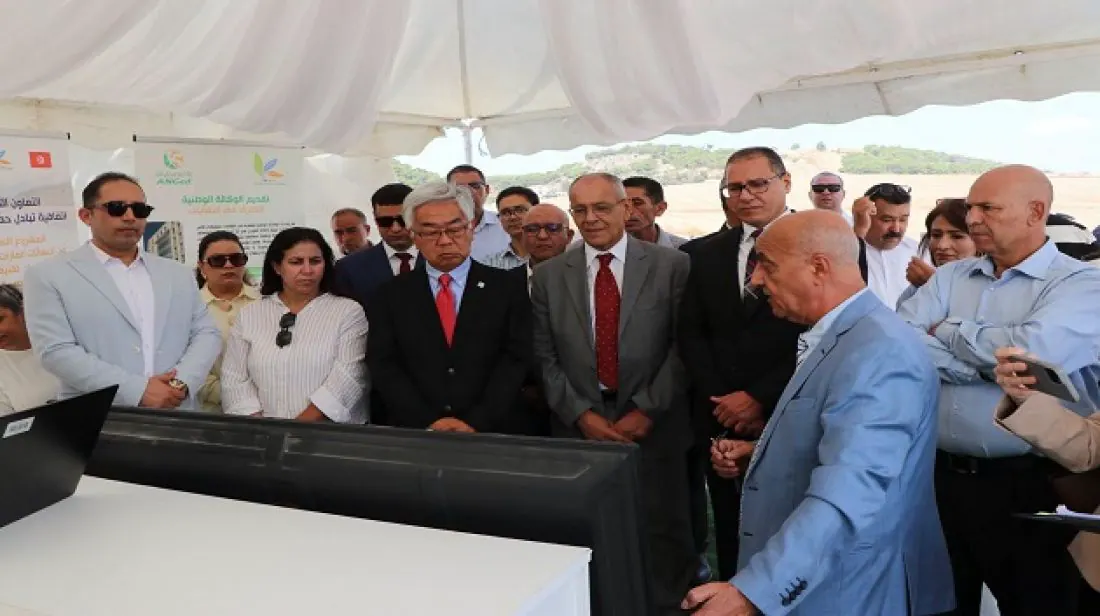
On October 2, 2026, Tunisia's Environment Minister Habib Obaid visited the Bajah governorate to launch a model project aimed at reducing greenhouse gas emissions from household and similar waste deposited at the Bajah waste treatment unit. The project uses the Fukuoka technology, which involves an aeration system that allows continuous airflow without consuming additional energy, accelerating the decomposition of organic waste and reducing methane production.
The Fukuoka technology is implemented in an existing waste processing cell, enabling the reduction of greenhouse gas emissions, particularly methane, which has a significant impact on climate change, with one ton of methane equivalent to 28 tons of carbon dioxide. This initiative supports Tunisia's national climate goals, focusing on reducing emissions from the waste management sector.
During his visit, Minister Obaid also attended a working session to review ongoing sanitation projects in Bajah, including the completion of the Wadi Az-Zarqa wastewater treatment plant and the construction of 21 kilometers of sewage pipes, connecting 1,200 homes to the public network. Additionally, plans are underway to treat three popular neighborhoods, connecting 500 homes to the public sanitation network.
Further sanitation projects are planned for Bajah, including the treatment of four popular neighborhoods in 2027, renovation of equipment at wastewater treatment plants in Tberesk, Testour, and Nefta, and the establishment of new treatment plants in Qebalat and Zahret Medina. The Qebalat sanitation network project is 80% complete, with studies underway for new treatment plants in Sidi Ismail and Dqaqa.
Minister Obaid also visited Majaz al-Bab to review the implementation of a regional plan to eliminate pollution in the Wadi Majardah basin, which involves identifying pollution sources, intensifying field inspections, protecting water resources, and treating waste. In 2025, 37 major projects were approved in Bajah, along with 19 projects subject to specific conditions.
A multidisciplinary team from the Ministries of Environment, Interior, Health, and Agriculture will continue to monitor factories and activities in Bajah to protect Wadi Majardah from pollution. The team's efforts aim to ensure the effective implementation of environmental regulations and mitigate the impact of human activities on the environment.
The launch of the model project in Bajah reflects Tunisia's commitment to addressing climate change and reducing greenhouse gas emissions. The project serves as a model for other regions, demonstrating the potential for innovative solutions to mitigate the environmental impact of waste management practices.
Key points
- Tunisia's Environment Minister Habib Obaid launches a model project to reduce greenhouse gas emissions from household waste in Bajah.
- The project uses Fukuoka technology to accelerate the decomposition of organic waste and reduce methane production.
- The initiative supports Tunisia's national climate goals, focusing on reducing emissions from the waste management sector.