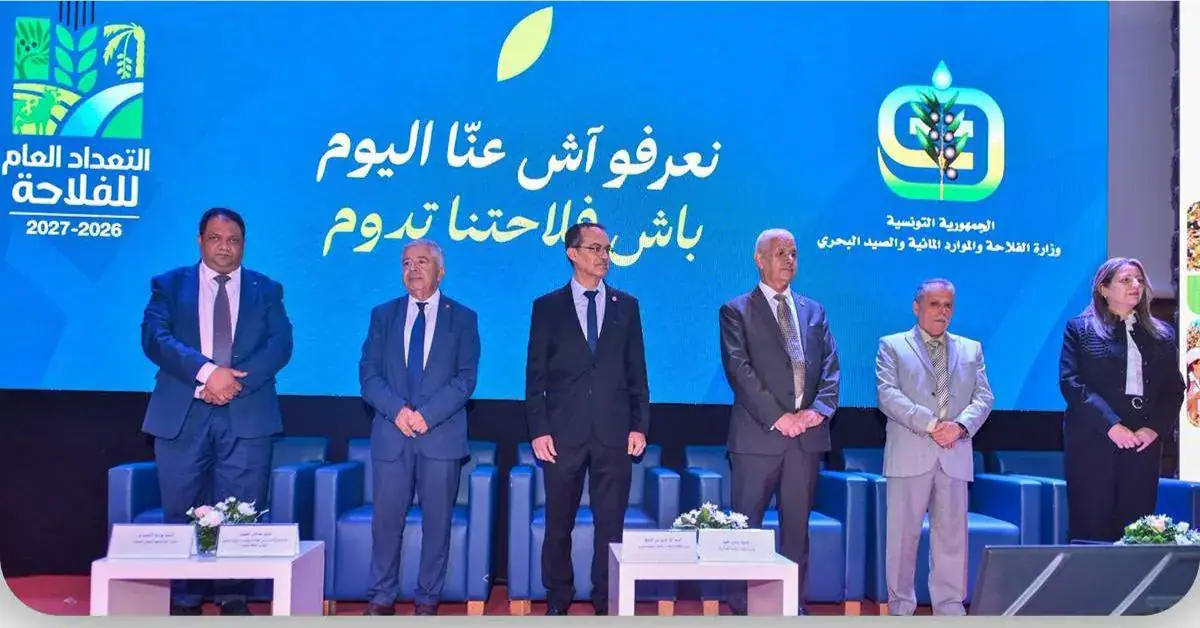
On October 30, 2026, Tunisian Minister of Agriculture, Water Resources, and Maritime Fishing, Aziz Rabbah, announced the official launch of the National Program for the First General Census of Agriculture 2026-2027. This census aims to establish a comprehensive and accurate agricultural database, serving as a primary reference for public policy-making, investment guidance, and sustainable agricultural development. The minister emphasized that this national project goes beyond being a statistical operation, representing a strategic shift towards building a modern agricultural sector capable of withstanding economic, climate, and food challenges.
Minister Rabbah highlighted that developing the agricultural sector requires a comprehensive vision based on accurate diagnosis and reliable data. This enables the transition from estimates to evidence-based planning by providing a national database reflecting the reality of agricultural holdings and regional specificities. He stressed the importance of investing census results in improving public and private investment orientation, setting development priorities, and programming projects according to actual needs.
The agricultural census will provide valuable insights into the country's agricultural sector, enabling policymakers to make informed decisions. By collecting accurate data on agricultural holdings, the census will help identify areas that require support and investment. This, in turn, will contribute to the development of effective policies and strategies for sustainable agricultural growth. The minister also emphasized the need for cooperation between all stakeholders, including farmers, to ensure the success of this national endeavor.
The National Program for the First General Census of Agriculture 2026-2027 is a collaborative effort between various Tunisian government agencies and international partners. The Ministry of Economy and Planning, the National Institute of Statistics, and the National Council of Statistics are providing technical and methodological support. The World Bank is contributing expertise and capacities, while the Grain Office, Tunisian Telecommunications Company, and regional agricultural development offices are providing logistical and field support.
Minister Rabbah called on farmers and agricultural stakeholders to actively and responsibly participate in this national process. He assured them that the collected data would be subject to complete statistical confidentiality and used solely for statistical and planning purposes, serving the interests of the agricultural sector and its stakeholders. The minister emphasized that the success of this national project requires the combined efforts of all parties involved.
The agricultural census is expected to have a positive impact on the country's agricultural sector. By providing accurate and reliable data, it will enable policymakers to develop targeted strategies and policies that address the sector's challenges. This, in turn, will contribute to the growth and development of the agricultural sector, ultimately enhancing food security and sustainable development in Tunisia.
The launch of the National Program for the First General Census of Agriculture 2026-2027 marks a significant milestone in Tunisia's efforts to modernize its agricultural sector. The census will provide a comprehensive understanding of the sector, enabling the development of effective policies and strategies for sustainable growth. With the support of various stakeholders, the census is expected to have a lasting impact on Tunisia's agricultural sector and its contribution to the country's economy.
Key points
- The Tunisian government has launched its first national agricultural census for 2026-2027.
- The census aims to establish a comprehensive and accurate agricultural database.
- The project is a collaborative effort between various Tunisian government agencies and international partners.