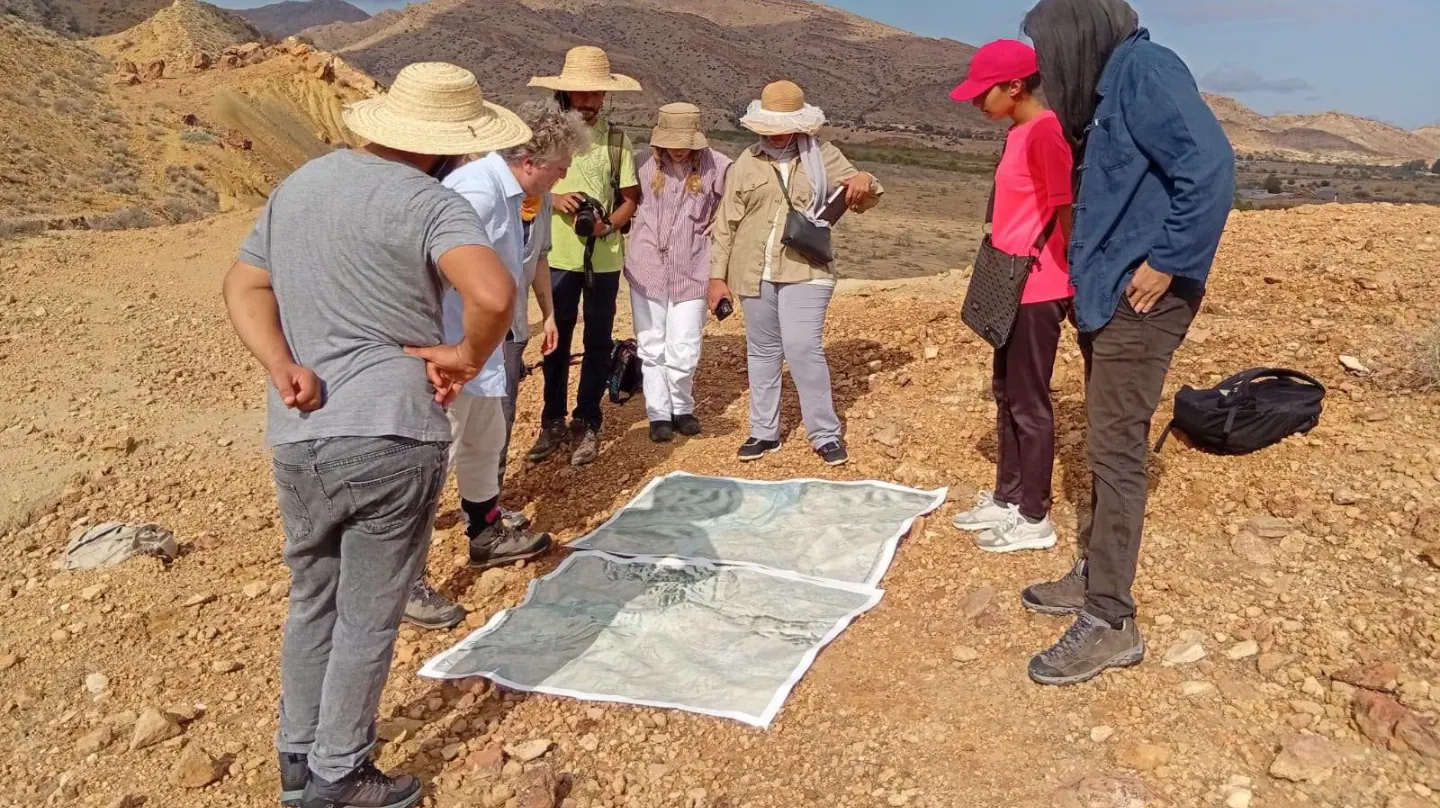
The National Heritage Institute of Tunisia has embarked on a significant archaeological project in collaboration with the University of Cambridge, UK. The research aims to explore the history of ancient agricultural societies in Tunisia, focusing on the period between the third millennium and the beginning of the first millennium BCE. This initiative seeks to deepen understanding of early agricultural communities and their interaction with the environment.
The field research is concentrated in two areas: the Wadi Zaroud basin in the Kairouan governorate and the Wadi Tassa basin in the Kef governorate. These locations offer contrasting environments, with the former being a semi-arid region and the latter a semi-humid area. By comparing these two settings, researchers hope to identify similarities and differences in settlement patterns and natural resource utilization.
The project's first phase involves an intensive archaeological survey of the lower Wadi Zaroud and Wadi Khengue al-Afras, between the towns of Zawarine and Sers. Researchers are re-examining the chronology of several archaeological sites, particularly funerary structures previously attributed to the Numidian period. However, the lack of absolute dating has made it challenging to confirm these attributions.
The fieldwork employs a range of advanced techniques, including differential GPS (DGPS) topographic surveying, 3D photogrammetry using drones, and geomorphological studies. Researchers are also collecting samples for archaeobotanical analysis and radiocarbon dating. These methods will help to build a more accurate picture of ancient agricultural practices and settlement patterns.
The collaboration between the National Heritage Institute and the University of Cambridge reflects a concerted effort to shed light on Tunisia's rich cultural heritage. By combining local expertise with international best practices, the project aims to make a significant contribution to the field of archaeology. The research has the potential to challenge existing narratives and provide new insights into the lives of ancient agricultural communities.
The scarcity of well-stratified archaeological sites and limited radiocarbon dating results have hindered our understanding of this period in Tunisia's history. This project addresses these knowledge gaps by adopting a comparative approach, examining two distinct environmental settings. The findings will provide valuable context for understanding the evolution of agricultural societies in the region.
As the research progresses, it is expected to yield important discoveries about the lives of ancient Tunisians and their relationship with the environment. The project's outcomes will be relevant not only to the academic community but also to the broader public, highlighting the significance of preserving cultural heritage and promoting historical awareness.
Key points
- The research project aims to uncover the history of ancient agricultural societies in Tunisia.
- The field research is being conducted in two areas: Wadi Zaroud and Wadi Tassa basins.
- The project employs advanced techniques, including DGPS, 3D photogrammetry, and radiocarbon dating.