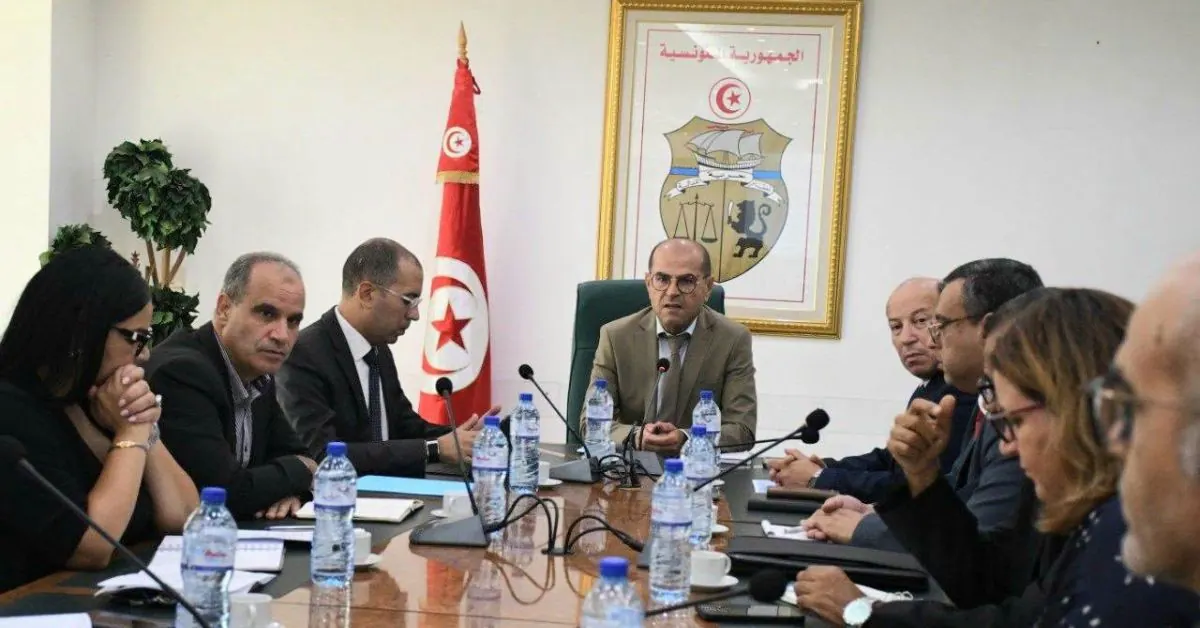
The first meeting of the Leadership Committee tasked with monitoring the implementation of the Tunisia-Italy electricity link project, also known as 'El-Med', took place on September 22, 2026, at the Ministry of Industry, Mines, and Energy. The meeting was chaired by Minister of Equipment, Housing, and Industry, Mines, and Energy, Salah Zwari. The committee discussed the project's progress and the need for coordination among stakeholders to ensure its timely completion.
Minister Salah Zwari emphasized the importance of coordination among various parties involved in the project to ensure its implementation according to the set schedule. He also stressed the need to address any challenges that may arise during the project's various stages and provide optimal conditions for its execution. The project is of strategic importance to Tunisia's national energy system, serving as a bridge for energy between Tunisia and Europe.
The Tunisia-Italy electricity link project aims to connect the two countries' electricity systems via a 223-kilometer undersea cable through the Strait of Sicily. The project has a transmission capacity of 600 megawatts and a voltage of 500 kilovolts with high direct current. The cable will be laid at a maximum depth of approximately 800 meters. This project will link the North African and European electricity systems.
The meeting was attended by several high-ranking officials, including the Director-General of the Tunisian Electricity and Gas Company, Faisal Tarifa, and representatives from various ministries, including Defense, Economy, Planning, Equipment, Housing, Agriculture, and Environment. Other attendees included officials from the General Directorate of Customs and senior officials from the Ministry and the Tunisian Electricity and Gas Company.
The project's implementation is expected to enhance Tunisia's energy system and provide opportunities for energy exchange with Europe. The Leadership Committee's role is crucial in ensuring the project's progress and addressing any challenges that may arise. The committee will work closely with all stakeholders to ensure the project's successful completion.
State Secretary for Energy Transition, Wail Chouchane, also attended the meeting. The project's success is seen as a significant step towards strengthening Tunisia's energy infrastructure and promoting regional cooperation in the energy sector. The project's implementation is expected to have a positive impact on Tunisia's economy and energy security.
The Leadership Committee's first meeting marks an important milestone in the project's implementation. The committee will continue to monitor the project's progress and work towards its successful completion. Three key points were emphasized during the meeting: the importance of coordination among stakeholders, the need to address challenges, and the project's strategic importance to Tunisia's energy system.
Key points
- The project will link Tunisia and Italy via a 223-kilometer undersea cable.
- The project has a transmission capacity of 600 megawatts and a voltage of 500 kilovolts.
- The project's implementation is expected to enhance Tunisia's energy system and provide opportunities for energy exchange with Europe.