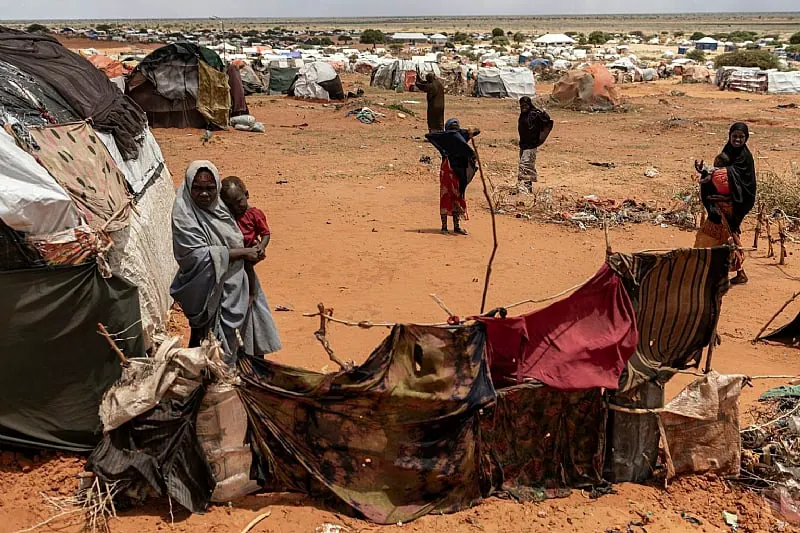
Climate change is exacerbating conflicts in Africa, with millions of people displaced due to droughts, floods, and failed harvests. In Somalia, for example, severe drought and conflict led to the displacement of millions in 2026. The situation is further complicated by weak governments, corruption, and poor public services. As the African population grows rapidly, many countries struggle to create jobs and economic opportunities, especially for young people. Frustration over poor governance has fueled protests and unrest, and in some countries, helped create conditions for the return of military coups since 2020.
Climate change rarely causes conflict directly but makes life more difficult for people, affecting peace and security indirectly. Rising temperatures, changing rainfall patterns, droughts, and floods reduce crop and livestock production, increasing competition for land and water. In the Sahel, West Africa, and the Horn of Africa, these pressures have heightened tensions between farmers and pastoralists. In southern Africa, repeated droughts have caused crop failures, livestock losses, food shortages, and falling household incomes. Climate-related disasters affected over 2.5 million people in Madagascar, Malawi, Mozambique, and Zimbabwe in 2021 and 2022.
The African Union and its member states are developing the Common African Position on Climate, Peace and Security, the first continent-wide framework on these issues. The framework aims to help African countries deal with climate-related conflicts and insecurity by providing a shared approach for governments. This approach will enable governments to work together, taking climate change into account when planning for peace, security, disaster response, and development. The framework brings climate, peace, and security together in one continental framework, usually treated as separate issues.
The Common African Position on Climate, Peace and Security will help African governments and regional organizations work together to improve warnings about droughts, floods, food shortages, and displacement. It will also help secure more funding for vulnerable communities by strengthening existing organizations and systems. The framework is about ensuring that Africa develops its own solutions, based on the continent's experiences, expertise, and priorities, rather than relying on external approaches.
To turn the Common African Position into action, the African Union Peace and Security Council called on experts to finalize it by the end of 2026. An implementation plan is needed, outlining what must be done, who will do it, and how progress will be measured. National governments can include climate-related security risks in their development and climate adaptation plans, budgets, early warning systems, and conflict prevention work.
Regional organizations can strengthen cross-border warnings about droughts, floods, and displacement, and coordinate responses between countries. Existing institutions can be used, but governments and regional bodies must work together more closely, considering climate-related security risks in their decisions. Governments must also fund this work through national budgets, while the African Union, international partners, and donors can direct additional funding towards places facing severe climate threats and conflict or instability.
The African Union and its member states must work together to implement the Common African Position on Climate, Peace and Security. By doing so, they can respond more effectively to droughts, food shortages, displacement, and other pressures that cross national borders. The framework's success will depend on the commitment and cooperation of African governments, regional organizations, and international partners.
Key points
- African governments are developing a Common African Position on Climate, Peace and Security to tackle climate-related conflicts.
- The framework aims to provide a shared approach for governments to work together and take climate change into account when planning for peace, security, disaster response, and development.
- The implementation of the framework will require commitment and cooperation from African governments, regional organizations, and international partners.