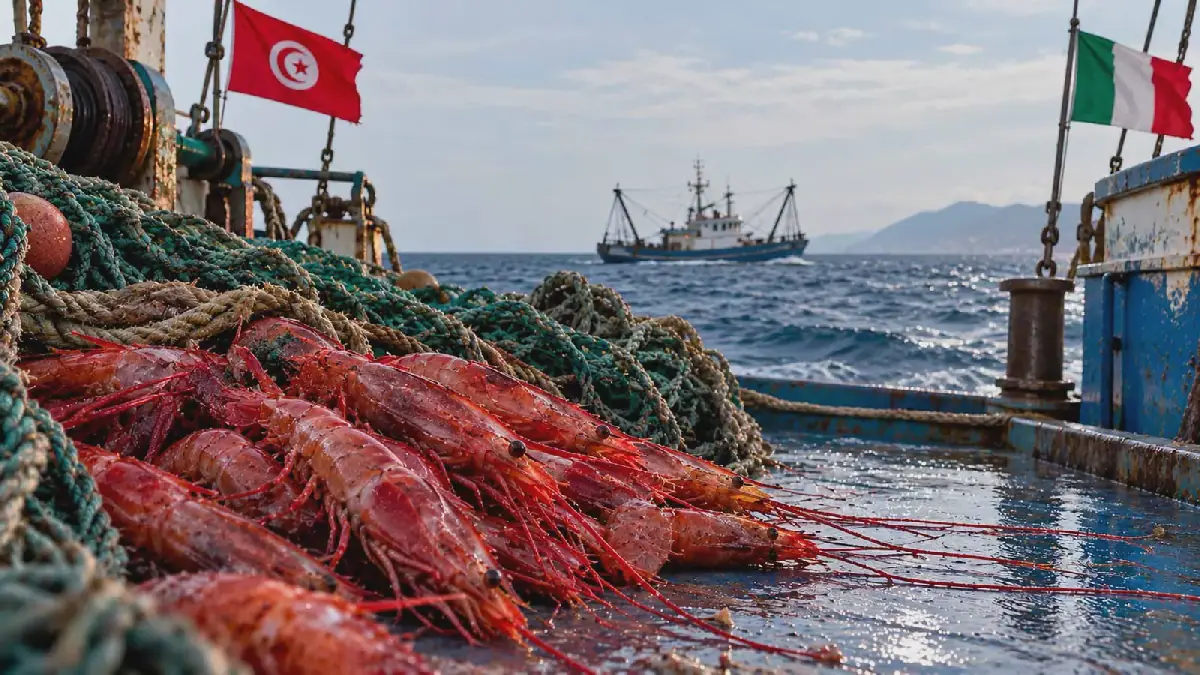
A dispute has erupted between Tunisia and Italy over the quota for catching red shrimp in the Mediterranean. According to the Italian Ministry of Agriculture, Food Sovereignty, and Forests (MASAF), Tunisia's quota for 2026 is 36 tonnes, but validated catch certificates indicate that at least 50.96 tonnes have been caught, a 41.5% exceedance. This has led Italy to consider suspending imports of Tunisian red shrimp for the remainder of 2026.
The Italian ministry has cited European rules against illegal, unreported, and unregulated fishing as the basis for its concerns. In a communication on June 5, 2026, it invited importers, transit operators, and others to consider suspending purchases of Tunisian red shrimp until the end of the year, warning of potential rejection of shipments and import refusals. The ministry has also opened an official channel of cooperation with Tunisian authorities to clarify the discrepancies.
The dispute centers on issues including adherence to international quotas, catch tracking, and accounting methods. Tunisia is also concerned about the suitability of its allocated quota. The 49th session of the General Fisheries Commission for the Mediterranean (GFCM), held in Rome from October 26-30, examined management measures for 2027, including the framework for managing fishing in the central Mediterranean.
According to data from the Tunisian National Observatory of Agriculture (ONAGRI), Tunisia exported 18,400 tonnes of fish products in the first seven months of 2026, valued at 422.3 million dinars (approximately 127 million euros). Italy was the leading market, accounting for 34% of Tunisian exports, followed by Spain (12%), Libya (11%), and Algeria and Malta (9% each).
Despite a 4.8% decline in export earnings compared to the same period in 2025, the trade balance for fish products showed a surplus of 92.6 million dinars, with a 125% coverage rate for imports. The average export price fell by 4.6% to 23 dinars per kilogram. Meanwhile, Tunisian authorities have launched a campaign to control non-compliant fishing nets in ports and markets.
On October 6, authorities began inspecting fishing gear, giving fishermen 48 hours to bring their equipment into compliance or face confiscation of prohibited gear. The controls focus on nets with mesh sizes under 30 millimeters, deemed detrimental to stock conservation and marine resource reproduction. Some fishermen have protested the uniform application of this limit, seeking consideration for local fishing techniques.
Upcoming technical meetings of the GFCM in November will aim to consolidate scientific data on red shrimp stocks in the central and eastern Mediterranean, informing future management decisions. The talks will contribute to resolving the dispute between Tunisia and Italy and ensuring sustainable fishing practices in the region.
Key points
- Italy claims Tunisia has exceeded its 2026 red shrimp quota by 41.5%, prompting consideration of import suspensions.
- The dispute highlights concerns about adherence to international fishing quotas and conservation of marine resources.
- Tunisia's fish exports to Italy totaled 422.3 million dinars in the first seven months of 2026.