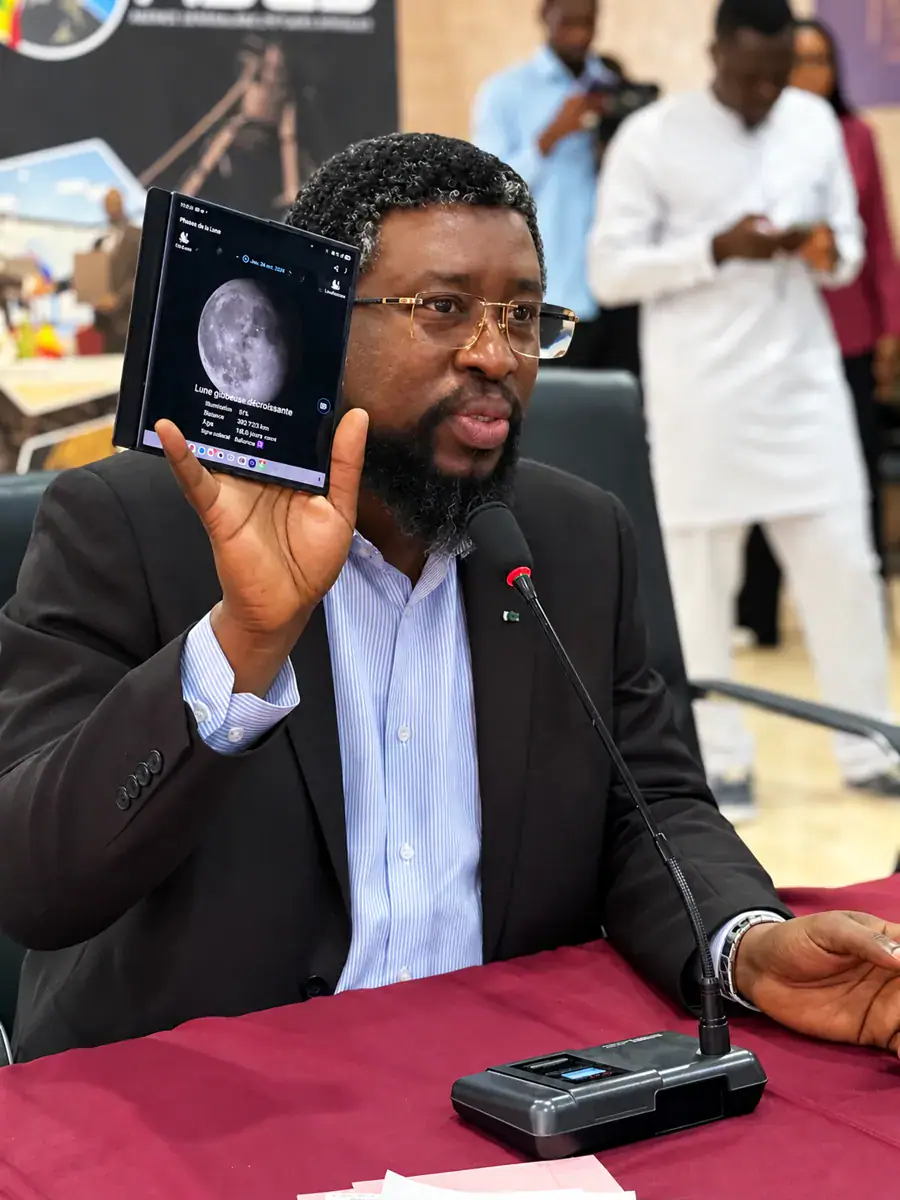
Maram Kaïré, director general of the Senegalese Space Studies Agency (ASES), is advocating for the national appropriation of space sciences to drive progress and sovereignty. He believes that making space sciences accessible to all and using them as an instrument for national development is crucial. This call was made during the national workshop on "Space Sciences, Media, and Society," which took place from October 26 to 28 in Toubab Dialaw.
The workshop brought together media professionals and imams to discuss the importance of space sciences, their applications, and their contribution to societal progress. The ASES aims to promote a better understanding of astronomy and space technologies among the population and to strengthen the capacity of information and knowledge transmission actors. By doing so, the agency seeks to bridge the gap between scientific knowledge and citizens.
Kaïré emphasizes that promoting space sciences should not be limited to laboratories or specialized institutions but rather involve a broader approach to spark public interest and dispel misconceptions. He notes that Africa, which has historically been lagging in this field, is now making efforts to catch up, with several countries establishing national space agencies. Senegal is also committed to affirming its place in the space sector.
The creation of the ASES reflects Senegal's willingness to structure its national competencies and make space sciences a domain of scientific and technological investment. However, Kaïré stresses that the success of this ambition depends on the population's ability to understand the stakes of this new frontier of knowledge. He believes that the Senegalese people must take ownership of this project for it to succeed.
The involvement of media professionals and religious leaders is seen as essential in disseminating scientific knowledge and promoting a culture of space sciences. Journalists can help clarify the stakes of space sciences, while imams can contribute to the transmission of knowledge, particularly in astronomy. This approach aims to dissipate confusion between astronomy and astrology and to lay the groundwork for sustained awareness efforts.
Kaïré is convinced that space sciences can contribute concretely to Senegal's economic and social transformation. Various sectors, such as agriculture, livestock, fishing, transportation, health, education, and security, can benefit from satellite technologies. The use of space data can improve crop monitoring, anticipate environmental risks, and enhance the planning of territorial occupation.
Senegal's ambition to become a space nation involves several projects, including the establishment of a research observatory in astronomy and astrophysics, a center for assembling micro and nanosatellites, and a potential satellite constellation. The country has also joined the Artemis agreements, demonstrating its interest in international cooperation for the peaceful exploration of the Moon and the development of a lunar presence.
Key points
- Senegal's director general of the ASES Maram Kaïré is calling for greater national appropriation of space sciences.
- The national workshop on "Space Sciences, Media, and Society" was held from October 26 to 28 in Toubab Dialaw.
- Senegal aims to become a space nation with various projects, including a research observatory and a satellite constellation.