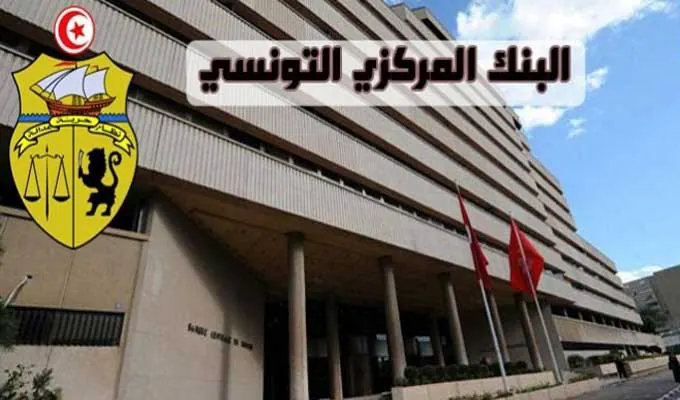
The Central Bank of Tunisia (BCT) has published a new circular that redefines the rules applicable to payment institutions. The circular, issued on September 25, 2026, aims to specify the services that payment institutions can offer and strengthen governance, control, and security rules. The new rules introduce three levels of payment accounts with different ceilings.
The three levels of payment accounts have ceilings of 1,500, 5,000, and 20,000 dinars. The first level, reserved for individuals, has a maximum balance of 1,500 dinars. The second level, accessible to individuals and legal entities, has a ceiling of 5,000 dinars. The third level, also accessible to individuals and legal entities, allows a maximum balance of 20,000 dinars.
The new circular also sets limits on cash withdrawals. For accounts with a ceiling of 1,500 and 5,000 dinars, cash withdrawals are limited to 3,000 dinars per day. For accounts with a ceiling of 20,000 dinars, cash withdrawals are limited to 10,000 dinars per day. Additionally, payment institutions can no longer offer overdraft facilities.
The circular allows for the opening of payment accounts remotely without the physical presence of the client. However, this must be done with certain safeguards, including verification of identity documents, facial recognition, and a reliable authentication mechanism. Clients must also give their consent for the processing of their personal data.
Payment institutions in Tunisia can provide various services, including managing payments and withdrawals, electronic transfers, remote payments, and issuing electronic payment instruments. However, transfers made by cash deposit are limited to 3,000 dinars per transaction. The provision of funds from abroad is limited to the equivalent of 20,000 dinars per transaction.
The new rules also require payment institutions to keep client funds separate from their own resources. These funds must be deposited into a unique global account with a bank, and the balance must at all times correspond to the sum of the balances of the accounts concerned. The institutions must also have secure systems, a continuity plan, and mechanisms against money laundering and cyber risks.
The circular will come into effect within three months of its publication and replaces the 2018 circular. Payment institutions must also conduct an annual security audit of their computer systems and have procedures for handling complaints. When using payment agents, the institutions remain responsible for the acts carried out by these agents within the framework of the services entrusted to them.
Key points
- The new circular introduces three levels of payment accounts with different ceilings.
- The circular allows for the opening of payment accounts remotely without the physical presence of the client.
- The new rules require payment institutions to keep client funds separate from their own resources.