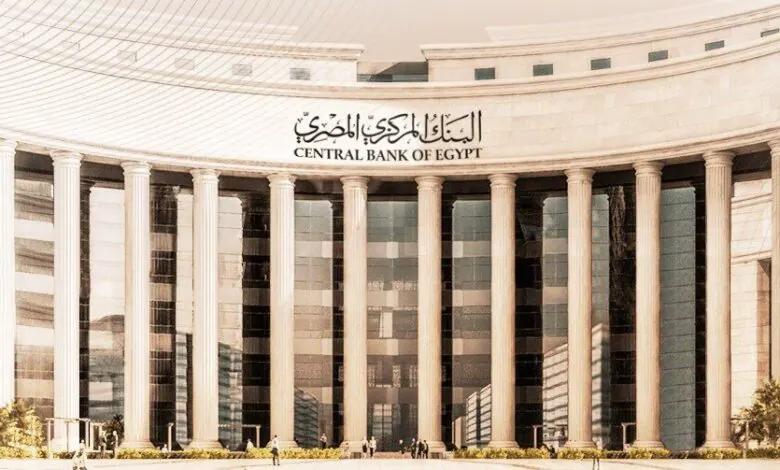
The Central Bank of Egypt (CBE) has revised its inflation forecasts downward, expecting annual headline inflation to stabilize in the third quarter of 2026 before gradually declining towards its target of 7% (±2%) in the second half of 2027. This decision was made by the Monetary Policy Committee (MPC) following recent inflation developments that were more favorable than expected. The CBE stated that the downward revision would reinforce current monetary conditions, which remain sufficiently restrictive.
Despite the positive outlook, the CBE noted that the balance of risks surrounding the inflation outlook remains tilted to the upside. Renewed regional hostilities and increases in global food prices could affect domestic inflation through a greater-than-expected pass-through from fiscal consolidation measures. The CBE also mentioned that global energy prices remaining elevated for an extended period could impact inflation. As a result, the MPC decided to keep its key policy rates unchanged.
The CBE's MPC maintained the overnight deposit rate at 19%, the overnight lending rate at 20%, and the main operation and discount rates at 19.5%. This marks the fifth consecutive meeting at which the CBE has kept rates unchanged. The decision reflects the MPC's assessment of the latest inflation developments and outlook, as well as changes in the risks surrounding them. The CBE's key policy rates are the main indicator of the near-term direction of interest rates on the Egyptian pound.
Globally, economic activity has slowed slightly due to geopolitical volatility and weaker demand. However, it continues to be supported by sustained growth in trade and investment. Inflation rates remain generally elevated, prompting central banks to maintain cautious monetary policies. In commodity markets, energy and agricultural product prices increased as regional tensions escalated and concerns over supplies intensified.
Domestically, real economic activity continued to grow at a moderate pace, with growth reaching 4.7% in the second quarter of 2026. Average real GDP growth reached 5.1% in FY2025/2026 and is expected to remain broadly stable at that level during FY2026/2027. The projected output gap indicates that demand-side inflationary pressures will remain limited in the near term, supported by an appropriately restrictive monetary policy stance.
Annual headline inflation edged down to 14.5% in August 2026, driven by lower food inflation. At the same time, annual core inflation remained relatively stable at 14.9% in August 2026. Monthly headline inflation stood at -0.4%, 0%, and 0.1% in June, July, and August 2026, respectively. The MPC noted that the current degree of monetary tightening provides sufficient room to contain risks while preserving the expected downward trajectory of inflation.
The CBE's MPC will continue to assess monetary conditions in light of economic developments affecting the projected inflation path and the risks surrounding it. The committee will not hesitate to use the tools at its disposal to preserve price stability. The decision to keep interest rates unchanged aims to support the expected downward trajectory of inflation while maintaining economic stability.
Key points
- The Central Bank of Egypt lowers inflation forecast to 7% (±2%) for the second half of 2027.
- The CBE keeps key policy rates unchanged at 19%, 20%, and 19.5%.
- Egypt's real GDP growth reaches 5.1% in FY2025/2026.