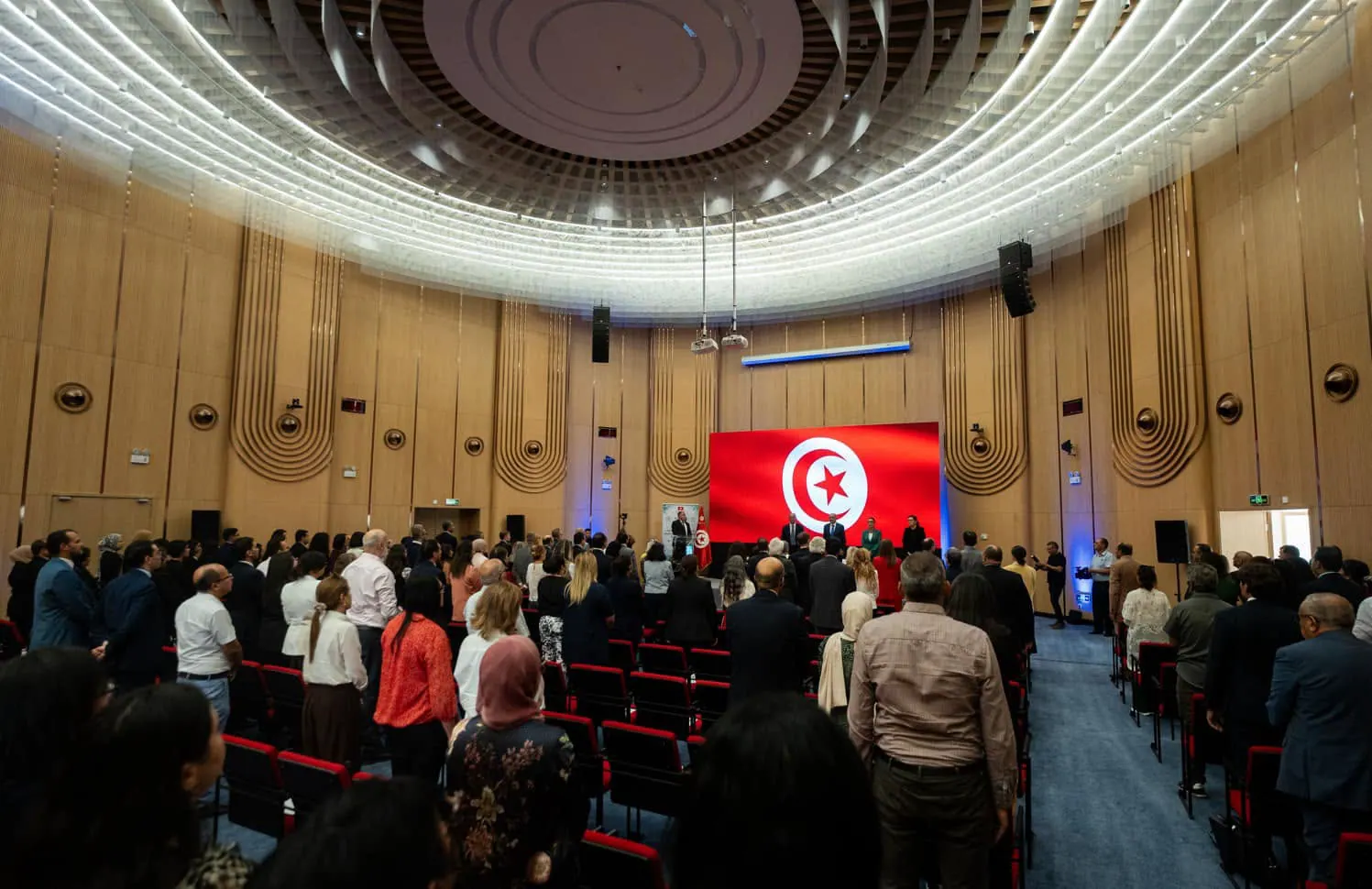
The International Diplomatic Academy in Tunis hosted a national workshop on October 7, 2026, focused on accessing international climate finance. The event was organized by the Ministry of Foreign Affairs, Migration, and Tunisians Abroad, in collaboration with the Ministry of Environment, and the Ministries of Finance and Economy and Planning, with the support of the United Nations Development Programme. The workshop brought together high-ranking officials from various ministries and institutions to discuss ways to enhance Tunisia's access to international climate finance.
The workshop aimed to strengthen Tunisia's capacity to benefit from international climate finance mechanisms by introducing available funding tools and clarifying the conditions and criteria for accessing them. This would enable the preparation and submission of priority projects that align with national needs and meet the technical standards of international funding agencies. The event was attended by Minister of Foreign Affairs, Migration, and Tunisians Abroad, Mohamed Ali Nafti, and Minister of Environment, Habib Oueid.
In his opening speech, Minister Nafti emphasized that mobilizing climate finance is a national priority and a key aspect of Tunisia's diplomatic efforts. He recalled that this issue was a priority during Tunisia's participation in the High-Level Week of the 81st session of the United Nations General Assembly in New York. The minister highlighted the importance of continued diplomatic efforts to identify available funding opportunities and promote Tunisian projects eligible for international financing.
Minister Nafti also stressed that Tunisia's climate ambitions, as outlined in its Nationally Determined Contribution 3.0, and the implementation of projects under the 2026-2030 development program, require significant financial and investment resources. He called for a new approach to mobilizing climate finance, based on enhanced national coordination among relevant institutions and a shift from isolated projects to structural programs and projects eligible for financing.
Minister of Environment, Habib Oueid, highlighted the sectoral orientations for adapting to and resilience in the face of climate challenges. He reviewed the plan of action and national contributions, which include sectors concerned with mitigating greenhouse gas emissions and adapting to the growing impacts of climate change. The minister also discussed available international cooperation mechanisms and the role of the Ministry of Environment in supporting sectoral strategies and contributing to the mobilization of financial resources.
The workshop participants discussed the importance of exploring innovative financing mechanisms, such as debt conversion for climate and development, and the role of carbon markets in mobilizing financial resources. The event also emphasized the need to support national capacities in project preparation and negotiation, and to reduce the time gap between the study phase and the actual implementation of projects.
The national workshop on accessing international climate finance is a significant step towards enhancing Tunisia's capacity to tap into global climate funding. The event demonstrated the country's commitment to addressing climate change and its impacts, and its efforts to mobilize financial resources to support its development goals.
Key points
- The workshop aimed to strengthen Tunisia's capacity to benefit from international climate finance mechanisms.
- Minister Nafti emphasized that mobilizing climate finance is a national priority and a key aspect of Tunisia's diplomatic efforts.
- The event demonstrated the country's commitment to addressing climate change and its impacts.