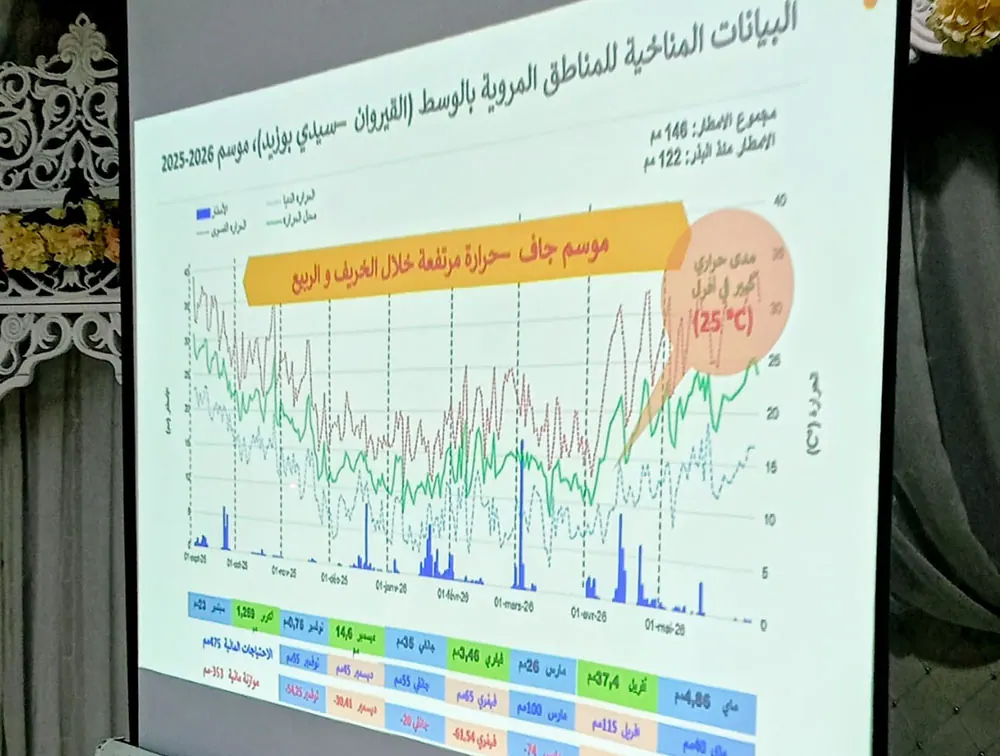
A national symposium was held in Kairouan, Tunisia, to discuss ways for the country's grain sector to adapt to climate change. The event, which took place on September 22, 2026, brought together experts and stakeholders to explore strategies for mitigating the impact of climate change on grain production. The symposium was attended by Moez Ben Zeghdan, head of the Tunisian Union of Agriculture and Fisheries.
Ben Zeghdan spoke to Assabah News about the discussions held during the symposium, highlighting the need for innovative solutions to address the challenges facing the grain sector. He emphasized the importance of collaboration between farmers, policymakers, and researchers to develop effective strategies for adapting to climate change. The symposium also featured presentations on the latest research and technologies in climate-resilient agriculture.
Climate change has had a significant impact on Tunisia's agricultural sector, with changing weather patterns and increased temperatures affecting crop yields and quality. The country's grain sector is particularly vulnerable, with wheat and barley being major crops. The symposium aimed to identify ways to support farmers in adapting to these changes and ensuring food security.
The event was organized by the Tunisian Union of Agriculture and Fisheries, in partnership with other stakeholders, including government agencies and research institutions. The symposium provided a platform for experts to share knowledge and experiences, and for stakeholders to discuss ways to support the development of climate-resilient agriculture in Tunisia.
Ben Zeghdan emphasized the need for a coordinated approach to addressing the challenges facing the grain sector, involving all stakeholders from farmers to policymakers. He also highlighted the importance of investing in research and development to improve crop yields and quality, and to develop new technologies and strategies for climate-resilient agriculture.
The symposium also discussed the role of digital technologies in supporting climate-resilient agriculture, including the use of precision agriculture and data analytics. These tools can help farmers make informed decisions about planting, irrigation, and harvesting, and can also support policymakers in developing effective strategies for supporting the sector.
The national symposium on climate change and grain sector adaptation concluded with a call for action, emphasizing the need for urgent and coordinated efforts to support the development of climate-resilient agriculture in Tunisia. The event highlighted the importance of collaboration and investment in research and development to address the challenges facing the country's agricultural sector.
Key points
- Tunisia's grain sector faces significant challenges from climate change
- A national symposium was held to discuss ways to adapt the sector to climate change
- The event highlighted the need for collaboration and investment in research and development to support climate-resilient agriculture