The first edition of the international conference "Creativity, Digital Technology, and Humanities - CNH2026" took place in Yasmine Hammamet, Tunisia, on November 25, 2026. Organized by the Amavi association as part of the Tacir program, the conference aims to explore the transformations caused by digital technology and its impact on society. The event brings together experts from various fields, including researchers, academics, artists, and culture professionals.
The conference focuses on the intersection of creativity, digital technology, and humanities, with a particular emphasis on the cultural, social, political, and human dimensions of digital technology. The initiative is part of a research and experimentation program launched in 2023 by Tacir-Research, which seeks to promote dialogue between academic knowledge, artistic practices, and field experiences. The program prioritizes the involvement of young researchers, scientists from the Global South, and South-South and South-North scientific cooperation.
The inaugural conference, titled "Le numérique décolonial, nouvel âge de l’illusion d’engagement" (Decolonial Digital Technology, A New Era of Illusion of Engagement), was delivered by El Hadj Souleymane Gassama, a sociologist, journalist, and researcher associated with the Institute of International and Strategic Relations (Iris). Gassama's work explores identity, democracy, demography, and the relationships between Africa and France. His presentation questioned the extent to which digital spaces enable the redistribution of power and speech.
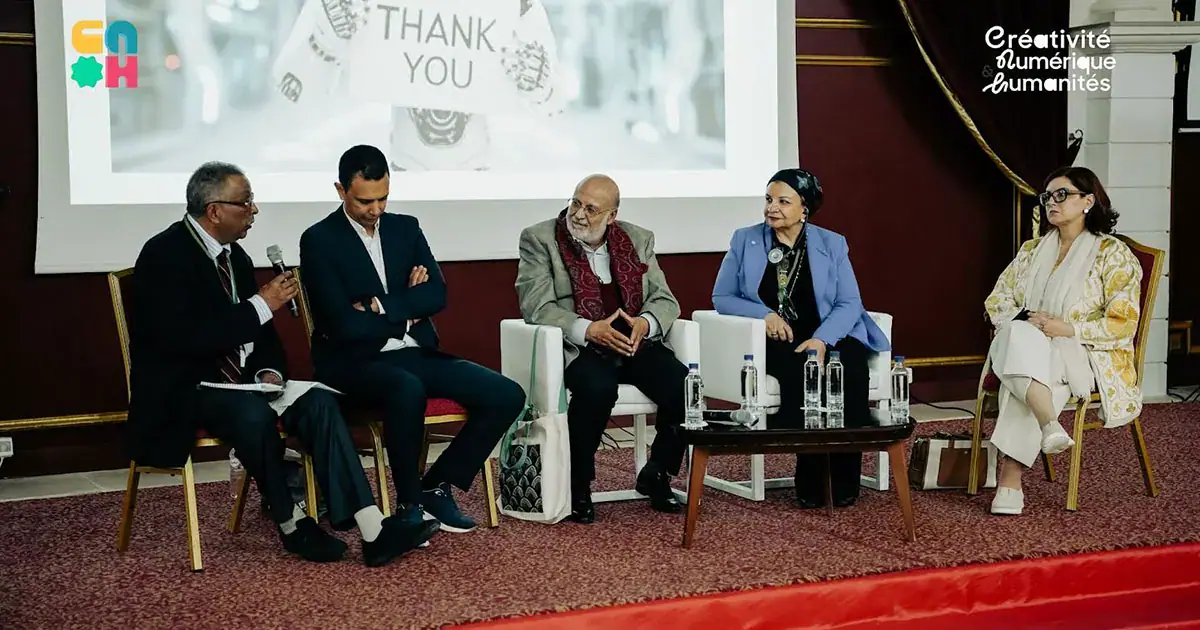
A panel discussion titled "Musées et numérique : enjeux et mutations" (Museums and Digital Technology: Challenges and Changes) brought together experts from various fields to discuss the impact of digital technology on museums and cultural heritage. The panel, moderated by Habib Ben Younès, an historian and expert in museology and heritage, featured Ali Louati, Fatma Ahmed Soliman, Soumaya Gharsallah, and Mohamed Ali Midani. The discussion focused on the challenges and opportunities presented by digital technology in the preservation, mediation, and dissemination of cultural heritage.
The conference also included several sessions of scientific communications, divided into four axes: "Créativité, apprentissages et mutations des pratiques numériques" (Creativity, Learning, and Changes in Digital Practices), "Arts, patrimoines et expériences immersives" (Arts, Heritage, and Immersive Experiences), "Identités, récits et justice sociale à l’ère numérique" (Identities, Narratives, and Social Justice in the Digital Era), and "Écosystèmes culturels, coopération et innovation durable" (Cultural Ecosystems, Cooperation, and Sustainable Innovation).
The diversity of contributions to the conference reflects the breadth of research fields involved in exploring the intersection of digital technology and humanities. The presentations highlighted the potential of digital technology to transform cultural practices, promote social justice, and foster creativity and innovation. The conference aims to create a critical space for reflection and dialogue on the impact of digital technology on society.
The conference "Creativity, Digital Technology, and Humanities - CNH2026" will continue for three days, bringing together experts and researchers to explore the complex relationships between technology, culture, and society. The event seeks to promote a deeper understanding of the challenges and opportunities presented by digital technology and to foster collaboration and innovation in the fields of creativity, culture, and humanities.
Key points
- The conference "Creativity, Digital Technology, and Humanities - CNH2026" aims to promote dialogue between academic knowledge, artistic practices, and field experiences.
- The event prioritizes the involvement of young researchers, scientists from the Global South, and South-South and South-North scientific cooperation.
- The conference focuses on the cultural, social, political, and human dimensions of digital technology.