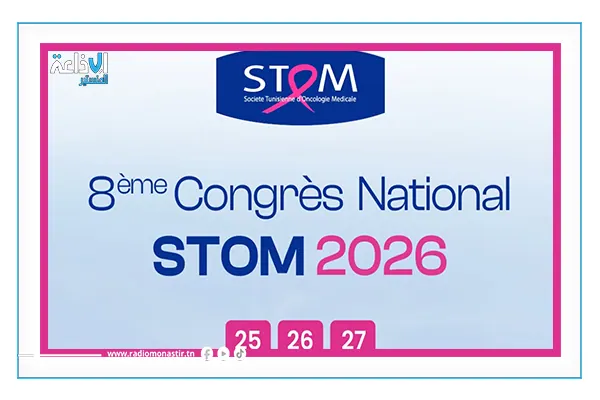
The eighth national oncology conference of the Tunisian Association of Oncology was launched on September 25, 2026, in Tunisia. The event, which will run until Sunday, brings together specialists in oncology, surgical oncologists, and radiation therapists. The conference aims to promote continuous training for specialists in oncology and related fields. According to Nabil Tomi, Secretary-General of the Tunisian Association of Oncology, the conference focuses on providing better care for cancer patients.
The conference features presentations on the latest studies on various types of cancer, including bladder, digestive, breast, reproductive, and thyroid cancers. The event also highlights modern treatment methods and new drugs that have shown significant effectiveness in treating cancer. Tomi emphasized that cancer treatment has evolved globally, and Tunisia is committed to keeping pace with these developments. He noted that treatment options, including medication, targeted therapy, and immunotherapy, have improved significantly.
Tomi stressed that cancer care requires a multidisciplinary approach, involving a team of specialists, including oncologists, surgeons, radiotherapists, and pathologists. He added that this approach enables the development of personalized treatment plans for each patient. The conference also features discussions on the use of artificial intelligence in oncology, which has improved diagnosis accuracy and treatment planning.
Chirーズ Ben Ayad, a member of the Tunisian Association of Oncology, highlighted Tunisia's progress in cancer diagnosis and treatment. She noted that the country has adopted modern diagnostic tools, such as PET scans, which are available in public hospitals in Tunis, Sousse, and Sfax. Ben Ayad also emphasized the advancements in surgical oncology, including the use of robots for precise tumor removal.
Ben Ayad discussed the evolution of radiation therapy in Tunisia, with the introduction of more accurate and precise equipment. She also noted that the country is keeping pace with the development of new medications and treatments. The conference includes a workshop on artificial intelligence, which aims to explore its applications in oncology.
The use of artificial intelligence in oncology has improved diagnosis and treatment planning, particularly in radiology and pathology. Ben Ayad emphasized that the adoption of these technologies in Tunisia is being done cautiously, with consideration for patient data and privacy.
The eighth national oncology conference in Tunisia concludes with a commitment to improving cancer care and treatment in the country. The event has brought together specialists in oncology to share knowledge and expertise, with a focus on providing better care for cancer patients.
Key points
- The conference highlights Tunisia's commitment to keeping pace with global developments in oncology and cancer treatment.
- The event features discussions on the use of artificial intelligence in oncology and its applications in diagnosis and treatment planning.
- The conference aims to promote continuous training for specialists in oncology and related fields.