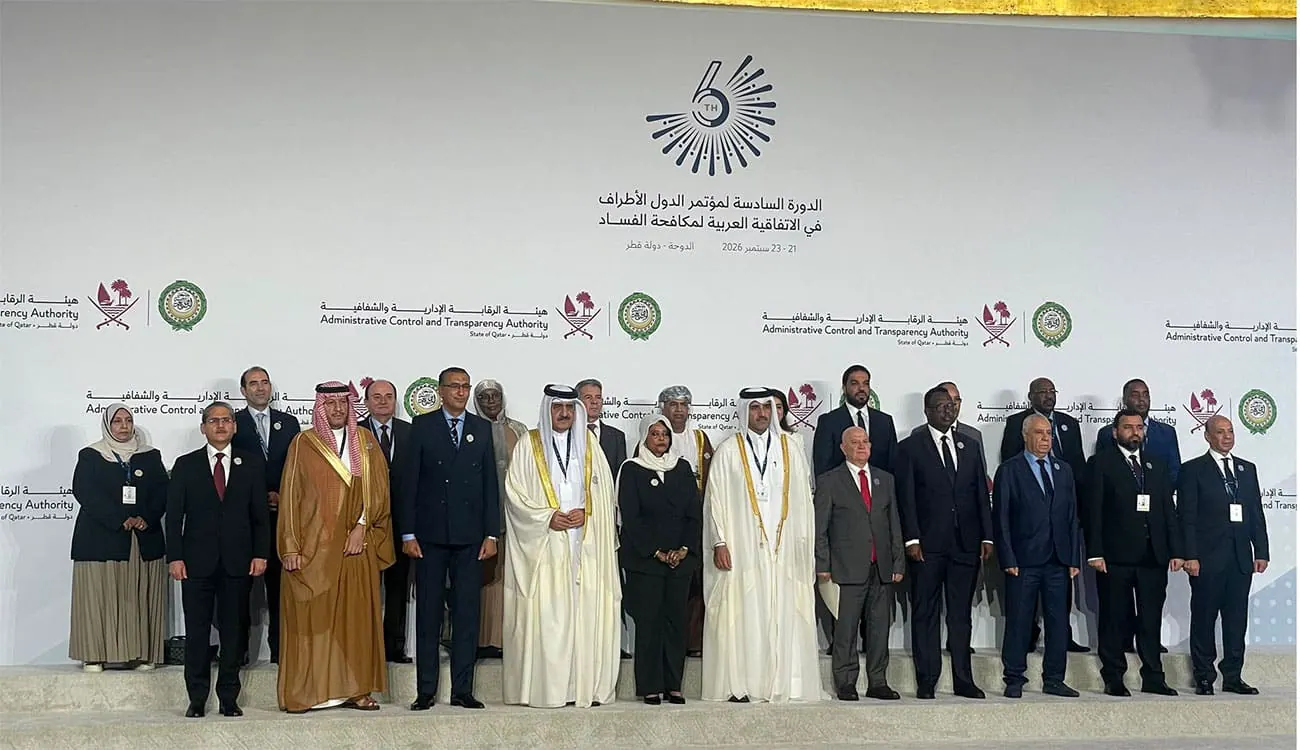
Tunisia's commitment to fighting corruption was reaffirmed by Imed Hazgui, head of the High Committee for Administrative and Financial Control (HCCAAF), at the sixth session of the Conference of States Parties to the Arab Convention against Corruption in Doha, December 21-23, 2026. Hazgui emphasized that Tunisia's anti-corruption policy focuses on enforcing laws and promoting integrity in both public and private sectors. This approach has led to significant reforms and measures aimed at reducing corruption risks.
According to the HCCAAF, Tunisia's anti-corruption strategy involves revising several legislative texts, simplifying administrative procedures, and digitizing public services. These efforts aim to minimize human intervention and associated corruption risks. The development of information systems in the public sector is also a key component of this strategy. By reducing bureaucratic complexities, Tunisia seeks to create a more transparent and accountable environment.
The HCCAAF has strengthened oversight structures, established accountability mechanisms, and intensified efforts to combat impunity. The relaunch of the reconciliation process is also a priority. These measures are designed to ensure that those engaging in corrupt practices are held accountable. By doing so, Tunisia aims to enhance public trust in institutions and promote a culture of integrity.
On the regional front, Hazgui called for increased cooperation among Arab states and organizations, based on sharing experiences and best practices. This cooperation is crucial in effectively combating corruption, as emphasized in the Arab Convention against Corruption. Enhanced regional collaboration can help address the complexities of corruption and facilitate the exchange of expertise.
Hazgui also stressed the need for Arab countries to work together to encourage the international community to develop more effective cooperation mechanisms in the fight against corruption. He advocated for the full implementation of the United Nations Convention against Corruption and the facilitation of procedures for recovering embezzled funds. This international cooperation is vital in tackling the global dimensions of corruption.
The Tunisian government's commitment to transparency and accountability is reflected in its efforts to simplify administrative procedures and digitize public services. By reducing the scope for human discretion, these measures can help prevent corrupt practices. The HCCAAF's work in promoting integrity and monitoring compliance is also critical in this regard.
The international community has taken note of Tunisia's efforts to combat corruption. The country's experience in implementing anti-corruption reforms and mechanisms can serve as a model for other nations. As the global fight against corruption continues, Tunisia's commitment to transparency and accountability serves as a positive example.
Key points
- Tunisia has implemented significant reforms to combat corruption, including the revision of legislative texts and the digitization of public services.
- The country has strengthened oversight structures and accountability mechanisms to prevent impunity and promote integrity.
- Tunisia advocates for increased regional and international cooperation to effectively combat corruption.