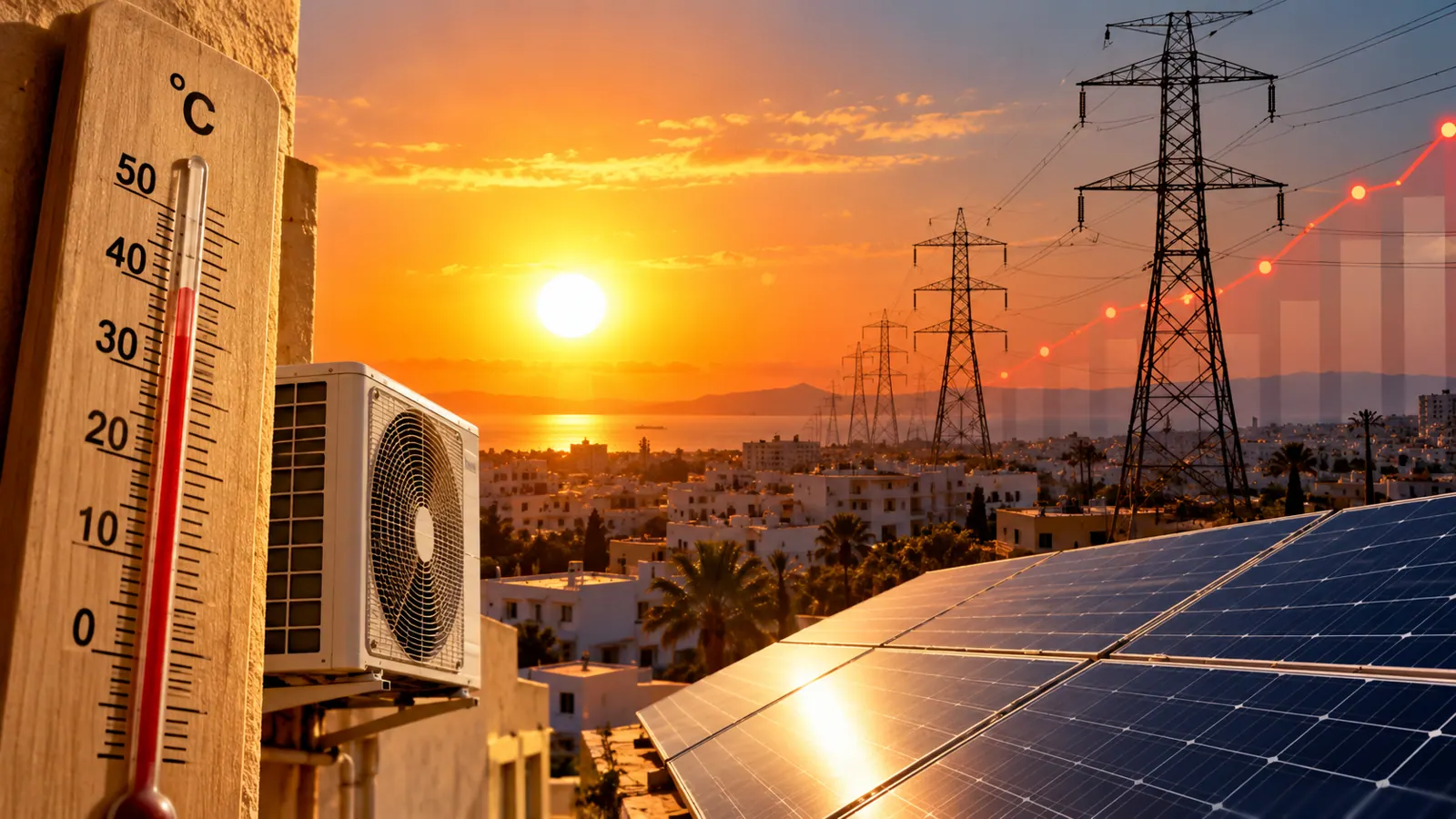
Tunisia has witnessed a significant surge in electricity demand during the summer months, outpacing production capacity. The country's peak demand for electricity reached 4924 megawatts in July 2026, a 2% increase from the same period in 2025. This rise in demand is attributed to the increased use of air conditioning units during the hot summer months. The surge in demand has put immense pressure on the national grid, leading to power outages and disruptions in daily life.
The Tunisian National Observatory for Energy and Mines reported that electricity production increased by 6% during the first seven months of 2026, reaching 12333 gigawatt-hours. However, this increase in production does not necessarily translate to a reduction in power outages, as the country's ability to meet peak demand is also crucial. The national grid's capacity to supply electricity during peak hours is a significant challenge, and the country's electricity production mix is dominated by natural gas, which accounts for 90.8% of total production.
Renewable energy sources, including solar and wind power, have seen significant growth, with a 61% increase in production during the first seven months of 2026. The share of renewable energy in the national electricity mix has risen to 9% as of July 2026. However, despite this growth, the country's reliance on natural gas remains high. The Tunisian Electricity and Gas Company (STEG) has attributed part of the problem to the pressure exerted by peak demand on the electrical grid, with demand increasing by around 30% during peak hours.
To mitigate the effects of peak demand, STEG has resorted to periodic and temporary power cuts to avoid a complete collapse of the grid. The company's managing director, Faisal Tarifa, has called on citizens to rationalize their energy consumption during peak hours. Experts argue that managing demand is crucial to addressing the country's energy challenges. This involves not only increasing production but also optimizing energy consumption, particularly during peak hours.
According to energy expert Ali Kanzari, managing demand does not mean depriving citizens of their basic needs, especially during periods of extreme heat. Instead, it involves reducing energy consumption or shifting it to periods when the grid is under less pressure. Simple measures, such as maintaining and optimizing air conditioning units, adjusting temperature settings, and using energy-efficient appliances, can make a significant difference when adopted on a large scale.
The use of data analytics can play a critical role in managing demand, enabling utilities to identify peak demand periods, large consumers, and areas where consumption can be shifted without impacting essential services. Advanced metering infrastructure and smart grid technologies can also help optimize energy distribution and consumption. By adopting a more nuanced approach to energy management, Tunisia can reduce the strain on its grid during peak periods and ensure a more reliable supply of electricity.
As Tunisia continues to grapple with the challenges of meeting peak electricity demand, the country is exploring new strategies to optimize energy consumption and improve the efficiency of its grid. The government's efforts to promote renewable energy and energy efficiency, combined with public awareness campaigns, are critical to addressing the country's energy challenges. By working together, Tunisia can develop a more resilient and sustainable energy system that meets the needs of its growing population.
Key points
- Tunisia's peak electricity demand has reached 4924 megawatts, outpacing production capacity.
- Renewable energy sources have seen significant growth, with a 61% increase in production during the first seven months of 2026.
- Managing demand through energy efficiency measures and optimized consumption is crucial to addressing Tunisia's energy challenges.