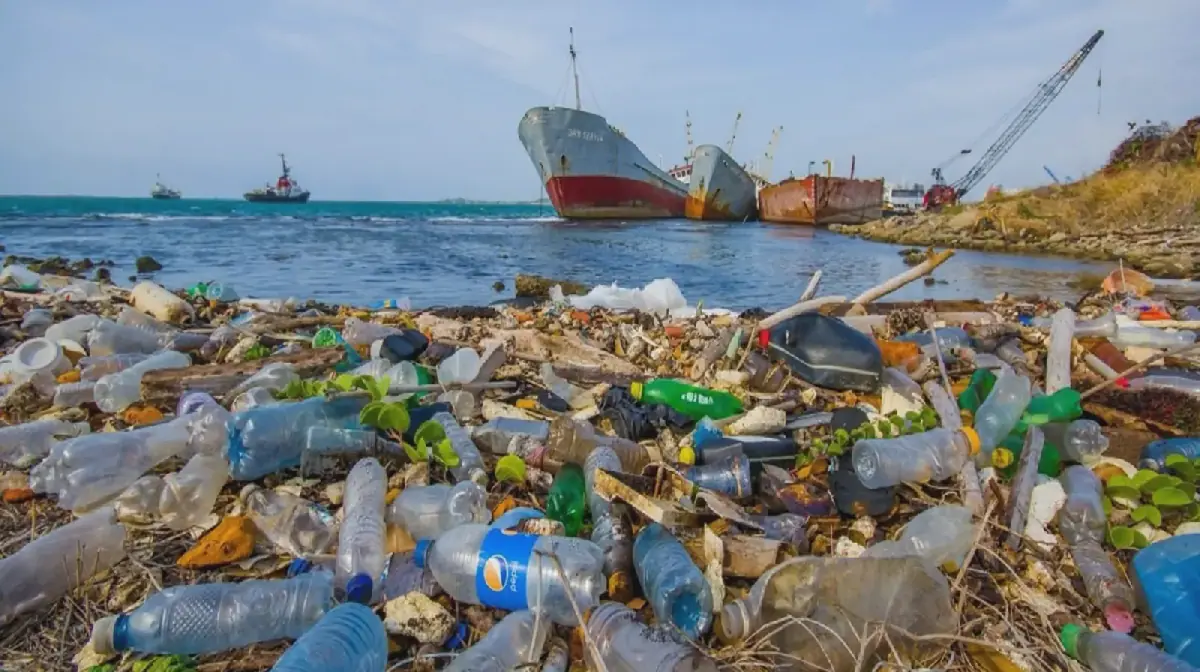
A recent report by Greenpeace Middle East and North Africa highlights the significant economic and environmental burdens of plastic pollution in Tunisia, Egypt, and Morocco. The report estimates that plastic pollution costs Tunisia between $170 and $560 million annually. If left unchecked, this cost could cumulatively reach $3-10 billion by 2040. This issue affects not only the environment but also public health, with communities near unmanaged waste sites facing increased health risks.
The report also provides a broader regional context, noting that the annual cost of plastic pollution in Tunisia, Egypt, and Morocco combined is approximately $5.5 billion. By 2040, this figure could escalate to $98 billion. In the Mediterranean Sea, around 229,000 tons of plastic waste enter the water annually. The Middle East and North Africa generate about 155 million tons of waste each year, with projections indicating an increase to 294 million tons by 2050.
The health impacts of plastic pollution are significant, particularly for communities near unmanaged waste sites. Residents in these areas face a heightened risk of various health issues, including diarrhea, acute respiratory infections, dengue fever, and skin diseases. For instance, the risk of diarrhea is about three times higher, and the risk of acute respiratory infections is approximately 2.8 times higher. The majority of plastic pollution in the Mediterranean comes from land-based sources, with about 65% of it entering the sea through rivers and surface runoff.
The report suggests that a substantial portion of these losses can be mitigated through practical measures, such as banning specific single-use plastic products. Implementing such a ban could reduce plastic leakage into the Mediterranean by 23%. As negotiations for a global plastics treaty resume in March 2027, Tunisia has an opportunity to advocate for a strong, legally binding agreement that limits plastic production, phases out single-use products, promotes reuse, and ensures fair financing for transitioning to a zero-waste economy.
The consequences of delaying action are severe, with the cost of inaction continuously rising. Therefore, immediate policy changes, improvements in waste management, and active participation in international negotiations are crucial for protecting Tunisia's coastlines, resources, and public health, while also alleviating future financial burdens. The report's findings underscore the importance of prompt action to address the plastic pollution crisis.
Recently, the United Nations Climate Change Conference (COP 31) in Antalya, Turkey, which took place from November 9 to 20, 2026, linked the issue of plastic pollution to climate change. The conference supported initiatives aimed at reducing waste, increasing recycling, and transitioning to a circular economy. On the sidelines of COP 31, the "Global Zero Waste Coalition" was launched to transform the efforts of the Zero Waste initiative into permanent international partnerships and environmental cooperation projects.
The issue of plastic pollution in Tunisia and the broader region requires urgent attention and collective action. By implementing effective waste management strategies, advocating for a strong global plastics treaty, and promoting sustainable practices, Tunisia can mitigate the impacts of plastic pollution on its environment, public health, and economy. The time for action is now, as delaying further will only exacerbate the problem and increase the financial and environmental costs.
Key points
- The annual cost of plastic pollution in Tunisia ranges from $170 to $560 million.
- Cumulative losses from plastic pollution could reach $3-10 billion by 2040.
- Implementing a ban on single-use plastic products could reduce plastic leakage into the Mediterranean by 23%.
Reporting sources
- Établissement de la Radiodiffusion-Télévision Tunisienne · Établissement de la Radiodiffusion-Télévision Tunisienne