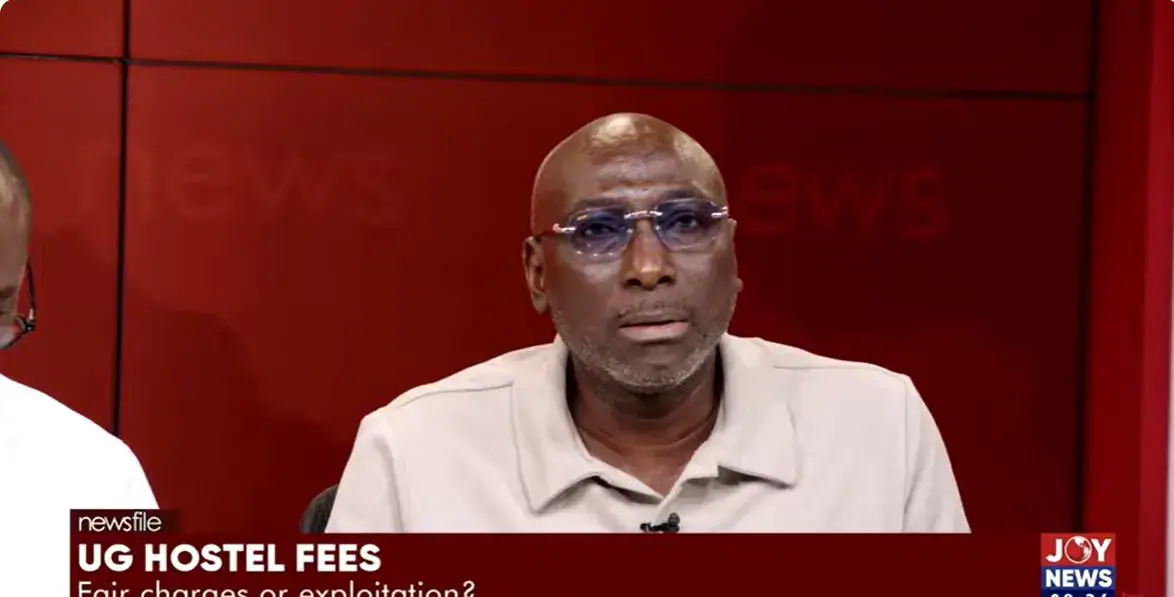
The Director-General of the National Road Safety Authority (NRSA), Abraham Amaliba, has stated that universities charging students for accommodation must comply with rent laws. He argues that the payment of fees creates a landlord-tenant relationship between the university and the student. According to Mr. Amaliba, the nature of this relationship should be determined by the payment made by students for occupying rooms, rather than whether they have full control over the facilities.
Mr. Amaliba believes that the Rent Commissioner, Frederick Opoku, is justified in intervening in the ongoing dispute over university hostel charges. He described the Commissioner's approach as a necessary disruption to longstanding practices in the accommodation sector. The dispute arose between the University of Ghana Enterprises Limited (UGEL) and Rent Commissioner Frederick Opoku over hostel fees, triggering concerns about the cost of student accommodation.
Mr. Amaliba called for a comprehensive regulatory framework for university and private student accommodation facilities. He warned that the growing number of private hostel operators could expose students to unfair charges. According to him, students are particularly vulnerable economically because many depend on their parents or guardians to finance their education and accommodation.
The NRSA Director-General challenged arguments that hostel operators should be allowed to transfer the full cost of loans and investments to students through increased accommodation charges. He stressed that investors and hostel operators must consider the financial capacity of their target market, insisting that students cannot be expected to shoulder every cost associated with providing accommodation.
Mr. Amaliba emphasized that the central issue should be finding a balance between allowing accommodation providers to recover their investments and protecting students from unaffordable charges. He argued that the clients of hostel operators are students, not mining companies or bank officials, and that their financial capacity should be taken into account.
The comments by Mr. Amaliba come amid concerns about the cost of student accommodation in Ghana. The University of Ghana Enterprises Limited (UGEL) and Rent Commissioner Frederick Opoku have been at odds over hostel fees, with the Commissioner intervening to regulate the charges. Mr. Amaliba's statements are expected to contribute to the ongoing discussions on finding a solution to the student accommodation crisis.
Key stakeholders, including university administrators, private hostel operators, and student representatives, are expected to engage in further discussions on the regulation of student accommodation charges. The goal is to find a balance between the interests of accommodation providers and the needs of students, ensuring that accommodation is affordable and accessible to all.
Key points
- Universities charging students for accommodation must comply with rent laws.
- A comprehensive regulatory framework is needed for university and private student accommodation facilities.
- Students should not be expected to shoulder every cost associated with providing accommodation.