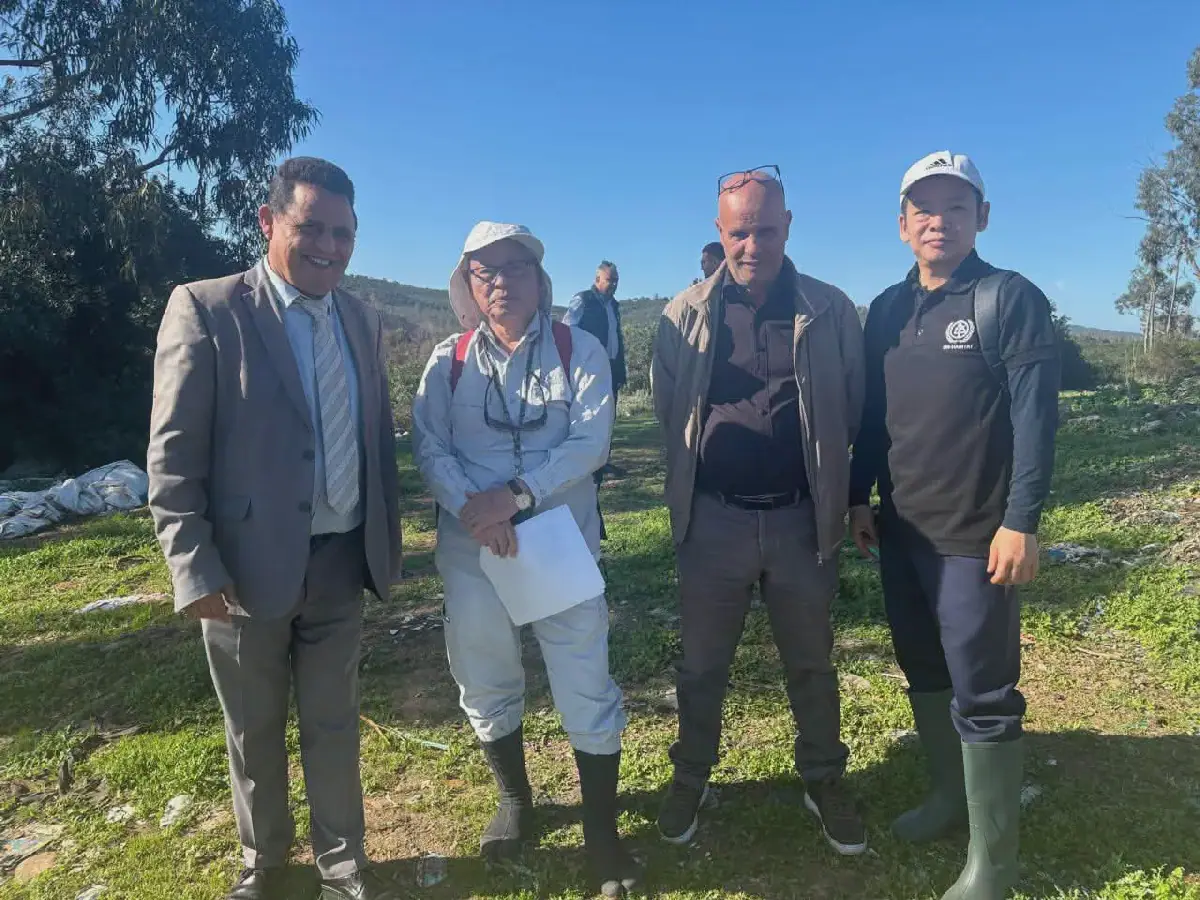
A team of Japanese experts has conducted a field study to assess the feasibility of adopting the Fukuoka method for waste treatment in Sajnane, Banzart governorate. This initiative is part of a project implemented by the UN-Habitat Tunisia office with financial support from Japan. The Fukuoka method, also known as semi-aerobic landfilling, aims to enhance air circulation within waste to accelerate decomposition and minimize environmental harm.
The study's findings were discussed during a meeting on November 19, 2026, in Tunis between Japanese Ambassador to Tunisia Saito Jun, Professor Matsufuji Yasushi from Fukuoka University, and representatives from UN-Habitat. The talks focused on the application's prospects and the technology's potential to improve waste management and mitigate health risks and greenhouse gas emissions. This project aligns with the "Sajnane Municipality and Community: Together for Clean Water and Zero Waste" initiative.
The Fukuoka method has shown promise in reducing methane emissions and leachate production. A pilot project using this technology was successfully implemented in Bajah, with the Japanese Embassy hailing its completion. This experience has encouraged further exploration of the method's applicability in Tunisia. The joint project between the Tunisian National Waste Management Agency and Japan's EX Research Institute was carried out under the Joint Credit System for Carbon Emissions Reduction.
The initiative supports Tunisia's efforts to achieve sustainable urban development and environmental protection. Japan has reaffirmed its commitment to backing Tunisia in these endeavors through collaboration with international organizations and Japanese experts. The project in Sajnane aims to promote sustainable waste management practices and reduce environmental impacts.
Key stakeholders, including the Sajnane municipality and local community, are engaged in the project's implementation. The project's launch on April 15, 2026, marked the beginning of a concerted effort to address waste management challenges in the region. With a budget of two million dinars, the project is poised to make a positive impact on the local environment.
The assessment of the Fukuoka method's feasibility is a crucial step toward potential implementation. If adopted, this technology could significantly enhance waste management practices in Tunisia. The project's outcomes will be closely monitored, and its success could pave the way for wider adoption of the Fukuoka method.
The "Sajnane Municipality and Community: Together for Clean Water and Zero Waste" project embodies a collaborative approach to addressing environmental challenges. By working together, stakeholders aim to create a more sustainable future for the region. The project's focus on community engagement and participation is essential to its success.
Key points
- Adoption of Fukuoka method could reduce greenhouse gas emissions and improve waste management in Tunisia.