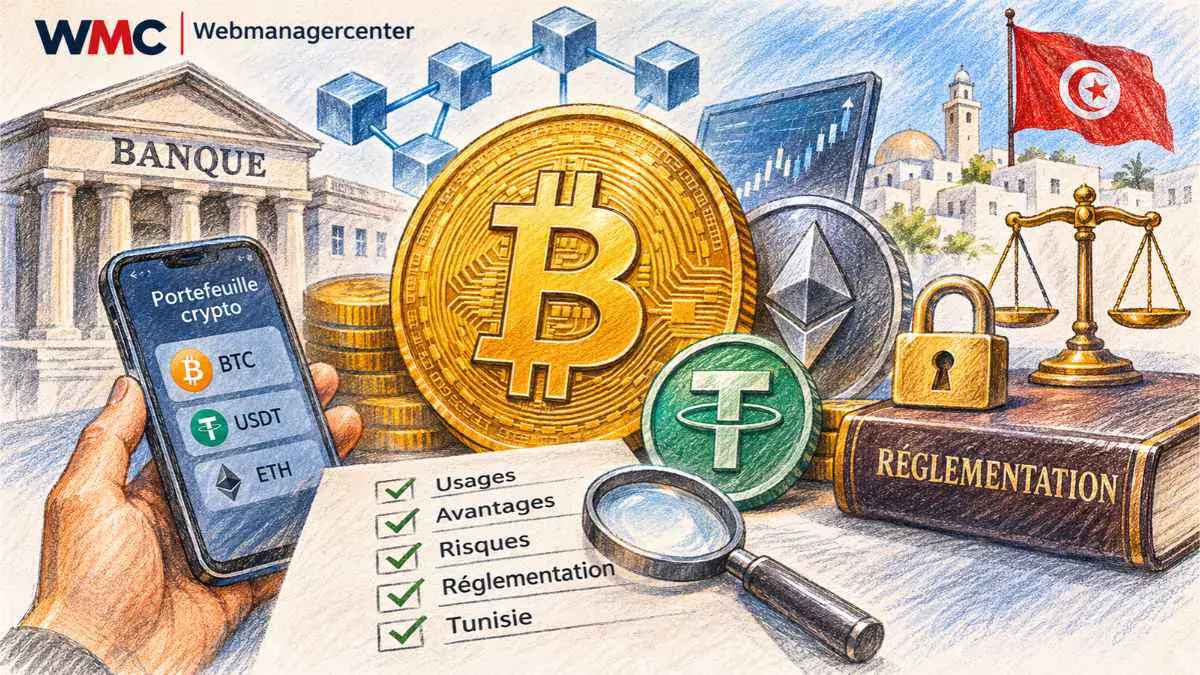
The concept of cryptocurrencies is transforming certain financial practices, while raising concerns about security, regulation, and user protection. In a bid to educate and inform, Webmanagercenter has launched a comprehensive guide to understanding Bitcoin, blockchain, and the associated risks. The guide comprises six educational articles that explain the fundamental mechanisms, differences with traditional banking, applications, risks, and the future of cryptocurrencies.
The guide aims to provide a progressive learning experience, free from technical jargon and unrealistic promises of returns. It addresses essential questions, such as whether cryptocurrencies are a new form of currency, an innovation, or a risky investment. The response, according to the guide, depends on the specific asset and its usage. Bitcoin, stablecoins, and other digital assets function differently, with varying uses, risks, and available protections.
One of the key aspects of the guide is to clarify the distinction between cryptocurrencies and traditional banking. While cryptocurrencies offer an alternative means of transferring value, they do not automatically possess the same legal status or guarantees as official currencies. Moreover, the security of a blockchain does not necessarily ensure the safety of wallets, platforms, or users.
The guide also explores the various applications of cryptocurrencies, including payments, international transfers, and stablecoins. Additionally, it highlights the potential risks, such as hacking and scams, and provides insights into the future of cryptocurrencies, including regulation, tokenization, and central bank digital currencies.
In Tunisia, the legal framework governing cryptocurrencies is a crucial aspect of their adoption. The guide provides an overview of the current regulatory environment, risks for users, and prospects for Tunisian businesses. As the cryptocurrency landscape continues to evolve, understanding the local context is essential for investors, users, and businesses.
The global cryptocurrency market has experienced significant events, such as the recent Binance hack, which resulted in losses of $6.3 billion. Such incidents underscore the importance of security and regulation in the cryptocurrency space. As the industry continues to grow, addressing these concerns will be crucial for mainstream adoption.
Before using cryptocurrencies, it is essential to verify the applicable legal framework, fees, conservation conditions, risks of loss, and the reliability of the service provider. By taking a comprehensive and informed approach, users can navigate the complex world of cryptocurrencies and make informed decisions about their financial futures.
Key points
- Cryptocurrencies have different uses, risks, and protections available.
- The security of a blockchain does not guarantee the safety of wallets, platforms, or users.
- Understanding the local regulatory environment is crucial for cryptocurrency adoption in Tunisia.