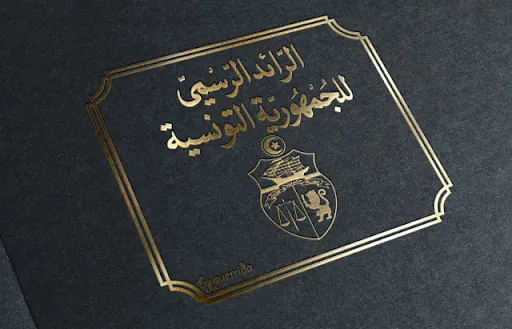
The Tunisian government has recently published four new decree-laws, which were approved by the Council of Ministers, in the Official Gazette of the Republic of Tunisia (JORT) on September 30, 2026. These decrees aim to reform various aspects of the country's legal and institutional framework. The decree-laws cover changes to the penal code, reconciliation procedures, the Independent Instance for Communication and Information (ISIE), and municipal councils.
One of the key changes introduced by the decree-laws is the modification of penalties for certain offenses. Under Decree-law 2026-1, the prison sentence for a first-time offender is abolished and replaced with a fine of 10,000 to 20,000 dinars. In case of recidivism, the penalty is increased to six months in prison and a fine of 50,000 dinars, which is doubled if the person concerned is a public official or equivalent.
Decree-law 2026-2 focuses on reconciliation procedures, introducing a new framework for provisional reconciliation. The project is based on the payment of at least 50% of the sums due, with the remainder to be settled over a maximum period of two years. The commission responsible for reconciliation can propose a lower rate if justified. The revenues generated from these procedures will be allocated to projects of national interest and development, as decided by the National Security Council.
The composition of the ISIE has been modified under Decree-law 2026-3. The Council will now consist of nine members, including three personalities chosen by the President of the Republic, three magistrates, two engineers, and a retired diplomatic cadre. The President of the Instance will be designated by the head of state among the members, with a non-renewable six-year term. The current Council, presided over by Farouk Bouasker, will remain in place until the new Council takes office.
Decree-law 2026-4, which comprises 140 articles, abrogates the 2018 Code of Local Collectivities. However, its implementation will be deferred until the proclamation of the final results of the next municipal elections, for which no date has been set. Until then, Decree-law No. 9 of March 8, 2023, will remain in force.
The new decree-laws have been introduced to reform and modernize Tunisia's legal and institutional framework. These changes aim to improve the country's judicial system, promote reconciliation, and enhance the functioning of municipal councils. The government has been working to address various challenges and implement reforms in different sectors.
The decree-laws are expected to have a significant impact on various aspects of Tunisian society. The changes introduced will likely influence the country's judicial system, local governance, and national development. The implementation of these reforms will be closely watched by various stakeholders, including civil society, the business community, and international partners.
Key points
- The Tunisian government has published four new decree-laws to reform its legal and institutional framework.
- The decree-laws introduce changes to the penal code, reconciliation procedures, the ISIE, and municipal councils.
- The implementation of these reforms aims to improve the country's judicial system, promote reconciliation, and enhance local governance.