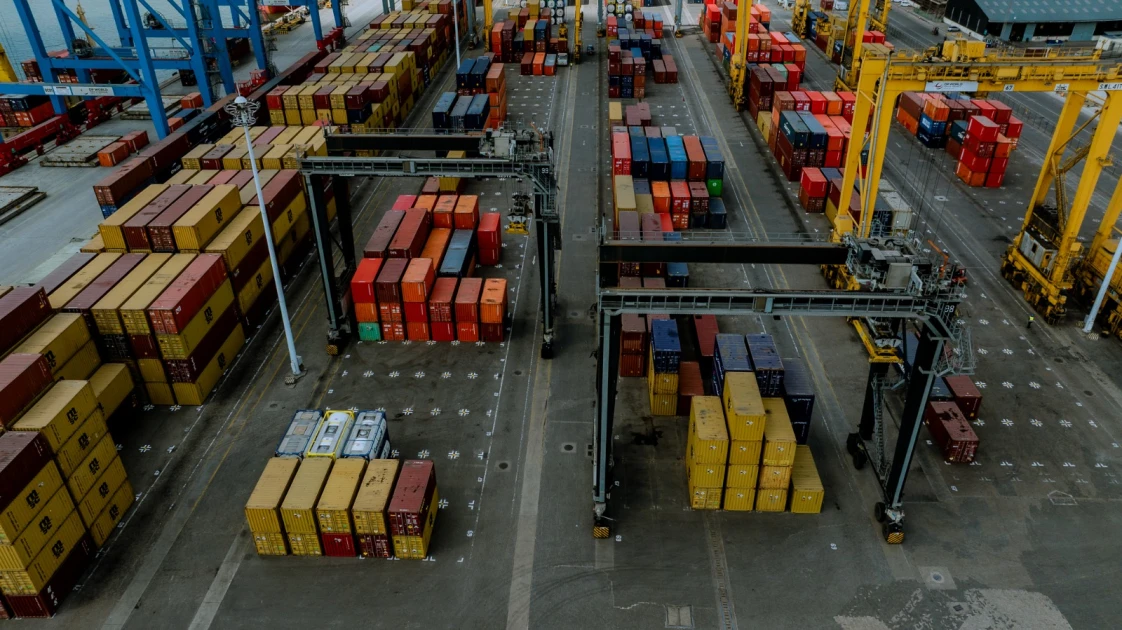
Dar es Salaam Port in Tanzania is experiencing a significant increase in transit cargo to landlocked markets in East and Central Africa. In the 2025/26 financial year, the port handled 14.61 million tonnes of transit cargo, a 17 percent increase from the previous year. This growth is largely driven by stronger cargo flows to the Democratic Republic of Congo (DRC), Zambia, and Rwanda. The DRC-bound cargo rose 30 percent to 7.77 million tonnes, accounting for more than half of the port's transit traffic.
The increase in transit cargo is a result of Tanzania's investments in port, rail, and road infrastructure. The government has been working to improve the efficiency of the Dar es Salaam corridor and attract cargo moving between the Indian Ocean and inland markets. Total cargo handled at Dar es Salaam Port reached 33.71 million tonnes in 2025/26, a 21.5 percent increase from the previous financial year. This growth trend is also reflected in the long-term statistics, with cargo handled at the port increasing from 16.27 million tonnes in 2020/21 to 27.76 million tonnes in 2024/25.
Private investment has played a significant role in the changes at the port, particularly with the entry of global port operator DP World under a 30-year concession. DP World has invested USD123 million in the terminal by April 2026 in equipment, infrastructure, technology, and operating systems. This investment has led to improved cargo handling efficiency, with cargo discharge times for comparable operations falling from more than 300 hours to less than 28 hours since the operator began operations in April 2024.
The improvements in cargo handling efficiency have resulted in a significant increase in container throughput. The terminal recorded four consecutive monthly records, handling 44,001 containers in May, 45,856 in June, 46,582 in July, and 48,793 in August. The port is also handling larger and more specialized vessels, including the 240-metre M/V RAMHAN, which discharged nearly 7,900 heavy-duty vehicles in just over 27 hours.
Tanzania is also expanding transport infrastructure beyond the port to improve the efficiency of the entire corridor. Commercial freight operations on the Standard Gauge Railway between Dar es Salaam and Dodoma began in July 2025, with construction continuing on sections intended to extend the network westwards. A planned freight terminal at Morogoro is expected to connect rail cargo with road transport serving domestic and neighboring markets.
The government is also pursuing digital reforms in maritime services, with the Tanzania Shipping Agencies Corporation (TASAC) preparing to introduce a Maritime Transport e-Regulatory System. This system will allow service providers to process licenses, registrations, and supporting documents online. Additionally, work is underway to address congestion at the Tunduma border crossing with Zambia, with the border approach being widened from one lane to four to ease truck traffic.
The developments in Tanzania's transport infrastructure and cargo handling efficiency are expected to have a significant impact on the regional trade. The performance of the entire corridor will increasingly determine whether Dar es Salaam can convert its recent increase in transit volumes into sustained regional market share. For businesses moving goods to the DRC, Zambia, and Rwanda, the efficiency and reliability of the corridor will be a key factor in their decision-making.
Key points
- Dar es Salaam Port handled 14.61 million tonnes of transit cargo in the 2025/26 financial year, a 17 percent increase from the previous year.
- DP World has invested USD123 million in the terminal, leading to improved cargo handling efficiency.
- Tanzania is expanding transport infrastructure, including the Standard Gauge Railway and a planned freight terminal at Morogoro.